
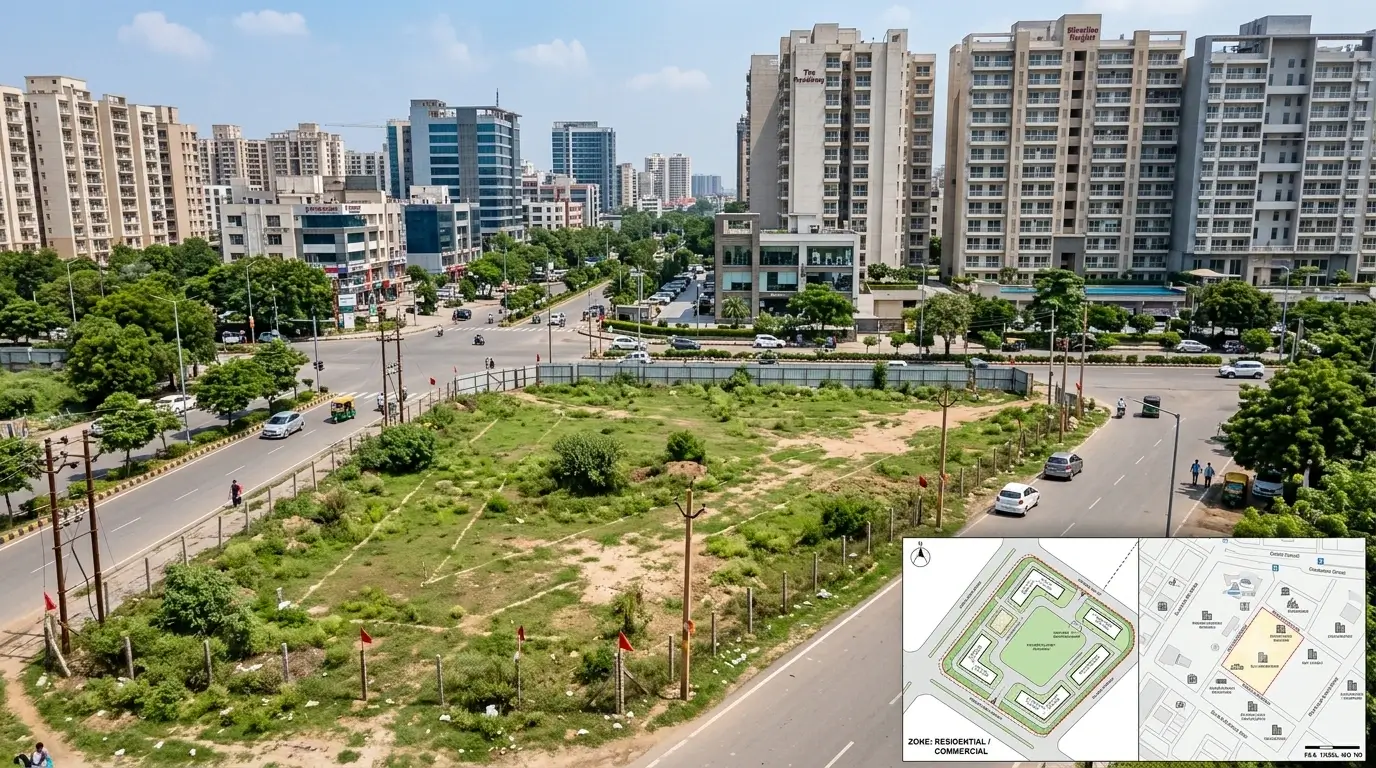
The plot may appear unremarkable now, but it will be worth something entirely different if there is a change in how it is zoned.
Zoning determines the type of development that is allowed on a plot. It decides whether the land will be put to residential, commercial, office, industrial, mixed use, or other types of development.
Understanding zoning changes and land value helps investors see how a change in permitted land use can affect a plot’s development potential and market appeal.
That is why changes in zoning and the value of the land have a close relationship with each other. With changes in the allowable use or development capability of the land, the options become different for the owner and developer.
But one must not consider zoning change to be a given increase in value.
What Zoning Changes Mean for Land Value
Zoning refers to the planning rules that control how land can be used and developed. Understanding zoning changes and land value starts with knowing which activities are permitted on a plot and whether those permissions may change through an official planning process.
Understanding Land Zoning
The zoning regulation divides land into different classes according to its permissible or intended use, though the classification varies depending on the locality.
Common examples include:
- Residential land for homes and housing projects
- Commercial land for shops, offices, and businesses
- Industrial land for manufacturing, storage, or other industrial activities
- Agricultural land for farming and related uses
- Mixed-use land where more than one type of activity may be permitted
Before buying a plot, investors should check the current zoning classification rather than relying only on what a seller says.
Important things to check include:
- Current land-use classification
- Permitted activities
- FAR or FSI limits
- Building height restrictions
- Road-width requirements
- Parking requirements
- Setback rules
- Environmental restrictions
- Development approval requirements
Knowing the zoning rules can help a buyer understand what the land can actually be used for.
How Zoning Determines What You Can Build
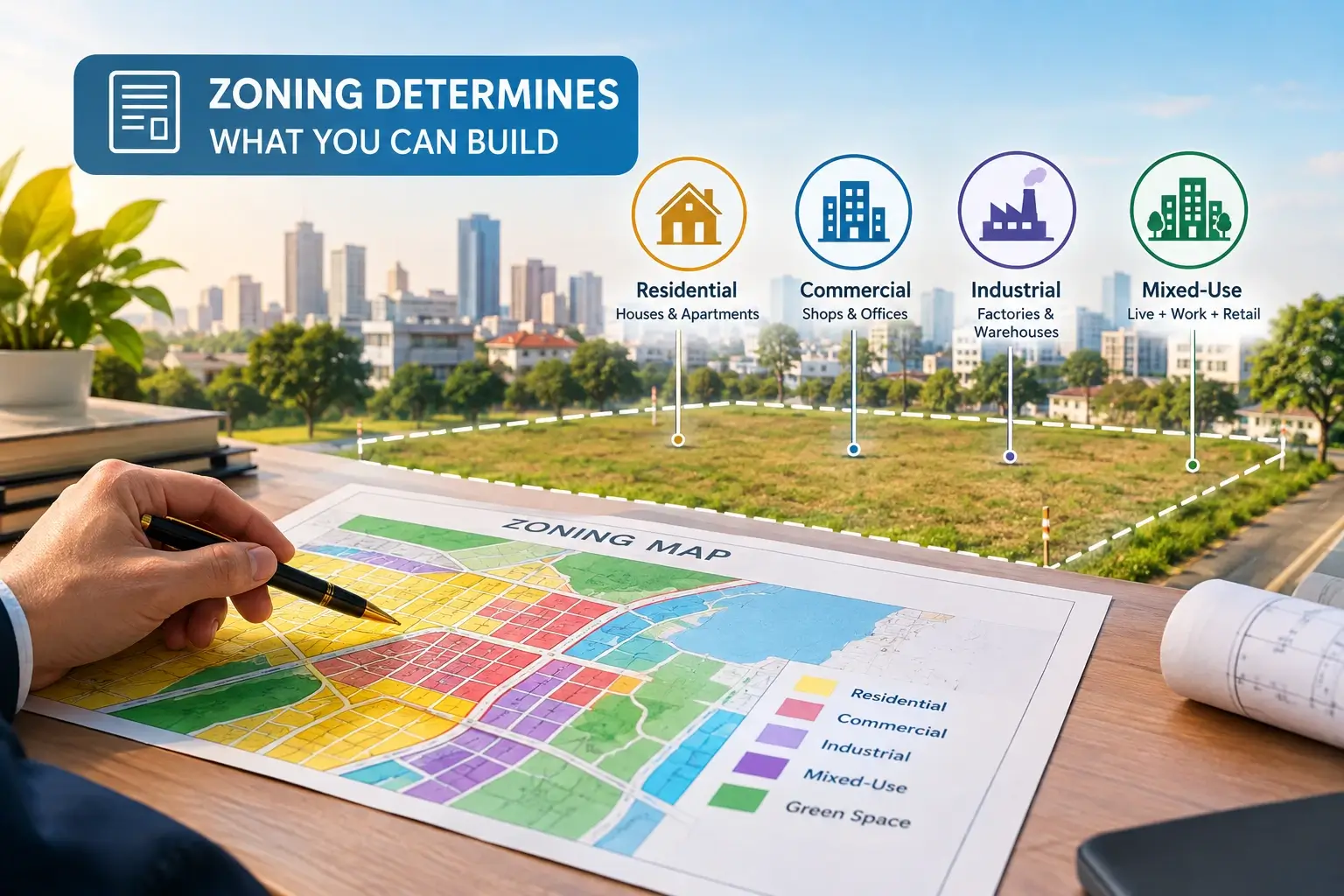
Size is just one factor among many others determining the development potential of a plot of land.
For instance, two plots of equal size might have different development potentials; one may be for limited development while the other permits more.
| Factor | Plot A | Plot B |
| Plot size | 10,000 sq. ft. | 10,000 sq. ft. |
| Permitted use | Limited residential use | Multiple permitted uses |
| Development options | Fewer | More |
| Density | Lower | Potentially higher |
| Buyer interest | Depends on demand | Depends on demand and permitted uses |
The difference is not the size of the land. It is what the owner is allowed to do with it.
Why Zoning Changes and Land Value Are Connected
Changes in zoning regulations can also change the development potential of a plot of land.
The relationship between zoning changes and land value depends on whether the new rules create useful development opportunities that buyers and developers are willing to pay for.
For instance, a piece of land that previously had limited development potential can gain more value due to change in the zoning regulations.
A zoning change may affect value through:
- More permitted uses
- Higher development density
- Greater development flexibility
- Better opportunities for developers
- Increased interest from potential buyers
However, these changes must be dependent on demand in the market.
This means that a piece of land cannot automatically gain development potential due to expectation of zoning regulation changes.
How Zoning Changes Can Increase Plot Value
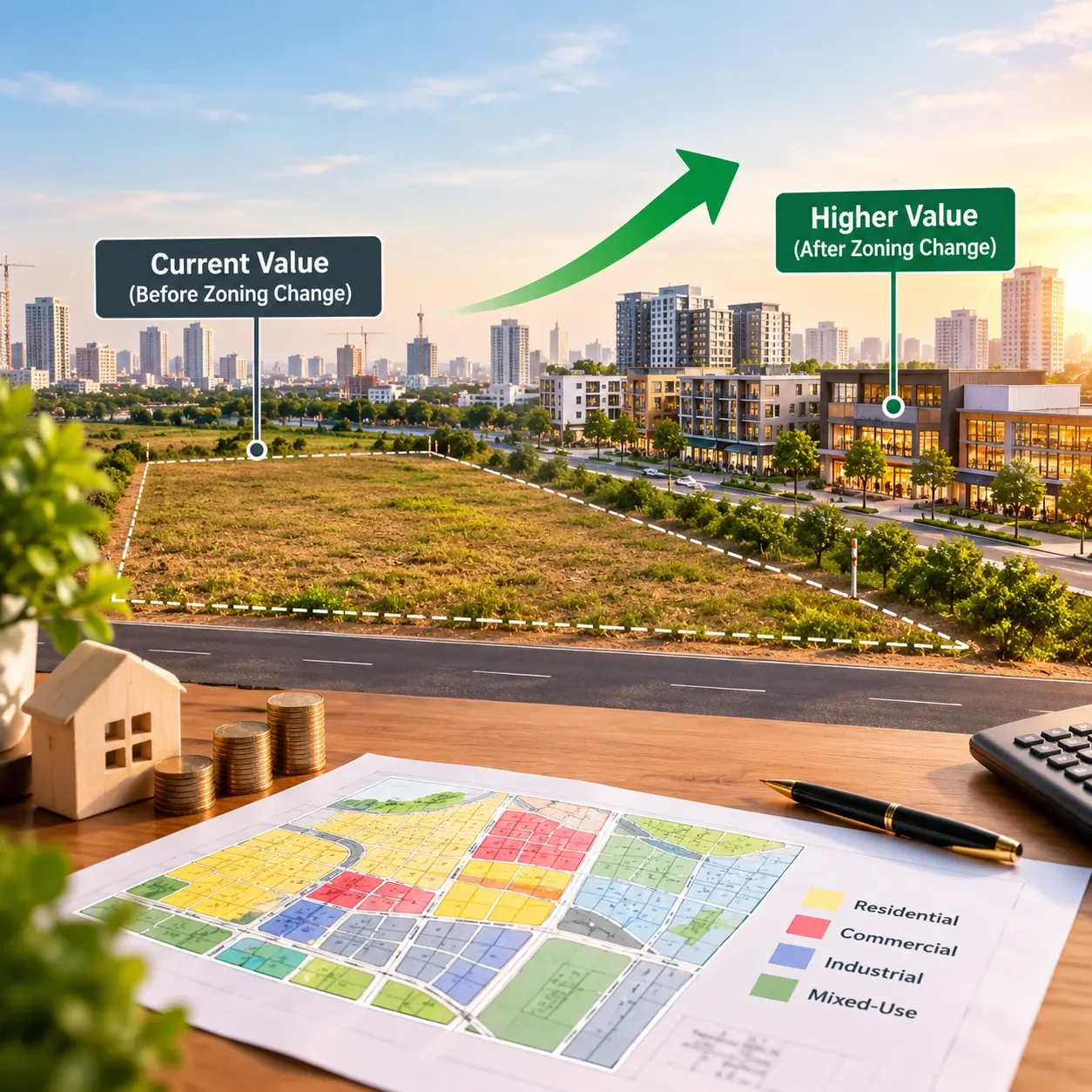
Zoning changes can create value when they allow land to be used in a way that is more suitable for the needs of the surrounding market. In this situation, zoning changes and land value are closely connected because the permitted use of a plot can influence its appeal to potential buyers and developers.
In many cases, zoning changes and land value are closely linked because a new permitted use can make a plot suitable for a wider range of projects, provided there is enough local demand.
A plot near a growing residential area, for example, may become more attractive if housing development is permitted.
Similarly, land near a major road may attract interest if commercial activities become permitted.
From Low-Value Use to Higher-Value Use
A change in permitted land use can sometimes create a major difference in development potential.
For example, land with limited agricultural use may attract different buyers than land that has legally obtained permission for urban development.
Before assuming that a zoning change will increase value, consider:
- Is there demand for the new use?
- Are developers active in the area?
- Is road access good enough?
- Are utilities available?
- What will development cost?
- How long will approvals take?
- What are similar properties selling for?
The key point is simple: development potential only becomes valuable when there is a realistic market for that development
Residential, Commercial, Industrial, and Mixed-Use Zoning
Different zoning categories create different development possibilities.
| Zoning type | Common uses | Factors affecting value |
| Residential | Homes, apartments, housing projects | Housing demand, schools, services |
| Commercial | Shops, offices, business spaces | Road access, visibility, customer demand |
| Industrial | Manufacturing, warehouses, logistics | Transport, utilities, permitted activities |
| Mixed-use | Residential and commercial uses | Local demand and exact permitted uses |
Commercial zoning, for example, does not automatically make every plot more valuable.
A commercial plot with poor access and limited visibility may not attract the same demand as a plot on a well-connected road.
How Development Potential Can Affect Land Prices
Developers usually take into account the amount of development that can be done on a piece of land.
Higher permitted development can make a property more attractive, but it can also increase construction and approval costs.
Potential costs include:
- Construction expenses
- Parking requirements
- Infrastructure charges
- Approval fees
- Utility connections
- Financing costs
- Development and compliance expenses
Therefore, buyers should compare the additional development potential with the additional cost required to use it. Careful analysis of zoning changes and land value can help buyers determine whether the additional development potential justifies the investment.
Types of Zoning Changes That Can Create Value
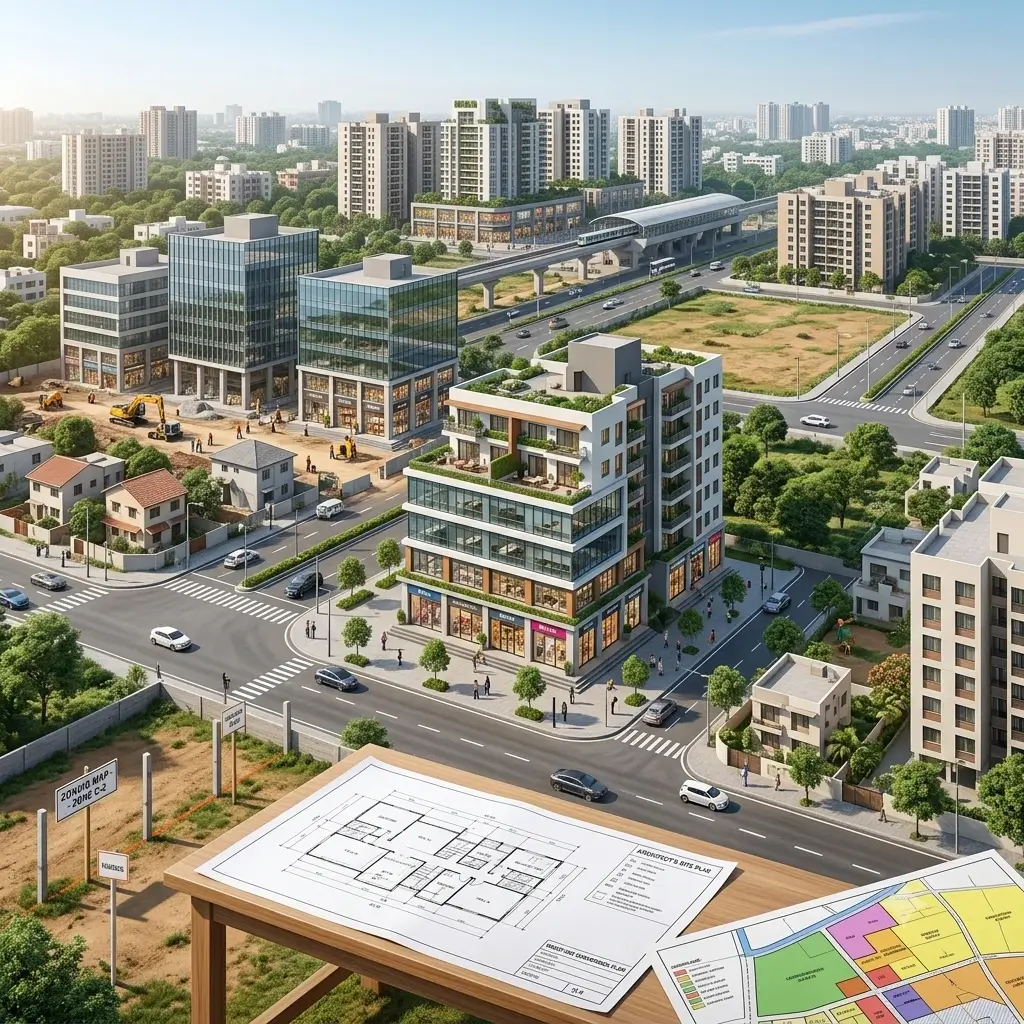
Not all zoning changes work in the same way. There are some that alter the manner of land use, and there are others that affect the intensity of land development. Understanding zoning changes and land value helps investors compare these different opportunities before making a decision.
Residential to Commercial
A residential-to-commercial change can create new opportunities when an area becomes more business-oriented.
This may happen near major roads, business districts, transport corridors, or growing commercial areas.
Potential opportunities include:
- Shops and retail spaces
- Offices
- Restaurants and service businesses
- Other permitted commercial activities
But investors should also check parking, traffic movement, road width, access, and the exact commercial activities allowed.
Agricultural or Peri-Urban Land to Urban Use
In case a city is growing, areas around it will be incorporated in urban developments.
With any alteration in the zoning ordinance and obtaining of relevant approvals, there are cases where some of the lands become capable of being developed for residential or other urban uses.
Before considering such land, check:
- Whether conversion is legally possible
- Required conversion charges
- Current land-use classification
- Road access
- Water and electricity availability
- Drainage
- Environmental restrictions
- Development permissions
The statement by the vendor that the land “is going to become residential in no time” does not equate to the alteration in land use zoning.
Single-Use to Mixed-Use Development
There could be instances of mixed zoning, allowing several kinds of developments within one piece of land.
An instance would be the presence of residential houses, businesses and other activities allowed under the law in one place.
It would apply especially to places where individuals prefer living near their workplaces, shopping, educational centers, healthcare centers and other amenities
Still, buyers should check the exact rules because mixed-use zoning does not mean every activity is automatically permitted.
Changes in Density, FAR, or FSI
A zoning change does not always involve changing the main land-use category.
Sometimes the important change is how much construction is permitted.
FAR or FSI provisions might influence how much development of floor area in relation to the plot area would be permissible.
For example, the permitted FSI of a certain place might permit the developer to develop more floor area in relation to the plot area.
This would have implications on the project finances.
Transit-Oriented and Infrastructure-Led Zoning Changes
New roads, transportation networks, stations, and other infrastructure developments might result in altered developmental trends.
Land plots close to important transportation corridors might be planned on account of increased connectivity, which could facilitate greater economic activities.
The investors need to consider something beyond the present state of affairs and think about new infrastructure plans or other development ideas.
Location and Market Factors That Affect Zoning-Related Land Value
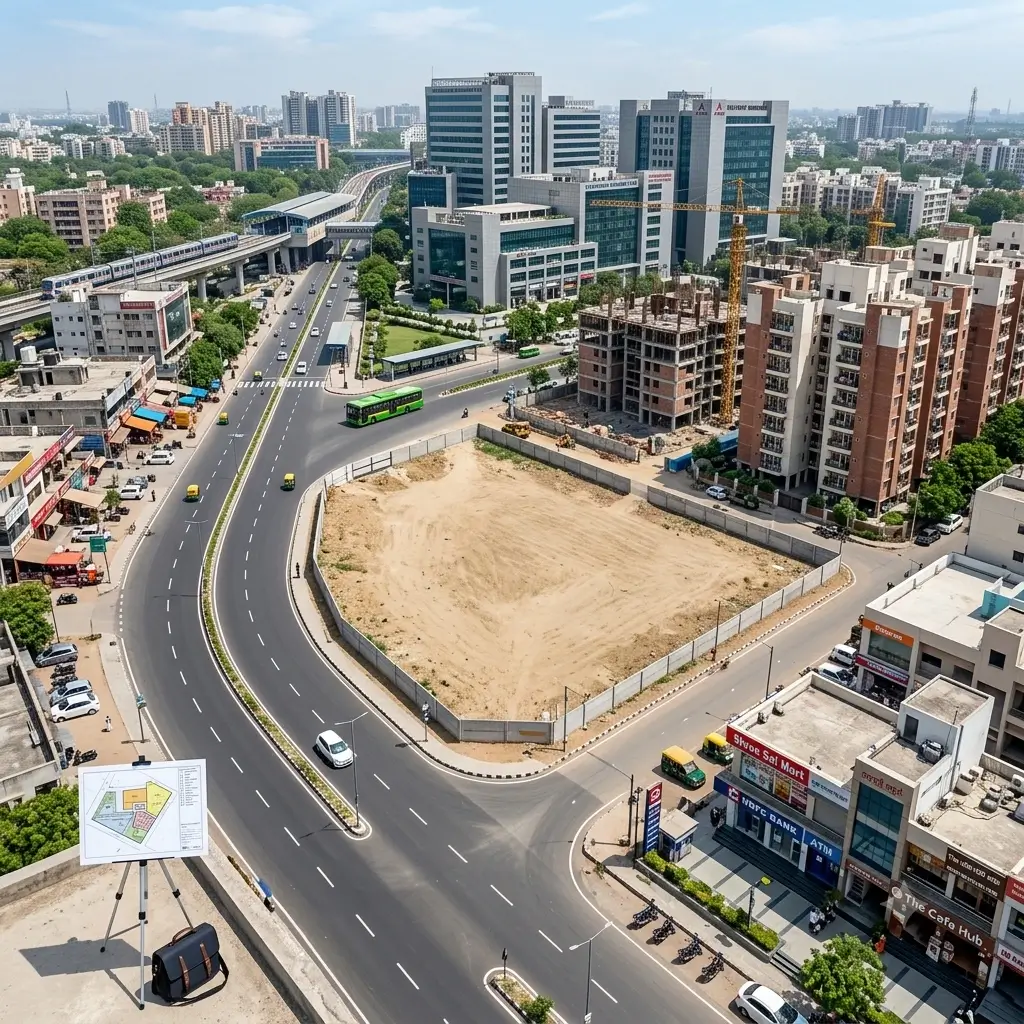
Zoning is crucial, but it operates within a framework.
The situation of the land plot and the surrounding demand might decide whether the zoning opportunity can be converted into greater market value.
The relationship between zoning changes and land value becomes clearer when investors also consider local demand, connectivity, and nearby development.
Roads, Public Transportation, and Connectivity
Greater connectivity makes land useful for people, businesses, employees, and customers.
Look at:
- Existing roads
- Road width and access
- Public transport
- Major highways or corridors
- Travel time to important areas
- Planned transport projects
A zoning change may create development potential, but poor access can still limit demand.
Nearby Employment and Business Hubs
Employment centers may affect the demand for housing and commercial properties.
The establishment of new offices, industrial estates, business parks or other employment centers near the area in question may bring about changes in housing and service demand.
Investors are advised to consider the reality of development rather than mere possibilities.
Population Growth and Housing Demand
A growing population can create demand for homes, shops, schools, healthcare, and other services.
However, population growth should be studied at the local level.
Useful indicators include:
- New housing projects
- Occupancy levels
- Rental activity
- New schools and healthcare facilities
- Retail development
- New employment opportunities
Strong zoning potential with weak local demand may not produce the expected result.
Infrastructure and Upcoming Development
Infrastructure can improve the usefulness of land.
| Infrastructure factor | Why it matters |
| Roads | Improves physical access |
| Public transport | Makes locations easier to reach |
| Water supply | Supports development and daily use |
| Electricity | Important for homes and businesses |
| Drainage | Reduces practical development problems |
| Schools and healthcare | Supports residential demand |
| Business hubs | Can create employment and housing demand |
The important point is to verify whether planned projects are actually approved and progressing.
How to Evaluate Zoning Upside Before Investing

Investors should investigate the plot from both a planning and market perspective. Evaluating zoning changes and land value requires checking the official planning rules, development costs, and demand for the uses permitted on the plot.
To assess zoning changes and land value properly, investors should compare the existing development rights with the proposed rules, expected costs, approval status, and likely demand for the finished project.
Study the Current Zoning Classification
Start with the current official classification.
Do not make an investment decision based only on advertisements, broker statements, or informal information.
Check:
- Current zoning
- Permitted uses
- FAR or FSI
- Building restrictions
- Access requirements
- Required approvals
Check the Master Plan and Future Land-Use Plans
Future land-use plans can provide useful information about how authorities intend to develop an area.
Look for official information about:
- Proposed roads
- Residential areas
- Commercial corridors
- Industrial zones
- Public facilities
- Transport projects
- Changes in land use
A future plan is useful information, but it should not automatically be treated as a guaranteed zoning change.
Look for Planned Infrastructure and Development
Infrastructure can be one of the strongest signals of future development activity.
Check whether proposed projects have:
- Official approval
- Identified timelines
- Funding arrangements
- Visible construction progress
- Relevant government or planning authority documentation
This helps separate confirmed projects from simple market rumours.
Compare the Plot With Nearby Properties
Nearby properties can provide a useful reality check.
| What to compare | Why it matters |
| Land prices | Shows local pricing levels |
| Plot size | Helps make fair comparisons |
| Zoning | Shows differences in permitted use |
| Road access | Affects usability |
| Development activity | Shows actual market demand |
| Rental activity | Indicates demand from occupants |
| Recent transactions | Provides a better market reference |
A plot should not be compared only by price per square foot. Its zoning, access, development potential, and restrictions also matter.
Check Development Restrictions and Approval Requirements
Land may have good zoning but still be restricted from development.
Before investing, check:
- Building setbacks
- Height restrictions
- Parking rules
- Road access requirements
- Environmental restrictions
- Utility requirements
- Approval procedures
- Land conversion requirements
These details can have a major effect on the final development cost.
Costs, Risks, and Common Mistakes to Consider
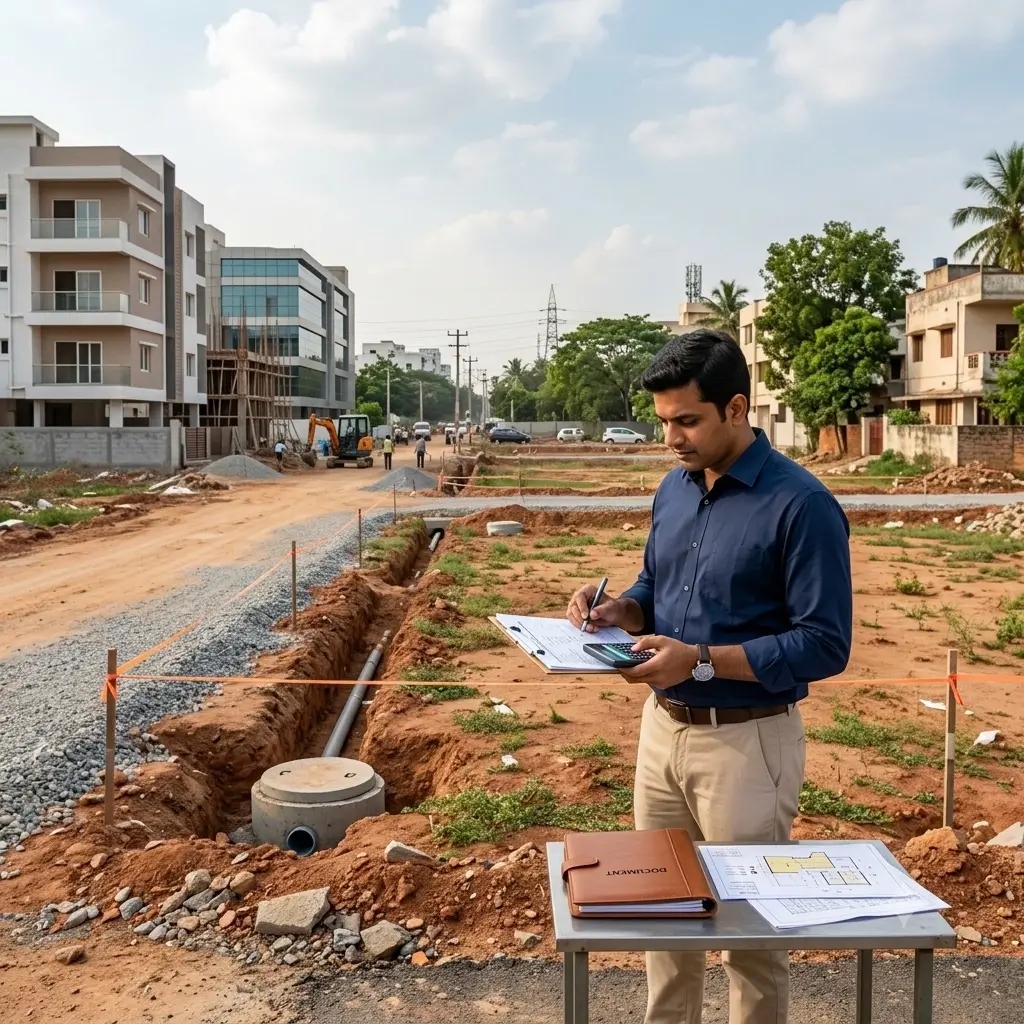
There is opportunity in the zoning aspect of land but there is also risk involved. Understanding zoning changes and land value also means considering the possibility that approval delays, unexpected expenses, or weak market demand may reduce the expected returns.
Potential buyers should determine the cost involved in making any changes in zoning rather than expecting high gains from it.
Land-Use Conversion and Development Charges
Changing the use of the land may incur costs according to zoning regulations.
Possible expenses include:
- Conversion charges
- Development charges
- Approval fees
- Infrastructure charges
- Professional fees
- Survey and documentation costs
This must be taken into consideration when the prospective gain is calculated.
Approval Delays and Regulatory Uncertainty
Changes in planning processes take time.
It might also be changed, delayed or outrightly denied.
Investors should therefore avoid assuming that the zoning process will succeed without any problem.
Infrastructure and Development Costs
Even after zoning approval, a plot may require significant investment before development can begin.
Costs can include:
- Road improvements
- Drainage
- Water connections
- Electricity connections
- Site preparation
- Construction
- Parking
- Other required infrastructure
The value of the land should thus be analyzed alongside the cost of developing the site.
Environmental and Protected-Zone Restrictions
Environmental rules can limit development even when zoning appears favourable.
Depending on the location, restrictions may relate to:
- Water bodies
- Flood-prone areas
- Protected land
- Forest areas
- Wetlands
- Ecologically sensitive locations
These restrictions can significantly affect what can actually be developed.
Why a Proposed Zoning Change Is Not an Approved Change
This is one of the most important points for investors.
When assessing zoning changes and land value, investors must distinguish between a proposed change and an officially approved change before estimating potential returns.
There is a major difference between:
| Situation | What it means |
| Rumour | No official confirmation |
| Proposal | A change is being considered |
| Draft plan | A formal planning document may be under consideration |
| Approved change | The relevant authority has officially approved it |
| Implemented change | The new rules are actually in effect |
Never pay a premium simply because someone says a zoning change is coming.
How Zoning Potential Can Turn Into Real Property Value
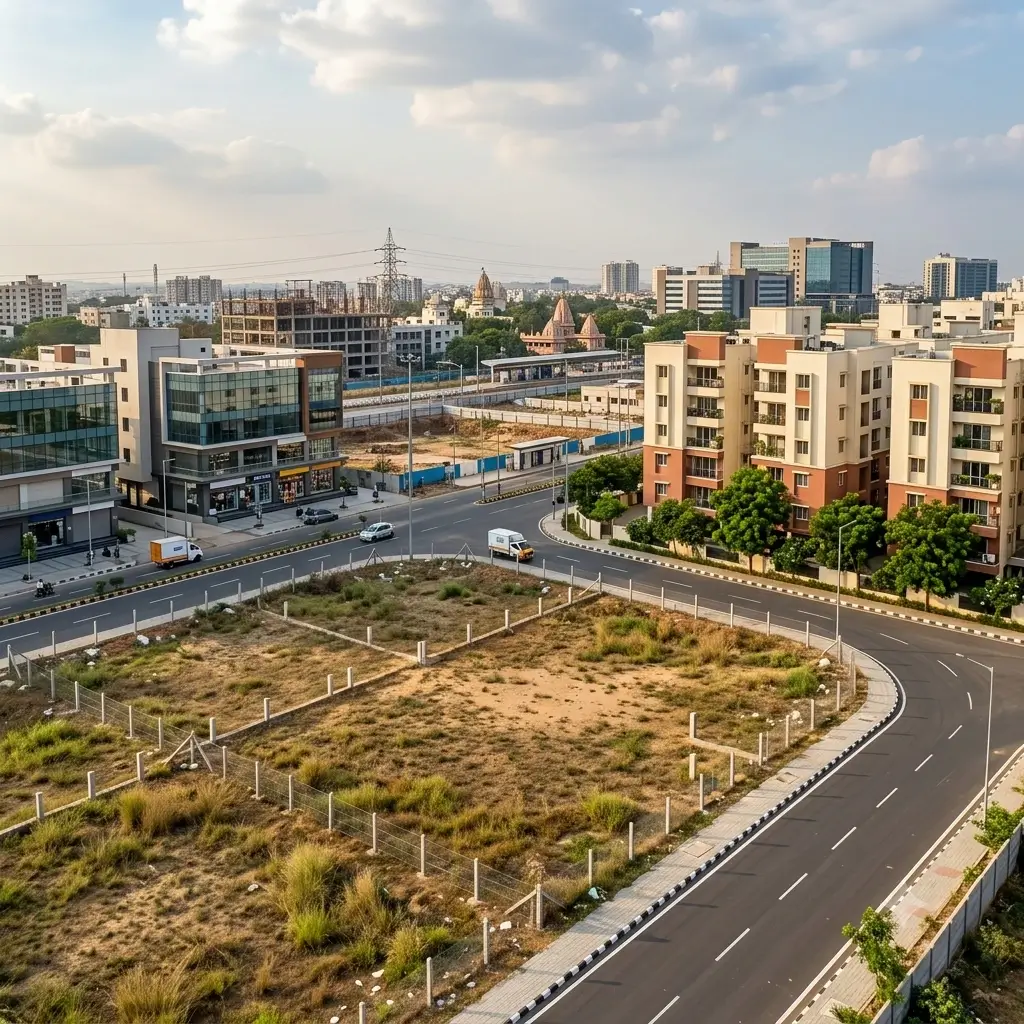
There is more meaning to zoning potential when other factors come into play.
In practice, zoning changes and land value are linked to whether the new development opportunities can generate realistic returns in the local market.
Land may have favorable zoning but still needs access, facilities, demand and economic activity. Ultimately, zoning changes and land value should be assessed together with development costs, local demand, and the likelihood of receiving the required approvals.
Infrastructure Improvements
Roads, transportation systems, utility systems, and other infrastructure projects may improve accessibility.
Greater accessibility may encourage residential, commercial, and other development.
New Business and Employment Centers
If employment centers increase in size, then the demand for housing, services, shops, and restaurants located nearby may increase.
Such changes may increase the importance of the land surrounding employment centers for developers and buyers.
Growing Residential Demand
If there is greater desire for living in a location, then its development potential may become more valuable.
Signs of residential demand can include:
- New apartment projects
- Increasing rental activity
- New schools
- Healthcare facilities
- Retail development
- Better public transport
Better Accessibility and Public Services
A location becomes more practical when residents and businesses can easily access everyday services.
Connectivity to:
- Schools
- Hospitals
- Markets
- Public transport
- Employment areas
- Shopping and entertainment
can influence how attractive a property becomes.
This is where zoning changes and land value come together with broader location factors. Zoning can create development potential, while infrastructure and demand can determine whether that potential is valuable in the market.
Frequently Asked Questions (FAQs)
How do zoning changes affect land value?
Zoning changes can affect land value by altering permitted uses, development density, or the amount of construction allowed. The actual impact depends on local demand, infrastructure, approval requirements, and development costs.
Can zoning changes increase the value of land?
Yes, a zoning change can increase land value when it allows uses or development levels that have strong market demand.
However, the effect depends on location, infrastructure, demand, development costs, and the exact zoning rules.
What is the difference between zoning and land-use change?
Zoning refers to the planning rules that control how land can be used and developed.
A land-use change generally refers to changing the designated or permitted use of a particular property or area.
The exact process and terminology can differ between jurisdictions.
Can agricultural land become residential land?
In some locations, agricultural land may be converted for residential development if the applicable planning rules allow it and the required approvals are obtained.
Investors should check the local conversion process, charges, restrictions, and development permissions before buying.
Does commercial zoning always make a plot more valuable?
No.
Commercial zoning can create additional opportunities, but value still depends on location, road access, visibility, customer demand, competition, development costs, and the specific commercial activities allowed.
How does FAR or FSI affect land value?
FAR or FSI can affect how much floor area may be developed on a plot, subject to applicable rules.
A higher permitted development capacity may make a plot more attractive to a developer, but the additional construction cost and other requirements must also be considered.
Can investors buy land before a zoning change?
They can, but doing so involves additional uncertainty.
A proposed zoning change may be delayed, modified, or not approved. Anyone considering such an investment should verify official planning information and understand the risks before paying a premium.
What risks should investors consider before buying land based on a proposed zoning change?
Key risks include:
- The change being recommended might not be accepted
- Approval may take longer than expected
- Development costs may be higher than expected
- Infrastructure may not arrive on schedule
- Market demand may remain weak
- Environmental or other restrictions may apply
- The final zoning rules may differ from expectations
How can I check whether a plot may be affected by future zoning changes?
Start with official planning and land-use information for the area.
You can also check:
- Master plans
- Future land-use plans
- Approved infrastructure projects
- Zoning maps
- Local planning authority information
- Development regulations
- Recent activity in nearby areas
It is also useful to compare the information with the property’s title documents and other relevant records.
Conclusion
Alterations in zoning regulations may prove crucial in deciding the future development prospects of the piece of land. Alteration in the type of permitted use, density, and development of a piece of land may prove to be very beneficial for its development.
Nevertheless, zoning alteration and valuation of the piece of land must never be thought about independently of the other aspects such as location, development possibilities, cost of development, and so forth.
Prior to making any investment decisions in a particular piece of land, one must always look beyond the possibility of a zoning change. One must examine all the aspects of approval, building possibilities, costs, and the demand in the surrounding market area.
1 thought on “Zoning Changes and Land Value: 7 Powerful Ways to Increase Plot Value”