

The choice of a property to purchase isn’t merely about acquiring a favourable rate or an appealing residence. The choice of locale itself could have a much greater role in how a particular property fares in the future. A neighbourhood that looks appealing today could become undesirable tomorrow if connectivity doesn’t improve, jobs begin to drift away, or basic amenities can’t keep pace with a growing population.
This is why more and more investors are looking towards **future-proof real estate locations** – properties that remain relevant, connected, livable, and in demand as the city in which they are situated shifts over time.
Future-proof doesn’t imply guaranteed property appreciation, but it does suggest that the locale may possess inherent traits which help secure longevity and minimize investment risk.
What Makes a Location Future-Proof?

A future-proof region typically boasts strong infrastructure networks, an active economy, a growing population, decent amenities and a track record of future resilience. However, none alone will render a place ‘future-proof’. Consider: A region might have brilliant transport links but poor job prospects, or an economy that’s booming but suffers from poor drainage or a lack of schooling and healthcare. Both situations can create problems for property owners in the future.
When evaluating future-proof real estate locations, investors should look beyond what is available today and ask what the area could look like five, ten, or even fifteen years from now.
Some important signs include:
- Improving roads and public transportation
- New infrastructure projects
- Growing employment opportunities
- Increasing population and housing demand
- Access to schools, healthcare, shops, and other daily essentials
- Strong rental demand
- Lower exposure to major climate and environmental risks
The goal is to find a location where several of these factors are developing together.
Infrastructure, Connectivity, and Future Development
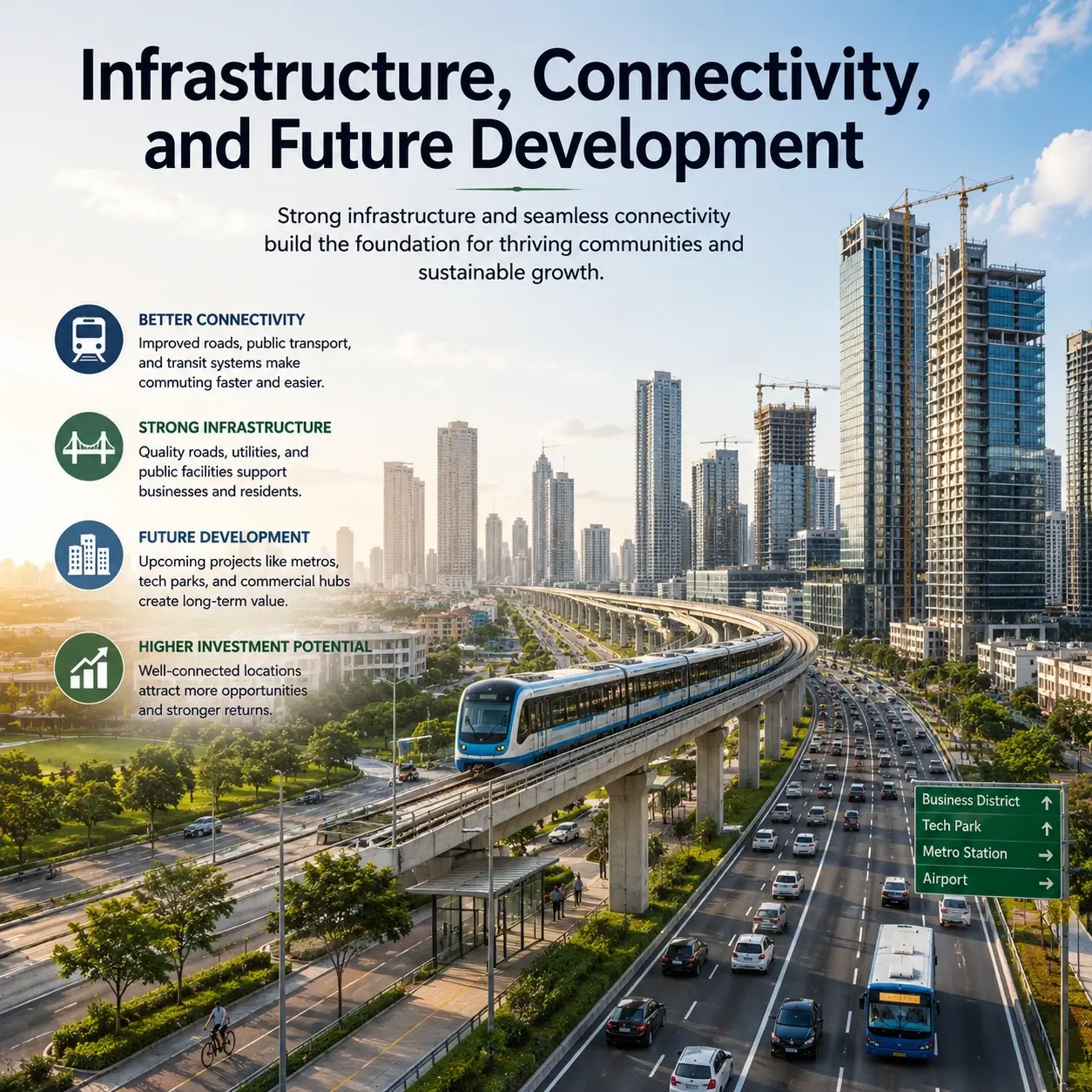
Although there’s certainly much more to consider for a location, in most cases, the overall quality of physical infrastructure may be the most influential element for a particular place to move forward. The quality of its transport networks, public services, facilities, roads and utilities could make it more approachable to the citizens and companies that may opt to reside or set up a business there.
Nevertheless, while the infrastructure itself existing at the present might tell future Investors a lot about what to expect of a given region, projected or progressing projects can also indicate this development.
This is particularly important when identifying future-proof real estate locations, as infrastructure can influence accessibility and demand for years to come.
Roads and Public Transportation
Accessibility The ease of commuting to and from a place is what makes it desirable – to owners and renters alike. Most people want to live somewhere where they can get to work, school, stores and other necessary facilities without spending more than a reasonable amount of time to travel. Road expansions, new bus lines, metro/subway projects, railway upgrades and increased accessibility to national highways can improve connectivity and thus the utility of a neighborhood.
Say a neighborhood was initially very remote, but a major new transportation link is constructed.
That place now opens up to commuters and business, thereby increasing the desirability of properties there. However, property investors need to look beyond the label “close to” a highway or transit system and look at real transit time.
Planned Infrastructure Projects
Future infrastructure can be a major reason why an area attracts real estate investors.New highways, transit lines, office districts, an airport, a school, or other community buildings, or commercial developments can alter the feel of a community. Before investing in a property to benefit from these anticipated changes, see whether the proposed project has been officially announced, approved and budgeted. Rumours or announcements alone are not a built piece of infrastructure.
But don’t forget to weigh potential negative consequences – a new highway might offer better access, but it is likely going to be noisy for those living beside it.
Future-proof real estate locations often benefit when planned roads, transit systems, business districts, and public facilities are actually completed as expected.
A savvy investor considers benefits and risks.
Economic and Population Growth
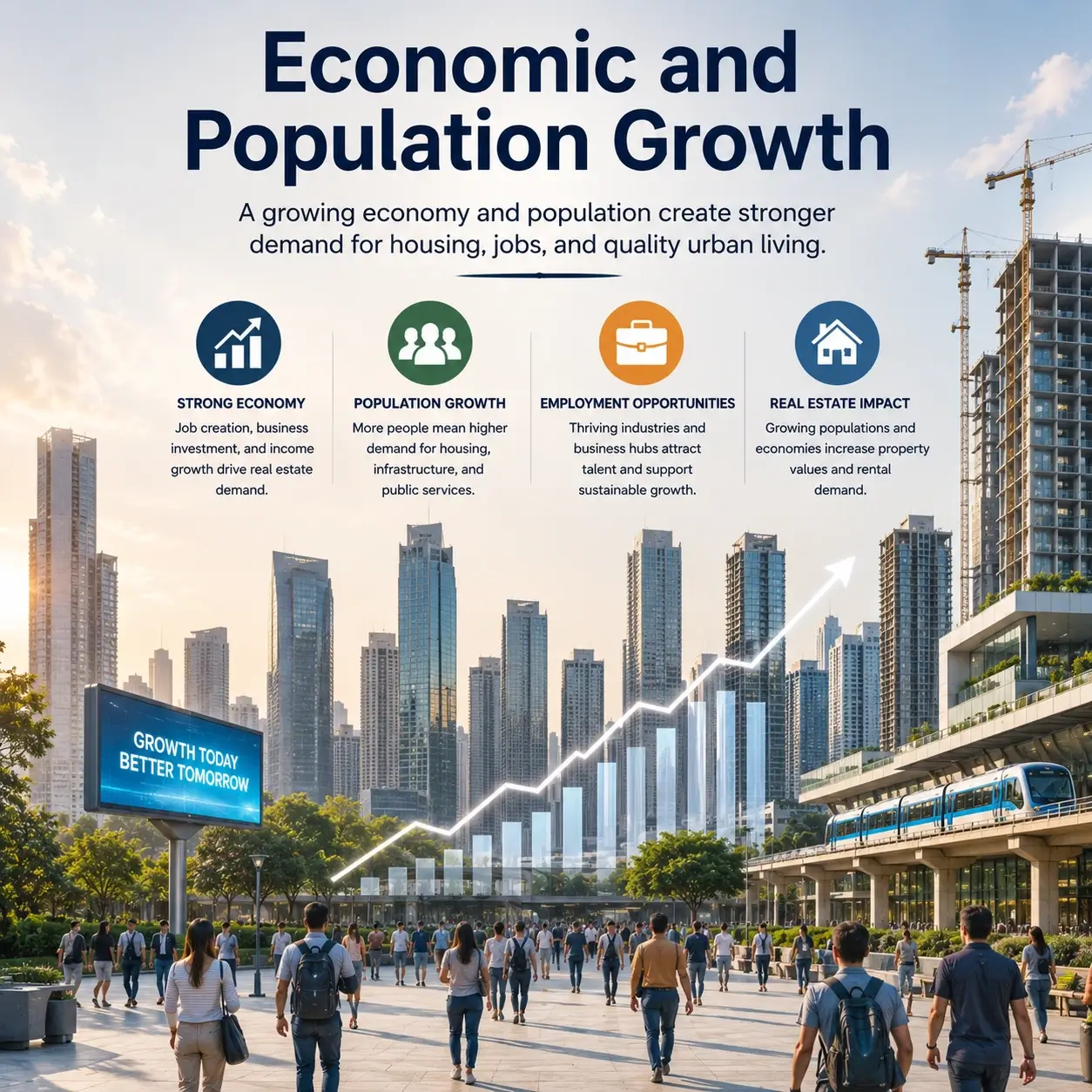
Economic Development A well-regarded local economy creates a strong local real estate market because it means employers have growth expectations in the areas around them and they are more likely to add to their workforces. When the workforce expands the local population grows, and this translates to more people looking for rental properties in addition to purchasing apartments, townhomes and single-family properties or new commercial properties for businesses. A population expansion fueled by improved job prospects are often more valuable for real estate investors than one fueled by a short term project where growth could diminish over time.
Strong economic activity and balanced population growth can make future-proof real estate locations more attractive to investors seeking long-term demand.
Job Opportunities and Business Growth
Employment: This is a major contributor to housing demand. Locations of a reasonable commute to places such as offices, technology and industrial parks, colleges, universities and hospitals often draw in demand because of the ease of access to jobs and employment. This makes economic diversity an important factor when choosing future-proof real estate locations.
Look for signs such as:
- New companies entering the area
- Existing businesses expanding
- New commercial or business districts
- Growth in employment opportunities
- Improving transport connections to employment hubs
A diverse local economy can also be beneficial. If an area depends heavily on one employer or one industry, a major economic change could affect property demand.
Population Growth and Housing Demand
The population may just outstrip housing supply. When population increases the amount of apartment rentals, single-family homes for purchase and hire, shops, services etc needed can also shoot up. Conversely too much of a boost in the population rate can put a pressure on the area’s infrastructure.
Be it traffic congestion, water resources, public amenities or other public facilities, these can become over-whelmed too.
Therefore investors should aim for more balanced population growth and also where employment and the local infrastructure are not being outpaced by population growth and housing supply. This balance is one of the key qualities investors should look for when assessing future-proof real estate locations.
This balance can help make future-proof real estate locations more attractive for investors looking beyond short-term gains.
Amenities, Livability, and Rental Demand
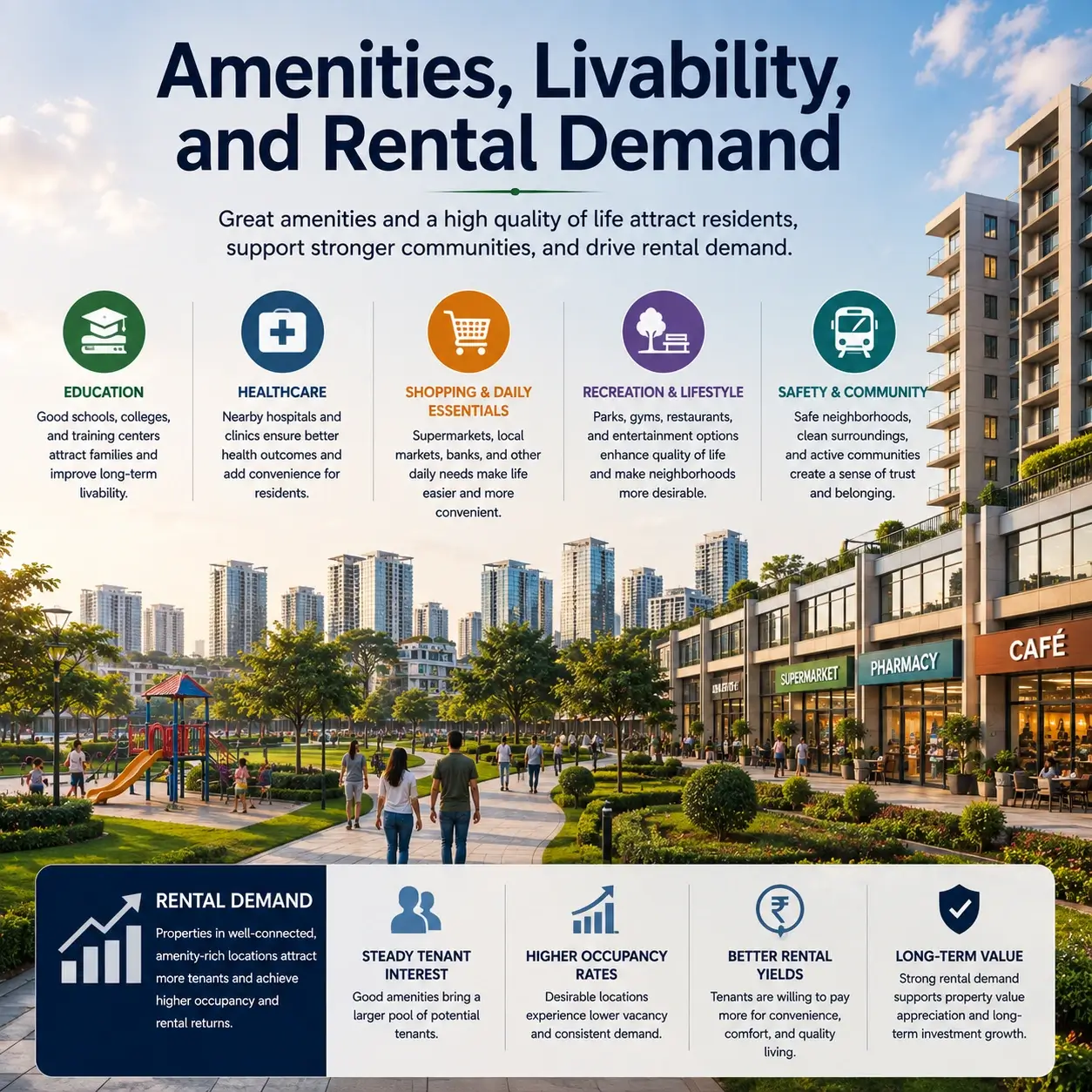
People do not choose a home based only on its walls and rooms. The surrounding neighbourhood plays a major role in everyday life.
If a property is close to a selection of schools, hospitals, shops, restaurants and a park, for example it is considered to have high livability; high livability means that the property is still appealing and can still attract tenants or potential owners at a time of low property demand.
These qualities can help future-proof real estate locations remain attractive to buyers and tenants as the surrounding area develops.
Schools, Healthcare, and Daily Essentials
Access to essential services is critical in establishing a location as appealing for families, professionals, and seniors. The existence of adequate schools may be sufficient to entice families, while clinics or doctors offices will be desirable to other buyer segments. Food markets, drug stores, restaurants, and financial institutions will are generally essential to most buyers of a location. To judge the convenience of a location, you may wish to think how much distance a hypothetical resident would travel from that location just to handle daily shopping tasks.
| Factor | What to Look For |
| Education | Schools, colleges, training centres |
| Healthcare | Hospitals, clinics, pharmacies |
| Shopping | Supermarkets, local markets, retail centres |
| Recreation | Parks, gyms, community spaces |
| Transport | Buses, metro, rail, major roads |
Rental Demand and Community Development
Demand for rent can also be an indicator of a location’s quality. Neighborhoods near work sites, universities, hospitals, or transportation hubs may have strong rental demand due to ease of access for occupants. Nonetheless, don’t expect all emerging neighborhoods to have strong rental demand automatically. Instead, check on existing rentals, vacancy rates, the type of tenant profile, and the amount of new housing construction in future-proof real estate locations.
Town building can be another aspect to assess. Neighborboods with considered public areas, retailers and services, social activities, are likely to improve in desirability over time.
Climate Resilience and Long-Term Risks
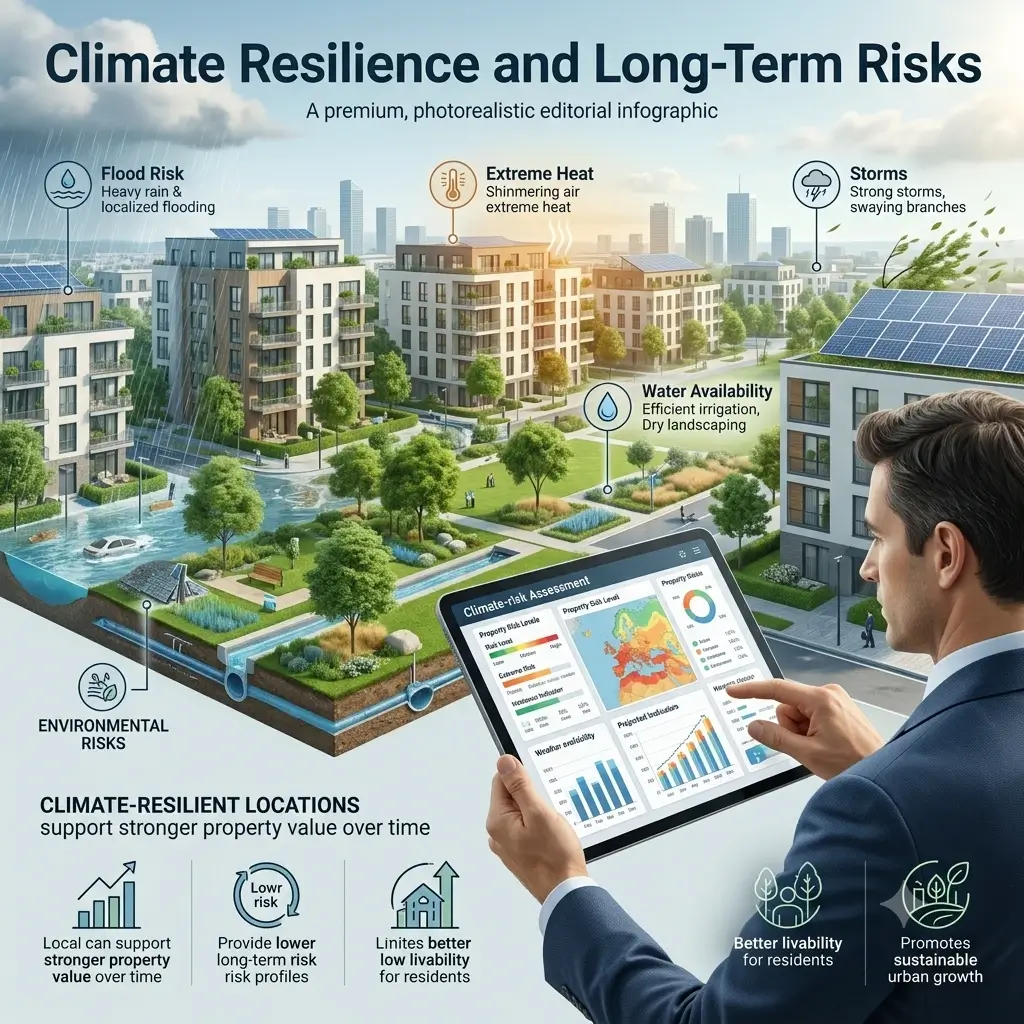
A location might have high growth potential, but it may involve some substantial long-term risks. Climatic and environmental considerations are increasingly central to real estate decisions. Natural hazards, including flooding, heat, droughts, storms and lack of storm water drainage, are all likely to have major impacts on property maintenance, insurance, construction and future demand.
For this reason, climate resilience should be part of the process of identifying future-proof real estate locations for long-term investment. Areas with strong rental demand and steady community development are more likely to remain among the future-proof real estate locations investors consider for long-term opportunities.
Flooding, Heat, and Water Availability
In the first instance, look into the history of flooding in the area, water-related issues. Find out if the property lies within a flood-prone region, check drainage infrastructure if any. Water sources: When it comes to water supply – many rapidly developing localities face an increasing demand from their swelling population, leading to strain on the water supply.
A hot location: Localities with less vegetational cover, high automobile traffic, closely built homes typically tend to generate greater heat which can impact comfortable living and power bills.
A location that offers measures for all these pressures, ideally well planned out infrastructure that anticipates it, will be future proof.
Environmental Risks to Consider
Investors need to consider present and future environmental risk. These may include:
- Flood-prone areas
- Water shortages
- Extreme heat
- Coastal or storm-related risks
- Poor air quality
- Land or soil problems
- Weak drainage systems
We’re not trying to find a “no risk area,” although that may not be realistic. It’s more about whether the investor should invest the funds, or if the region will have the structure and planning needed.
How to Evaluate a Location Before Investing
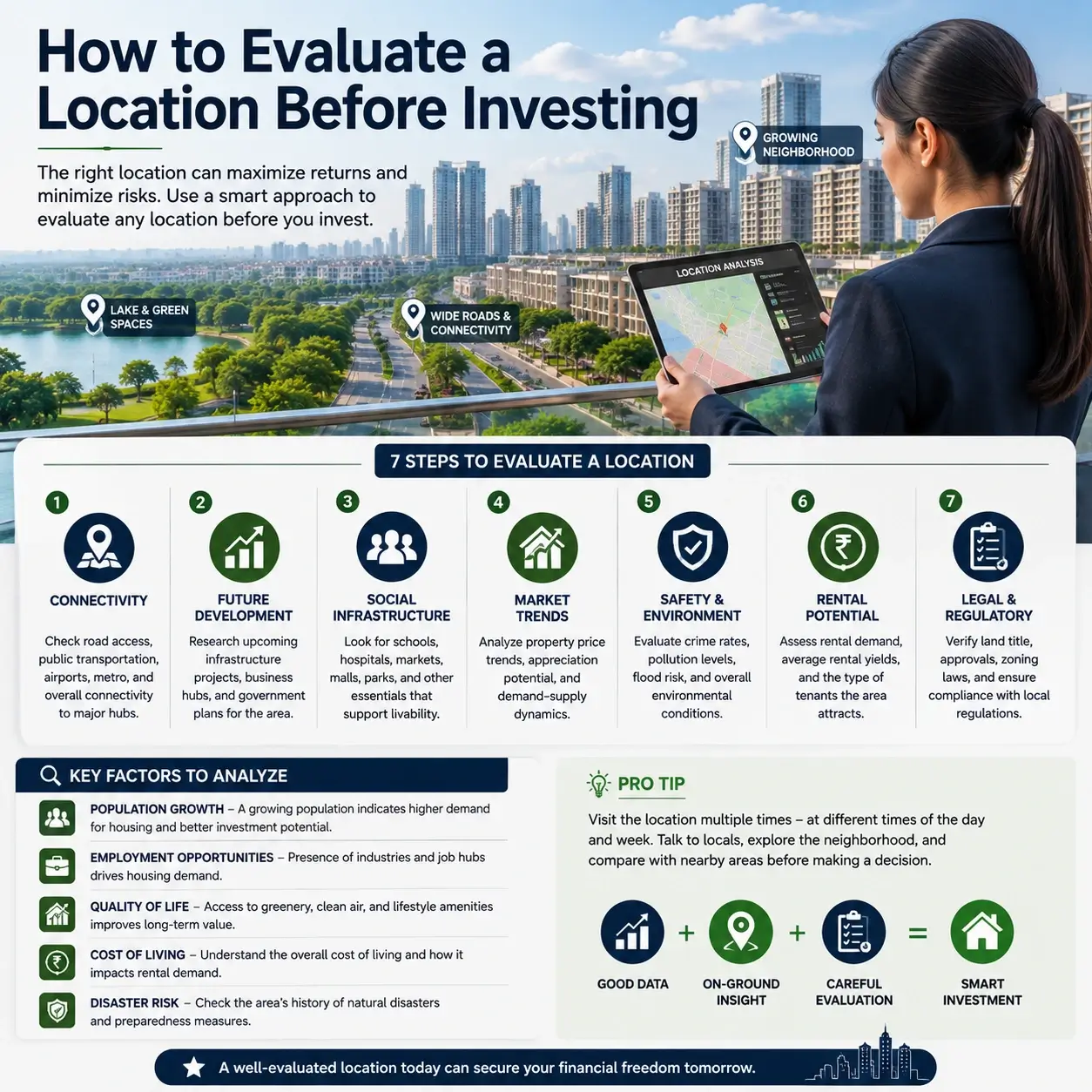
“Discover Future Proof Real Estate Investment Locations But a place will require in-depth analysis not by reading adverts or talking to locals but you need to do your own research. Check the areas existing infrastructure and any upcoming development, job opportunities, demographic changes, rental demand, facilities, and risk in the area in environmental impacts etc. To do compare number of areas will be very useful.
Comparing several areas can make it easier to identify future-proof real estate locations with stronger long-term potential.
A simple checklist can include:
- Check current and planned transportation infrastructure.
- Research employment and business growth in the area.
- Study population and housing demand trends.
- Measure access to schools, healthcare, and daily essentials.
- Look at rental demand and vacancy levels.
- Research flooding, water availability, heat, and other environmental risks.
- Verify major development projects through reliable sources.
- Compare property prices with nearby locations.
By comparing these factors across different areas, investors can identify future-proof real estate locations based on real evidence rather than short-term hype
Most importantly, avoid investing solely because someone says an area is “the next big location.” A future-proof investment should be supported by several real indicators rather than speculation.
Frequently Asked Questions(FAQs)
What is a “future-proof” location for real estate?
A future-proof location for real estate includes characteristics that are likely to continue generating demand for properties well into the future. This could include robust infrastructure, job growth, population growth, amenities, transportation links, and climate resilience.
Are developing areas always good real estate investment destinations?
Not necessarily. Development can present opportunity, but investors need to carefully assess the quality of that development. Infrastructure, jobs, local demand, environmental considerations, etc., all need to be weighed.
How much will future public transportation impact a property’s future value?
It depends on factors like existing public transportation, how efficient it is, where it goes and how much is used.
Well-planned public transportation, especially transit, has often helped drive real estate value in many neighborhoods.
Should climate change impact my investment decision?
Absolutely.
Climate-change risks – things like flood exposure, water scarcity or excessive heat – have the potential to impact how easy or difficult it is to maintain a property, how livable the location becomes over time, insurance costs, the
resilience of infrastructure (like power and roads), and long-term demand.
How far into the future should I look at an investment location?
Since real estate is a long-term proposition, looking 5 to 15 years ahead at the potential of a location is a reasonable framework for an investment analysis.
The time frame will vary by property type and your individual goals.
Conclusion
Future-proof real estate locations are not defined by just the least price tag on the real estate on sale in the vicinity or a dazzling new development that made the news yesterday; but rather is driven by confluence of several factors working towards the long term. Robust connectivity and an ample availability of jobs, high populace rate, social infrastructure, tenant interest for rentals and of course, global climate changes, all hold substantial importance for the long term growth trajectory of the region.
Looking at infrastructure, employment, population, amenities, rental demand, and climate risks together can help investors identify future-proof real estate locations with stronger long-term potential.
So, prior to an actual stake into any area for property purchase, one needs to look at more than what is present in the locality right now and dive deeper in to understanding how it’s changing and why is the growth is here to stay!