
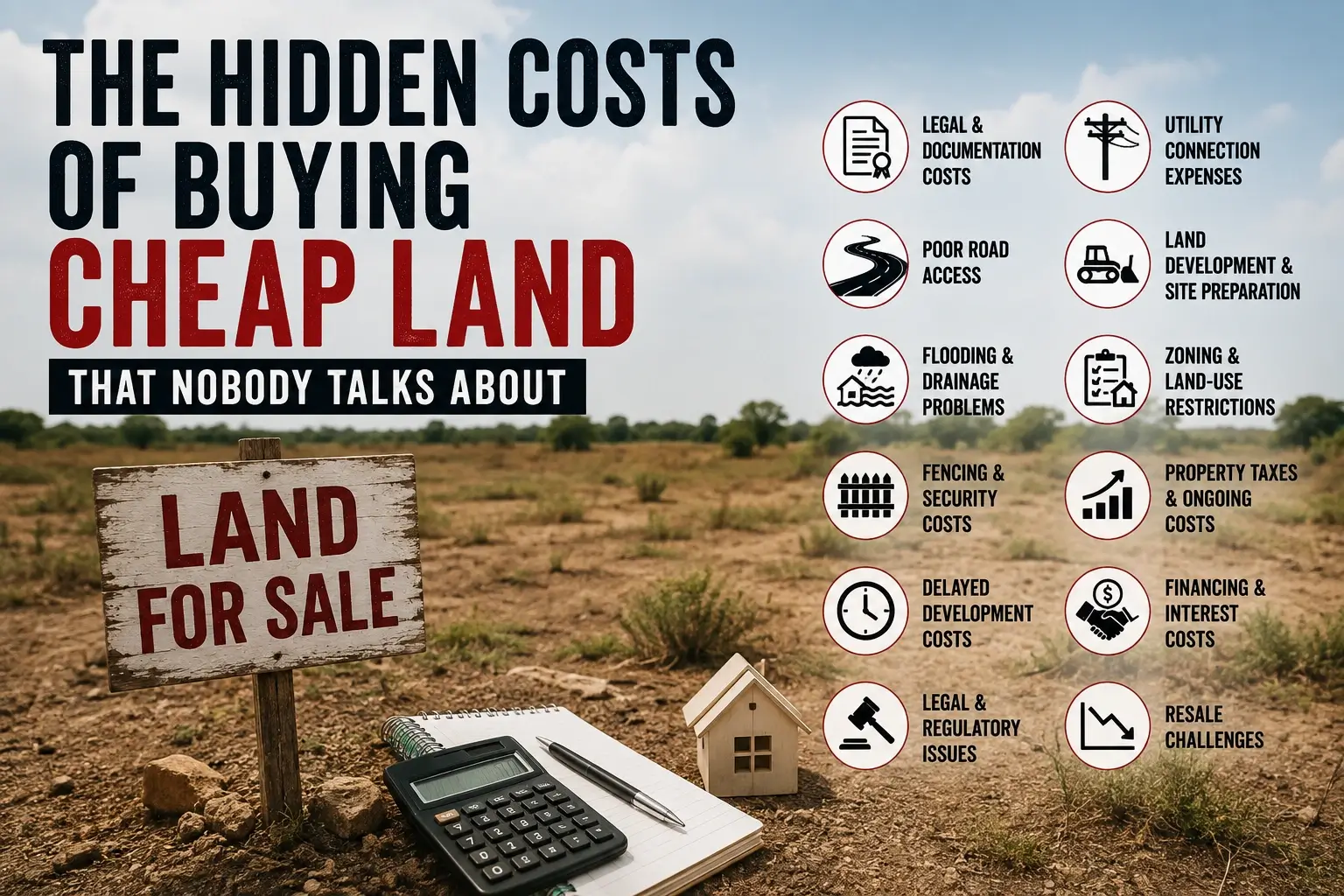
That is why the right comparison is not simply the price of cheap land. It is the total cost of getting the land ready for your intended use.
Buying cheap land can feel like a very smart way to enter real estate. A plot priced below similar properties may look like an opportunity to save money today and benefit from future appreciation tomorrow. The problem is that the price on the advertisement is rarely the complete cost of owning the land. The problem is that the price on the advertisement is rarely the complete cost of owning the land, which is why understanding the hidden costs of buying cheap land is so important.
That does not mean cheap land is always a bad investment. Some affordable plots are genuinely undervalued because an area is still developing. The important thing is to understand why the land is cheap and what you will have to spend after buying it.
The real question is not, “How much does this plot cost?” It is, “How much will this plot cost me before it becomes useful, and how much will it be worth when I want to sell?”
Why Is Some Land So Cheap?
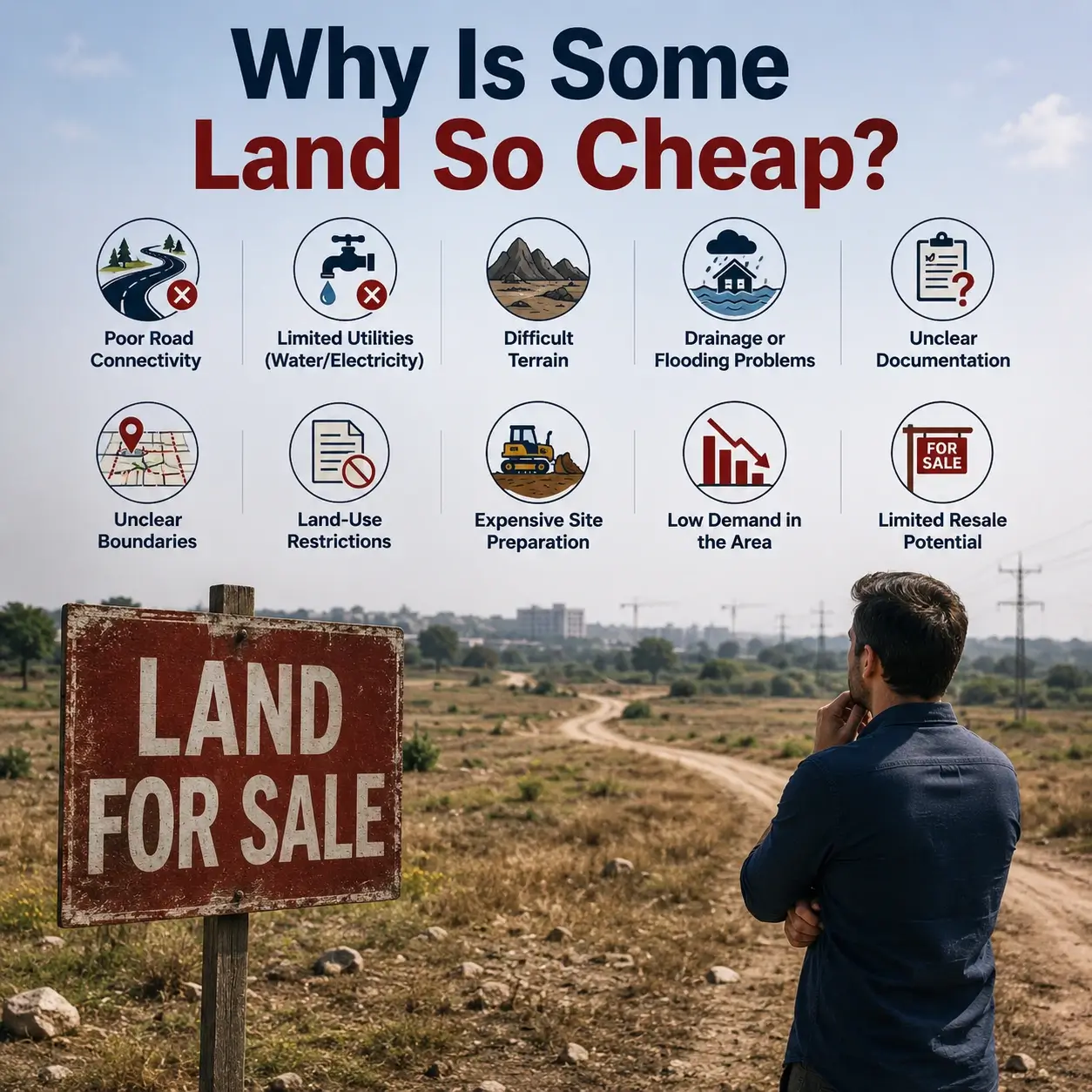
Land can be inexpensive for perfectly reasonable reasons. A location may be on the edge of a growing city, infrastructure may still be catching up, or a seller may simply need a quick transaction. In such cases, a lower price can create a genuine opportunity.
But a large price difference deserves investigation. Cheap land can also have problems that are not obvious from photographs or a short property listing.
Common reasons include:
- Poor road connectivity
- Limited electricity or water access
- Difficult terrain
- Drainage or flooding problems
- Unclear boundaries
- Documentation concerns
- Land-use restrictions
- Expensive site preparation
- Low demand in the surrounding area
- Limited resale potential
Before negotiating, ask the seller a simple question: why is this property cheaper than comparable land nearby? Then verify the answer independently.
Understanding the hidden costs of buying cheap land starts with identifying why the property is being offered below the prices of similar plots.
A good deal should become clearer when you investigate it. If every answer creates another question, slow the purchase down.
Legal and Documentation Costs
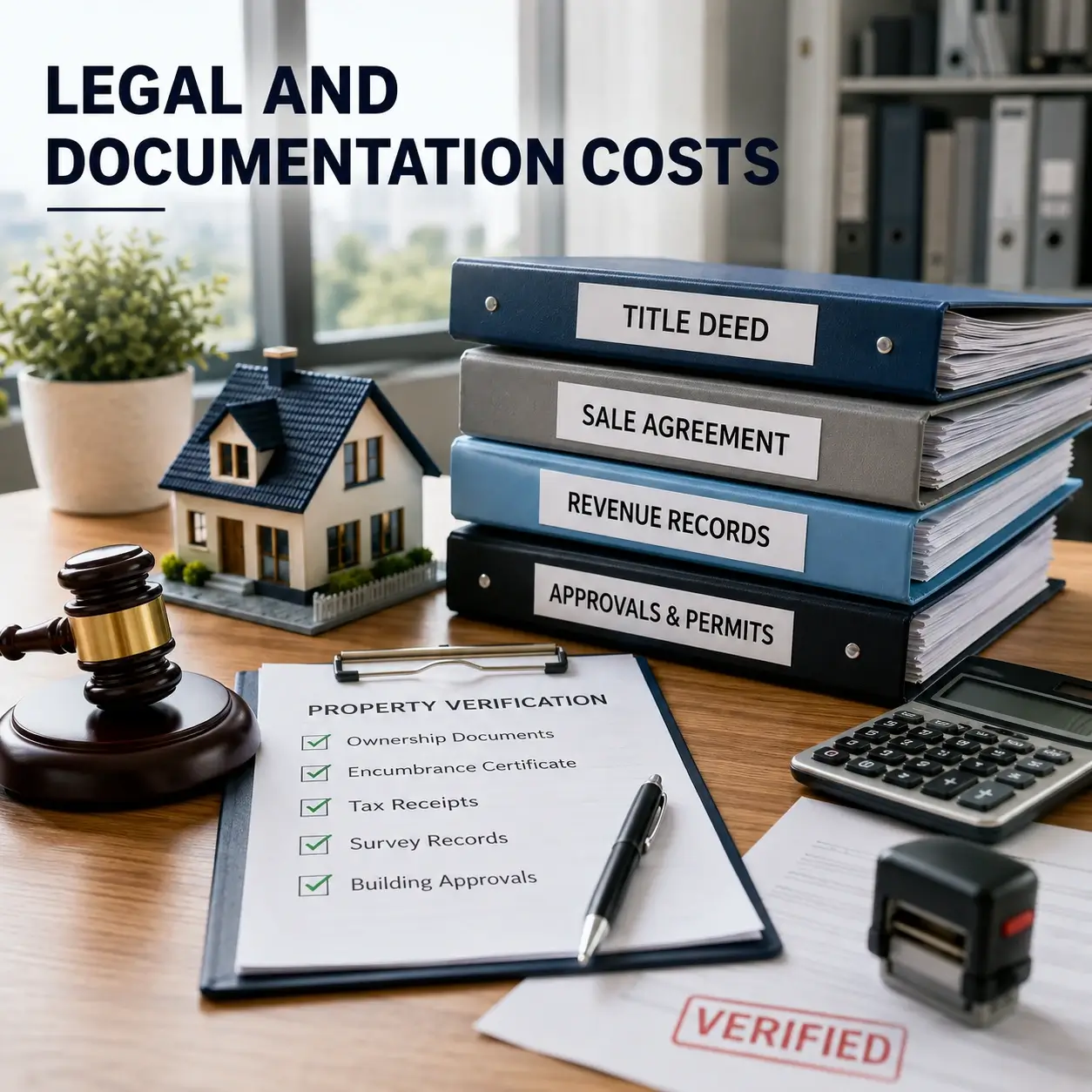
The first hidden expense of buying cheap land can appear before you even own the land. Proper legal due diligence may require professional help, document searches, certified copies, surveys, and other checks.
The seller’s name on a document is not enough. You need to know about the past history of the title and be assured that the one who is selling the land has the legal right to sell. You need to check for mortgages, claims, debts, inheritance problems, disputes on boundaries, or anything else that might complicate matters.
Depending on the property, your checklist may include:
- Ownership and title documents
- Previous sale or transfer records
- Encumbrance checks
- Revenue or municipal records
- Property tax receipts
- Survey records
- Layout or planning approvals
- Documents relating to land use
There are also other costs of buying cheap land, such as registration costs, taxes, legal expenses, and paperwork expenses.
These expenses are easy to ignore because they do not appear in the advertised price. Yet they are part of the money you need to spend to acquire the property safely.
Spending on verification may feel unnecessary when you are trying to buy cheaply. However, these checks can help uncover the hidden costs of buying cheap land before they become expensive problems.
It can be one of the best expenses in the entire transaction because discovering a problem before purchase is far better than discovering it after your money is committed.
Road Access Can Change the Whole Deal
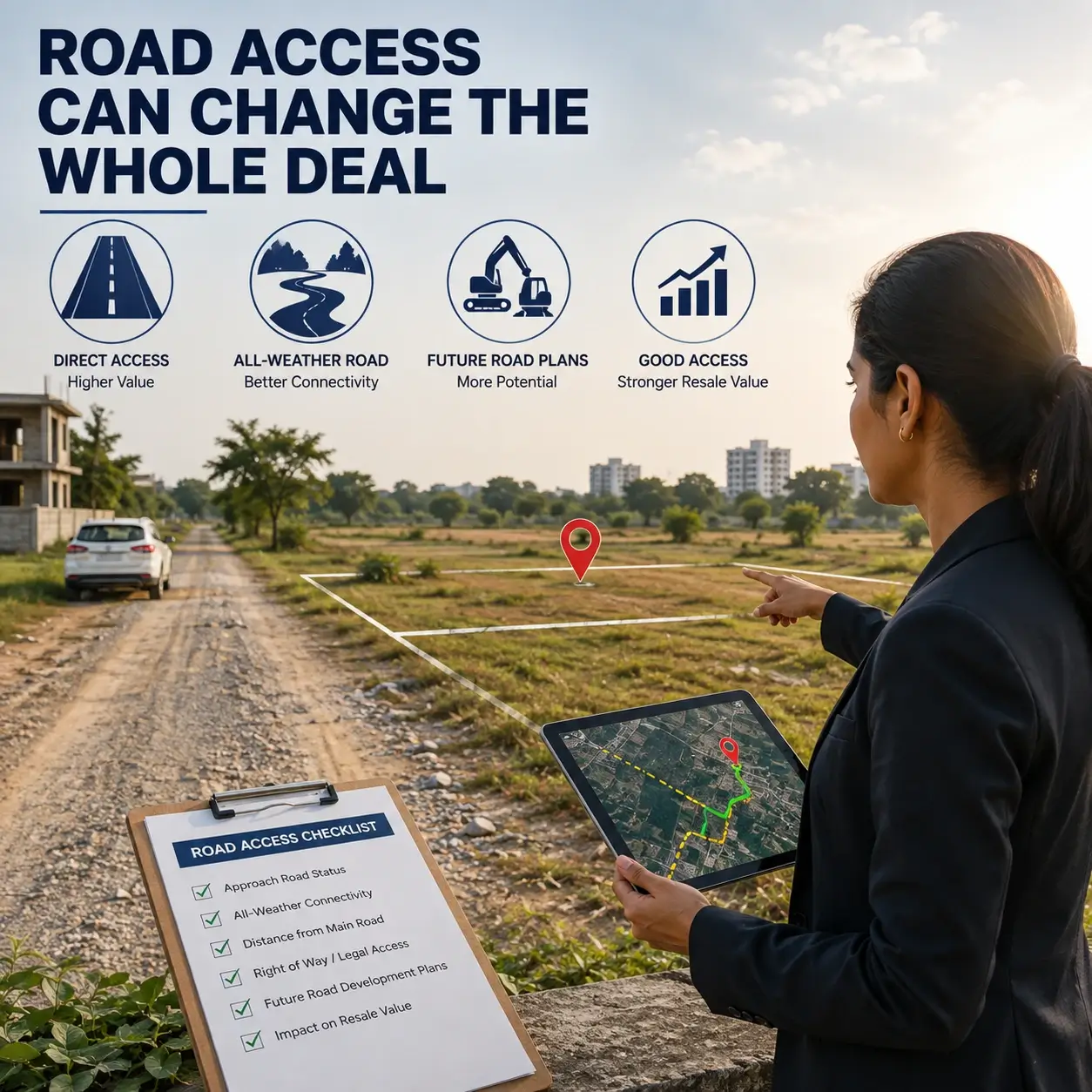
Poor access is therefore one of the hidden costs of buying cheap land that buyers should investigate before making a purchase.
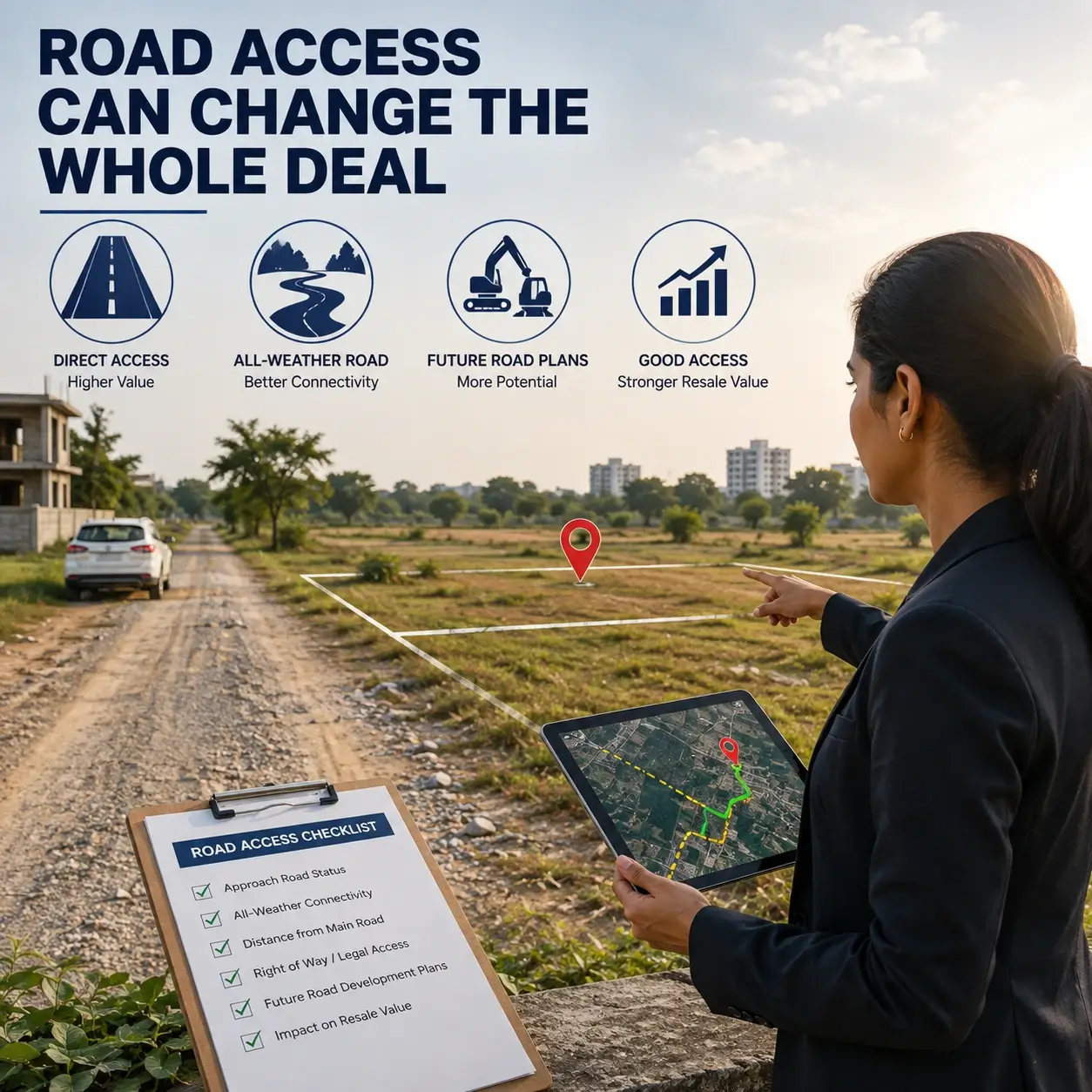
This is a point that should be considered. Although there may be a road marked on the map, the road leading to the land may be narrow, not be surfaced, private, or may be hard to navigate in case there are unfavorable weather conditions. In some instances, the road may cross another individual’s property, raising issues with regards to the legality of access.
For buyers, poor access is one of the hidden costs of buying cheap land because improving the route can require additional money and time. This is due to the fact that building will be difficult and costly since transport may not be easy.
Improving access may require:
- Clearing an existing route
- Widening a road
- Levelling the approach
- Adding road material
- Improving roadside drainage
- Creating a proper entrance
- Resolving access rights
- Sharing maintenance costs
Visit the property yourself. Do not judge access from a brochure or satellite image alone.
Utility Connections Are Not Always Ready
Another common hidden cost of buying cheap land is finding out that nearby infrastructure does not necessarily mean that your plot is connected.
One might see electricity poles in the distance, but connecting the plot to them may still take additional efforts. Water may be available in the neighborhood without being connected to your site. Wastewater and drainage can be even more complicated.
Depending on the location and your plans, you may need to budget for:
- Electricity connection
- Water connection
- Alternative water arrangements
- Wastewater or septic systems
- Drainage
- Internet and telecommunications
- Internal utility lines
These utility expenses are important to consider when calculating the hidden costs of buying cheap land.
Ask where the nearest connection points are and who is responsible for extending services to the property.
A seller saying “everything is nearby” is not the same as having a confirmed connection plan and cost estimate.
Site Preparation Can Eat Into Your Savings
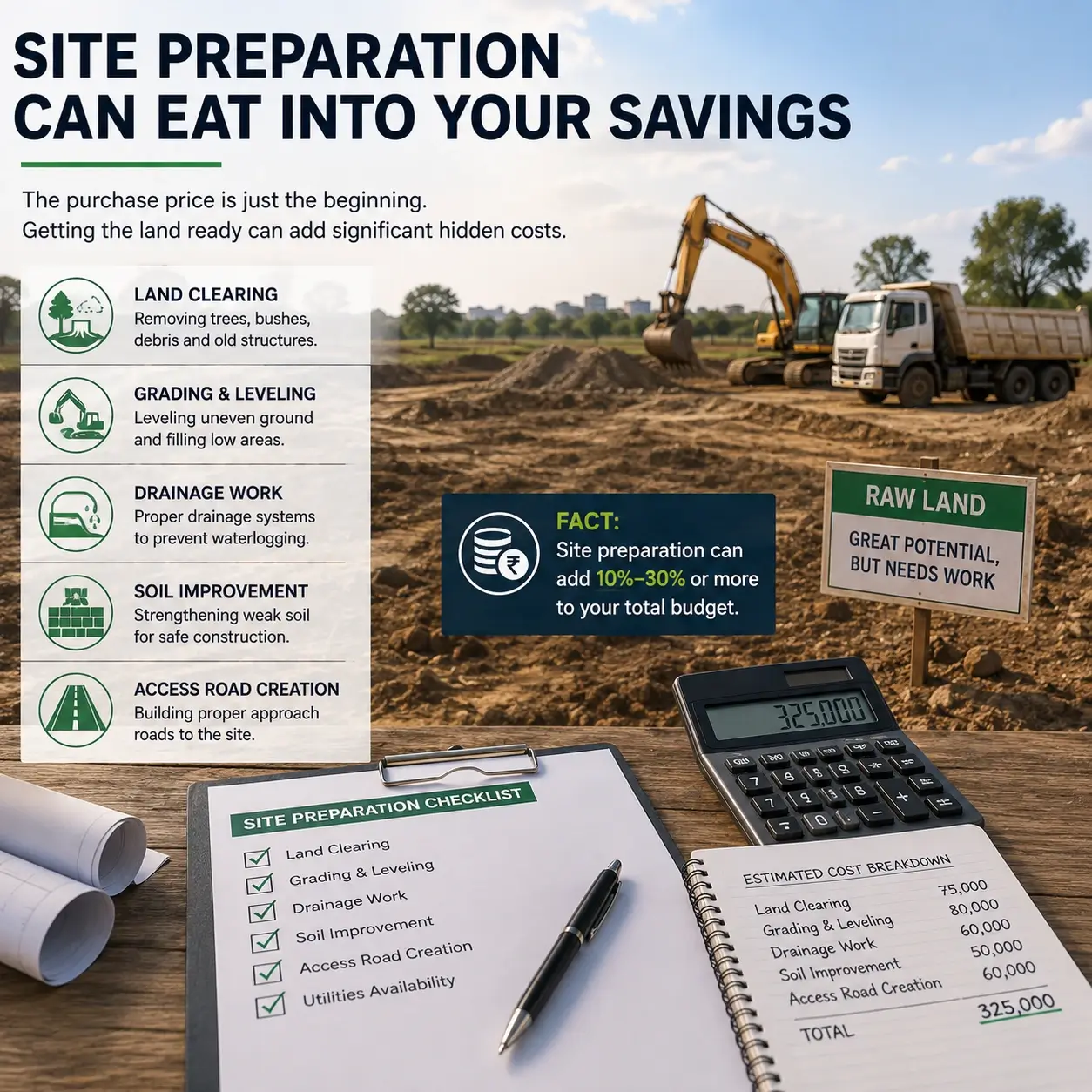
One of the biggest differences between a developed property and vacant land is the amount of work needed before construction.
Cheap land may be covered with vegetation, uneven, rocky, sloped, or lower than the surrounding road. It may need filling, excavation, levelling, clearing, or drainage before a foundation can be started.
Possible site-preparation expenses include:
- Clearing vegetation
- Removing rocks or debris
- Excavation
- Land filling
- Levelling
- Soil compaction
- Retaining structures
- Drainage work
Consider two plots. Plot A costs more but is flat and ready for development. Plot B is cheaper but needs extensive filling and drainage.
These expenses are important hidden costs of buying cheap land because they can significantly increase the amount you spend before construction even begins.
This is one of the most important hidden costs to consider when buying cheap land.
That is why the right comparison is not simply the price of cheap land. It is the total cost of getting the land ready for your intended use.
Soil Conditions Can Become a Construction Problem
This may be the case where the site appears ideal at first glance, but is challenging beneath the surface.
Soil has a great bearing on construction, especially when it comes to the kind of foundation necessary for the construction.
Soil study helps you to know about your purchase before construction starts.
This is especially important if you are purchasing land for a substantial house, commercial building, warehouse, or development project.
Paying for a professional assessment before purchase may seem like an extra cost, but it gives you information when you still have the power to change your decision.
If the land requires expensive engineering work, include that amount in your investment calculation instead of treating it as an unexpected construction expense later.
This is another hidden cost of buying cheap land that should be assessed before completing the purchase.
Flooding and Drainage Are Easy to Miss
Land viewed during a dry period can tell only part of the story.
A plot that looks perfectly usable on a sunny day may collect water during heavy rain. Nearby roads may also become difficult to use, even if the plot itself remains relatively dry.
Look for warning signs such as:
- Standing water
- Erosion
- Water marks
- Damaged roads
- Deep roadside drains
- Low-lying sections
- Raised neighboring buildings
- Blocked drainage channels
Talk to your neighbors. They might be able to tell you about flooding problems, quick drying of rain, and hard accessibility of that place when it is raining season.
Some solutions to fix drainage problems include filling, channels, culverts, pumping, raising the foundation, and more.
Moreover, flood risks will also affect your ability to resell the property, as future buyers will know the bad reputation of the place even if you put effort into making it better. These potential expenses are important to include when calculating the hidden costs of buying cheap land.
This is another reason why buyers need to consider the hidden costs of buying cheap land before deciding that a low purchase price is a good deal
Zoning Can Limit What You Build
Land acquisition doesn’t necessarily guarantee its suitability for use for different activities.
The planning laws and land use controls may determine whether the land is suitable for residential development, commercial purposes, rental housing, agriculture, or other activities. There may also be rules relating to setbacks, building height, plot coverage, subdivision, access, or protected areas.
This matters because your plans determine the land’s value to you.
If you purchase a plot expecting to build a large rental property and later discover that the permitted development is much smaller, the bargain may no longer be a bargain.
It is important to confirm the authorized use before purchasing from the relevant authority or professional.
Taxes and Holding Costs Continue After Purchase
The purchase is not the end of your spending when buying cheap land.
In case you want to keep the piece of land for some years, you should think about recurring expenses. This could depend on the type of land and include taxes, security, clearing vegetation, fencing repairs, local expenses, and interest on loans.
The empty land will be not profitable during this time, but there are expenses.
For instance, one can purchase the land with the aim of selling it in five years. During this time, the land will gain its value, but the owner should bear all expenses anyway.
A simple holding-cost table can make the situation clearer:
| Cost | Why It Matters |
| Property taxes | Recurring ownership expense |
| Security | Helps protect vacant land |
| Vegetation clearing | Keeps the property maintained |
| Fencing | Establishes and protects boundaries |
| Loan interest | Adds to the cost while debt remains |
| Local charges | May apply depending on the property |
Include these expenses when comparing investments.
These ongoing expenses are part of the hidden costs of buying cheap land and should be included in your overall investment calculation.
Delays Can Become a Hidden Financial Cost
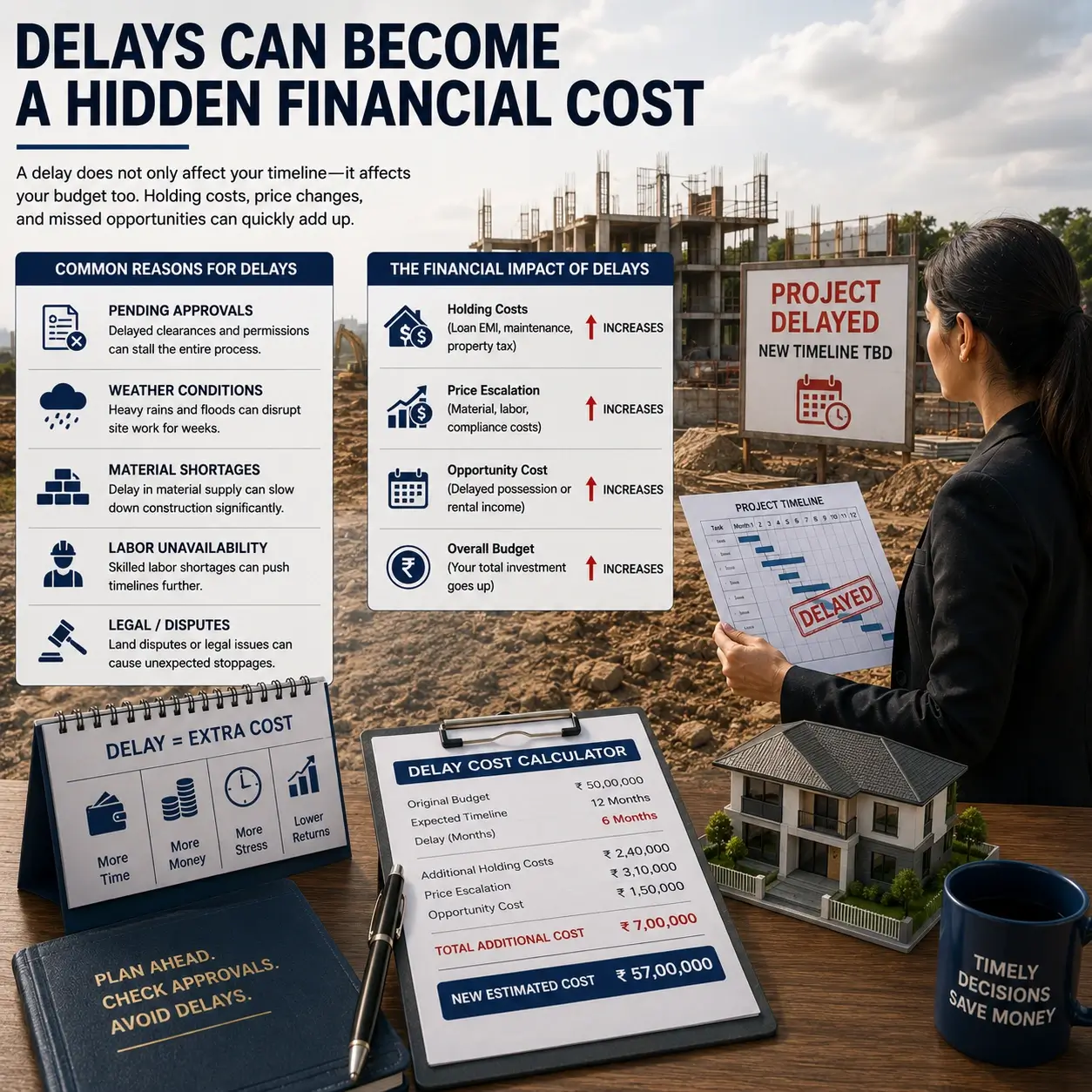
Time is another expense buyers rarely include in their original calculations.
Suppose you expect to begin construction six months after buying the land. Then documentation takes longer, approvals are delayed, utilities are unavailable, and site preparation reveals another problem.
For this reason, delays should be included when estimating the hidden costs of buying cheap land.
During that period, you may still pay:
- Loan interest
- Taxes
- Security
- Maintenance
- Professional Fees
- Maintenance
- Additional site expenses
Your money is also tied up in an asset that may not produce income. For this reason, delays should also be considered when calculating the hidden costs of buying cheap land.
This is why an attractive land deal should be evaluated not only on price, but also on how quickly and realistically you can use it.
Cheap Land May Be Harder to Resell
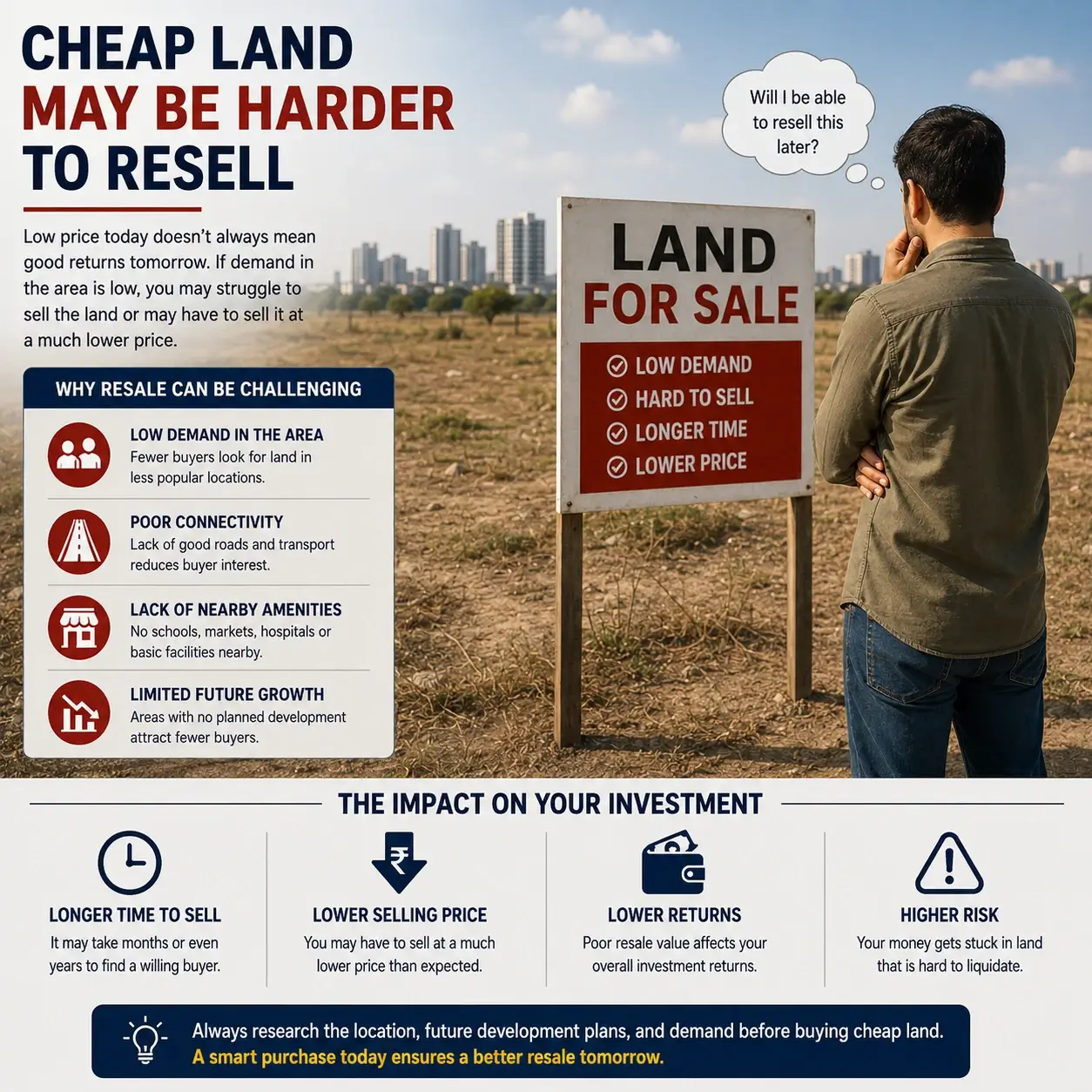
A smart buyer thinks about the exit before entering the investment. This is especially important when assessing the hidden costs of buying cheap land, because the factors that reduce the purchase price can also reduce future demand.
Considering these factors can help reveal the hidden costs of buying cheap land before they affect your investment.
Ask yourself who will want this land in three, five, or ten years.
If the property has poor access, limited infrastructure, unusual dimensions, legal uncertainty, or development restrictions, the same issues that made it cheap may make it difficult to sell. These factors can turn the initial savings from a cheap land purchase into additional investment costs.
Look at the surrounding area for evidence of genuine demand:
- New homes being built
- Better Roads
- New businesses
- Improved utilities
- Growing employment centers
- Increasing population
- Active property transactions
Future development is not guaranteed, so avoid paying today’s money based entirely on a promise about tomorrow.
When assessing the hidden costs of buying cheap land, buyers should also consider how easily the property can be resold in the future.
Why Price Per Square Foot Can Be Misleading
Price per square foot is useful for comparison, but it should never be the only number you consider.
| Factor | Plot A | Plot B |
| Purchase price | Higher | Lower |
| Road access | Good | Limited |
| Utilities | Available | Need work |
| Site preparation | Low | High |
| Drainage | Good | Needs improvement |
| Development risk | Lower | Higher |
| Resale appeal | Stronger | Less certain |
This is why the hidden costs of buying cheap land must be considered alongside the advertised price.
How to Calculate the True Cost
A simple formula can help you understand the hidden costs of buying cheap land:
True Land Cost = Purchase Price + Transaction Costs + Legal Costs + Site Preparation + Infrastructure + Financing Costs + Holding Costs
You can also divide these land purchase costs into three stages.
| Stage | Costs to Consider |
| Before purchase | Legal checks, survey, soil assessment |
| Purchase | Price, registration, taxes, professional fees |
| After purchase | Utilities, access, preparation, fencing, financing, maintenance |
This approach gives you a much more realistic picture of the investment.
Sometimes a plot that costs more upfront is actually cheaper overall because it is already serviced, accessible, legally clear, and ready for development.
How to Avoid Hidden Costs When Buying Land
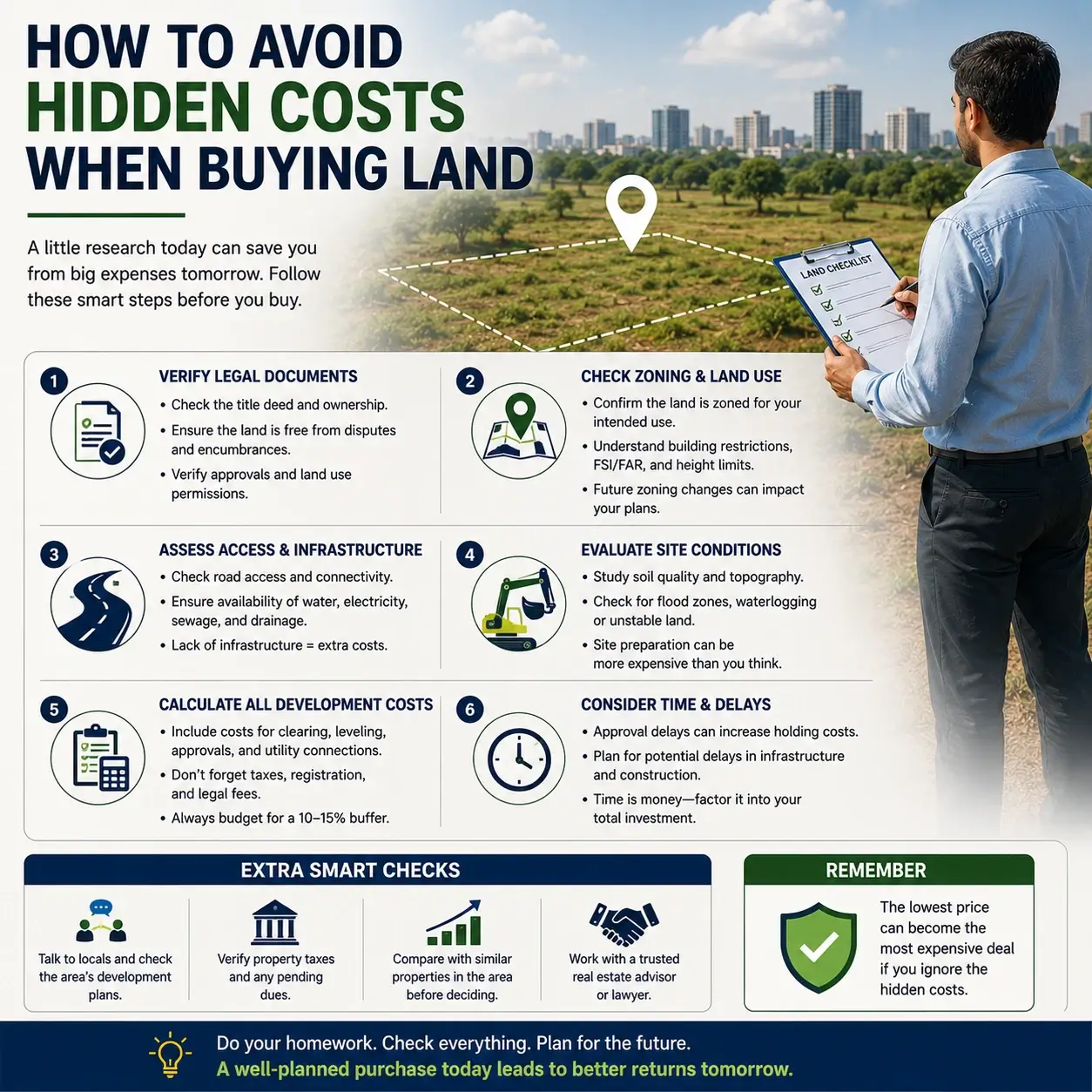
You do not need to predict every expense, but you should investigate the major hidden costs of buying cheap land before committing money.
Use this checklist:
- Verify ownership and title documents.
- Check relevant records and outstanding dues.
- Confirm the seller’s authority to sell.
- Verify the plot boundaries.
- Visit the property personally.
- Check road access in real conditions.
- Confirm utility availability and connection costs.
- Investigate drainage and flood history.
- Verify permitted land use.
- Estimate site-preparation costs
- Consider a soil assessment where appropriate.
- Check environmental restrictions.
- Calculate taxes and holding costs.
- Research nearby development.
- Think about future resale demand.
- Keep a contingency reserve.
Taking these steps can help you identify the hidden costs of buying cheap land before they become unexpected financial problems.
It is also useful to visit the property more than once. A careful inspection can reveal some of the hidden costs of buying cheap land that may not be obvious during a single visit. A location can feel different during busy traffic, heavy rain, or after dark.
Is Buying Cheap Land Still a Good Investment?
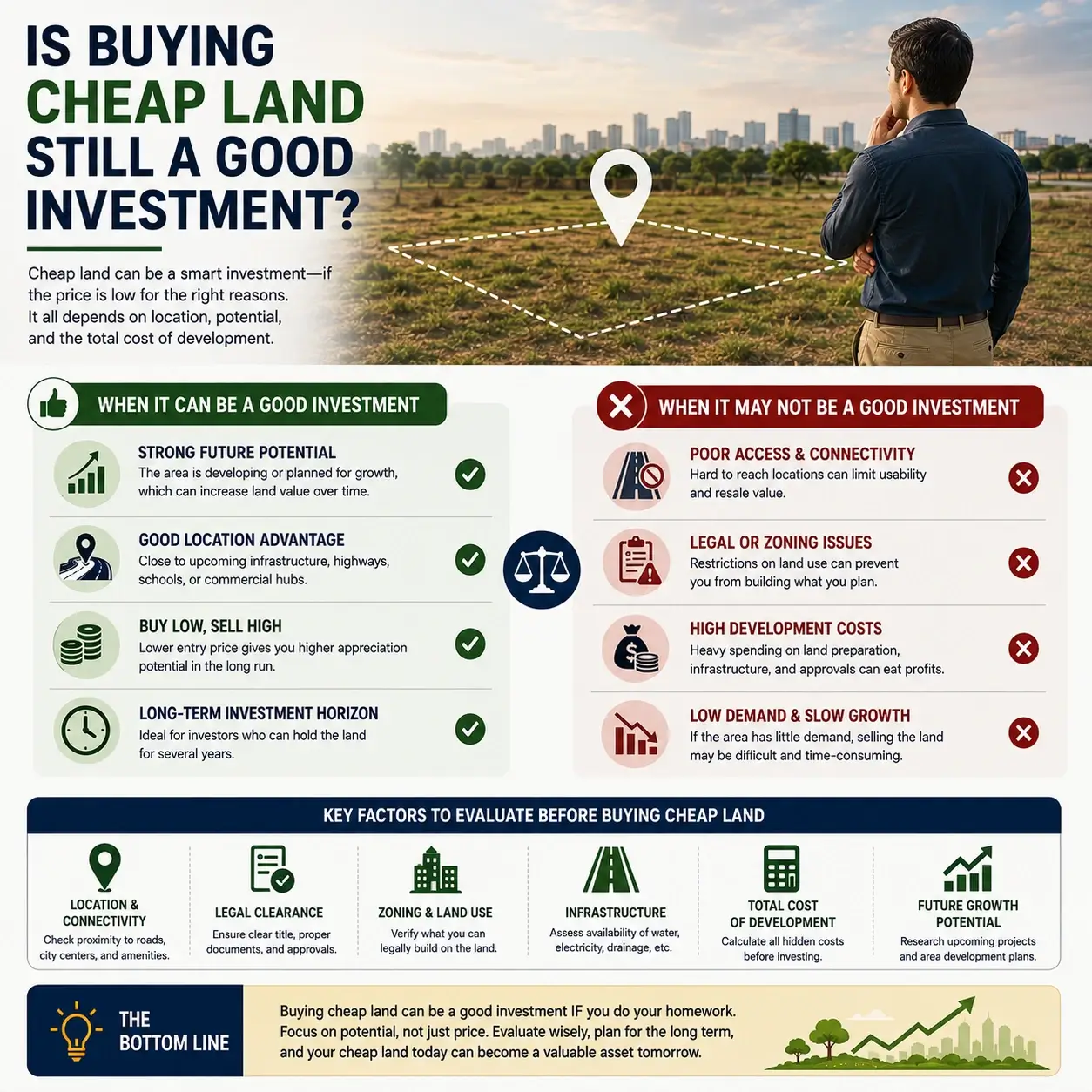
Yes, but the reason behind the low price matters more than the low price itself.
Affordable land in an emerging area can offer strong potential when ownership is clear, development is permitted, access is practical, infrastructure is improving, and future demand looks realistic.
Problematic land is different. Understanding the hidden costs of buying cheap land can help you distinguish between a genuine opportunity and a property that is cheap because of underlying problems.
If the price is low because the property has unresolved legal issues, severe access problems, difficult drainage, or weak development potential, the discount may simply reflect the risk.
The goal is not to find the cheapest plot available. It is to find the plot where price, risk, development cost, location, and future demand work together.
Conclusion
Cheap land can be a genuine opportunity, but understanding the hidden costs of buying cheap land is essential before committing to the purchase.
That is why the best land deal is rarely the one with the lowest asking price.
A complete assessment of the hidden costs of buying cheap land can help you decide whether the apparent bargain actually represents good value.
If the numbers still make sense after every major expense is included, the low price may represent genuine value.
If the deal only looks attractive before those costs are added, it may be better to walk away.
Frequently Asked Questions(FAQs)
1.What are the hidden costs associated with purchasing low-cost land?
The list includes legal confirmation, documentation, surveying, improving roads, laying utilities, clearing the land, leveling, draining, fencing, taxes, finance, maintenance, and other development costs. The specific costs will depend on the particular case.
2.What makes cheap land a risky choice?
The cost may indicate poor accessibility, inadequate infrastructure, difficult terrain, flood-prone area, unclear legalities, development limitations, and low demand for resale. It is the actual risk that cannot be quantified by the price.
3.How do I investigate a piece of land before purchasing it?
You should investigate the title, records, boundaries, accessibility, permitted use, taxes, utility services, drainage, and surrounding development of that piece of land. It is important to take professional advice on difficult pieces of land.
4.Is it possible that a piece of cheap land becomes expensive once bought?
Yes. There could be a lot of expenses that could add to the total investment.
5.Is the inexpensive land always a profitable investment?
No. There can be limitations on building, land use, subdivision and so on. The buyer should know about all the limitations for a particular piece of land before buying it.
6.What is the biggest mistake made by buyers?
Looking only at the price of purchase. The inexpensive plot of land does not necessarily mean the inexpensive investment. It is necessary to know the reason for this low price and the costs of development.
7.How significant is the resale value?
Highly significant, particularly when the land is to be acquired as an investment. Land that has problems such as bad accessibility, lack of infrastructure or development can be hard to sell even when the market around it improves.
8.What is the most secure approach for assessing inexpensive land?
The low price should be an indication for conducting the assessment of its legal standing, conditions and all other aspects of the deal.