
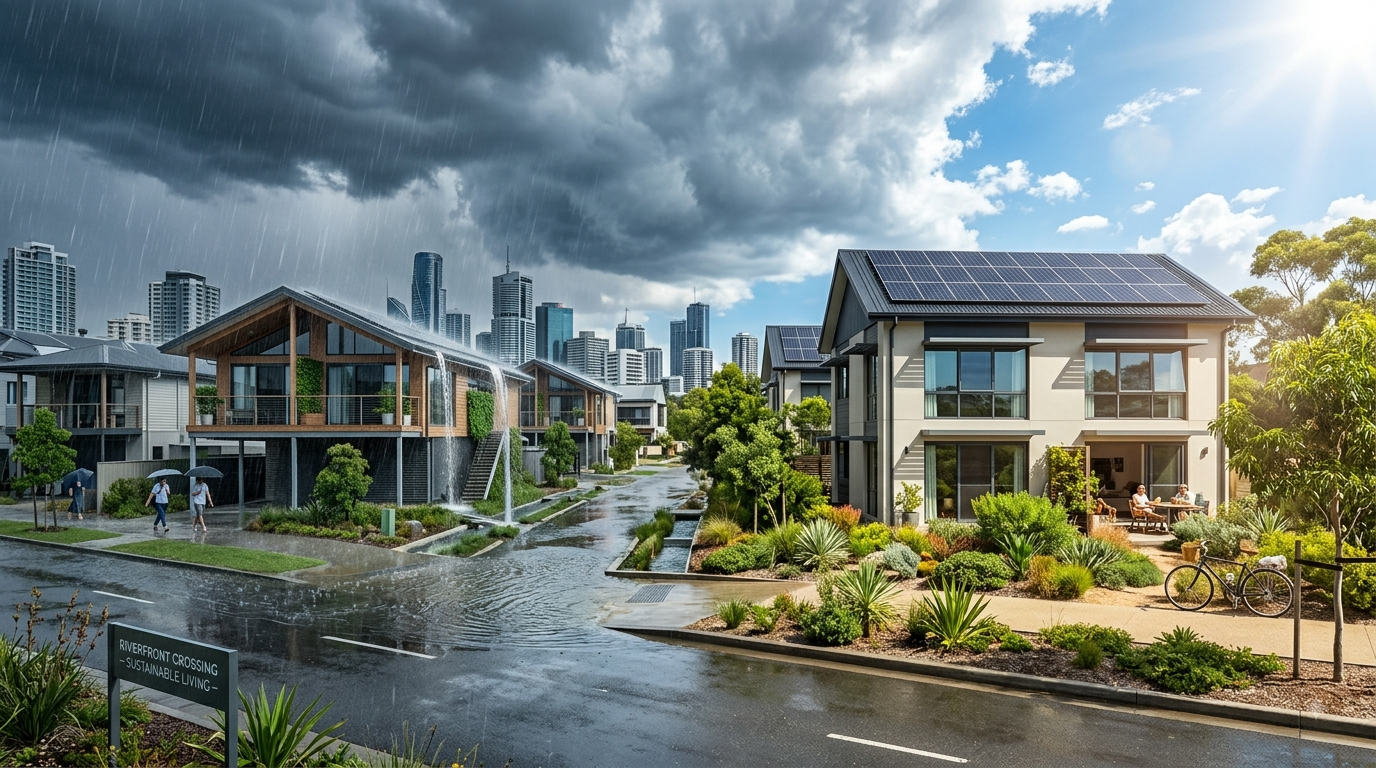
Climate change is becoming an important factor in the way people buy, sell, invest in, and develop properties. From flooding and extreme heat to rising insurance costs and changing regulations, climate risks are influencing real estate decisions in new ways.
The Growing Influence of Climate Risks on Real Estate
For a time, people made decisions about real estate based on things like where a place is, how much it costs and whether it is easy to get to. Things are changing now. The weather is becoming an issue when deciding where to buy a house, where to invest money, and how to plan new buildings.
Things like floods, hot temperatures, big storms and weird weather are making things tough for the real estate business. The house that seems like an idea to buy today might have problems later if it is in a place that is likely to be affected by bad weather.
Climate Risks Are Changing Real Estate Decisions because buyers, investors, and developers are increasingly considering how floods, extreme heat, storms, and other environmental challenges could affect a property’s safety, future costs, and long-term value.
This is why climate risks are changing real estate decisions everywhere. People who buy houses investors and developers are now looking for properties that’re safe good for the environment and ready, for whatever the weather brings in the future. Real estate decisions are being affected by climate risks and people are taking climate risks into consideration when making real estate decisions.
Modern real estate decisions now consider:
- Protection from extreme weather conditions
- Long-term property value
- Efficient energy
- Building safety and durability
- Future government regulations
For example a home with insulation cooling systems that work well and protection from floods may attract more people who want to buy it compared to a similar home that does not have these climate-friendly features.
As climate change keeps affecting people and businesses it is really important to understand the risks that come with climate change so we can make choices when it comes to real estate like buying or selling a home, which is why understanding climate risks is essential for making smarter choices, about real estate and that is climate change and real estate.
Understanding Climate Risks in the Real Estate Sector
Climate risks in real estate involve the potential difficulties and financial consequences that properties might experience as a result of climate change. These risks can affect residential homes, commercial buildings, industrial spaces, and large development projects.
Real estate professionals usually divide climate risks into two major categories:
| Type of Climate Risk | Description | Common Examples |
| Physical Climate Risks | Direct damage caused by climate-related events | Floods, heatwaves, storms, rising sea levels |
| Transition Risks | Changes caused by new policies, technology, and market expectations | Energy regulations, sustainability standards, changing buyer preferences |
Understanding these risks helps property owners and investors prepare better strategies for the future.
Physical Climate Risks: Floods, Heat, Storms, and Rising Sea Levels
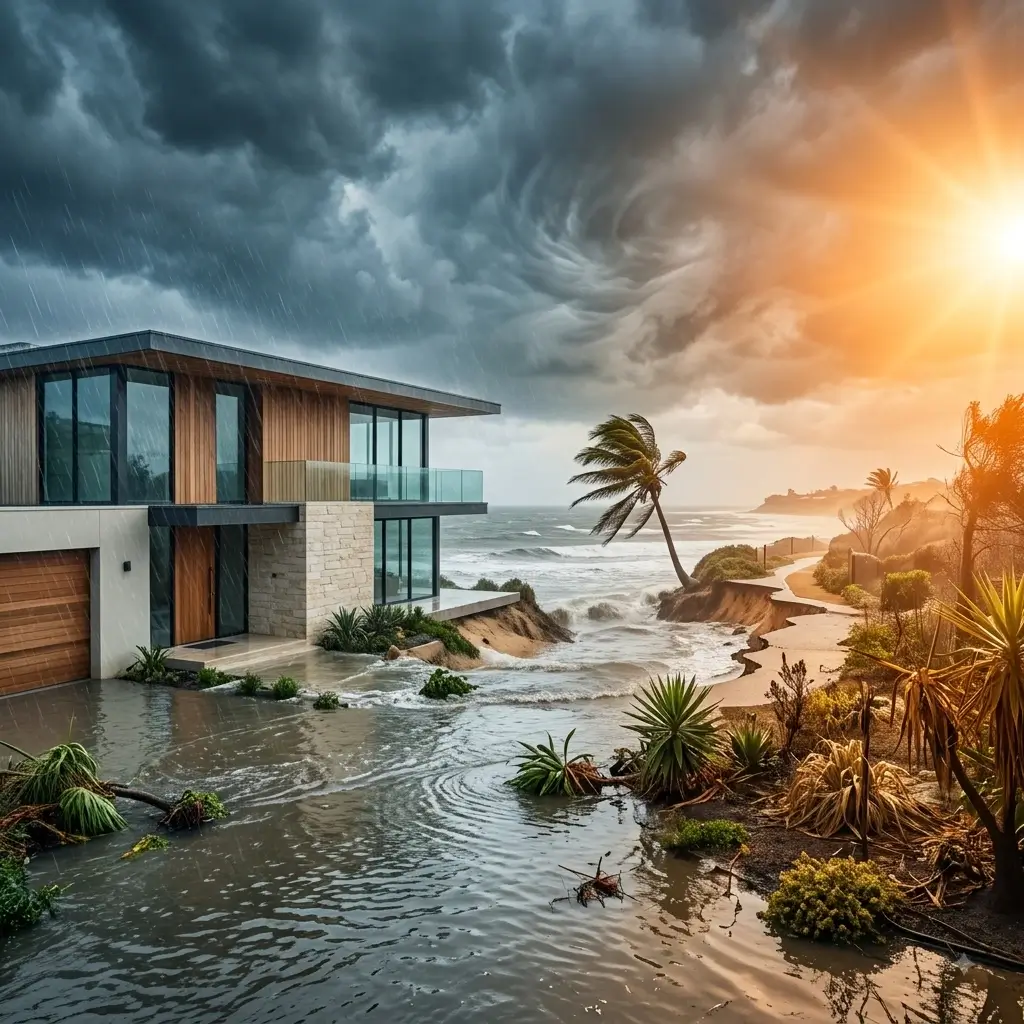
Climate change is having an impact on our daily lives. The weather is getting really crazy. This is causing a lot of problems. Physical climate risks are the things that happen because of climate change They can hurt buildings and houses. Make them worth less money. We are seeing these problems more and more because of bad weather, like big storms and heavy rain. Climate change is making these extreme weather events happen often. This is why physical climate risks are a deal.
Climate Risks Are Changing Real Estate Decisions because physical threats such as flooding, heatwaves, storms, and rising sea levels can directly affect property conditions, maintenance costs, insurance expenses, and future market demand.
Some major physical risks include:
Flooding: Properties that are near rivers or the ocean or in areas can get damaged by water and have problems with their structure. This can also make insurance more expensive.
Heat: When it gets really hot outside it can cost more money to keep buildings cool and it can be very uncomfortable if the building is not made to handle the heat.
Storm damage: When we have storms with strong winds they can cause a lot of problems. Storm damage can hurt the roofs and the windows of buildings. Storm damage can also hurt the system and other important parts of buildings. This is because storm damage from winds can be very bad for buildings. Storm damage is something that we should be worried, about when there are storms.
Rising sea levels: Properties near the ocean may have problems in the long run because the water can wear away the land and cause more flooding.
For example a property, near the ocean may be very popular because of where it’s but people who want to invest in it will also think about the costs it may have in the future because of rising sea levels and the things that need to be done to protect it.
Transition Risks: Regulations, Energy Standards, and Market Shifts
Transition risks are the risks of the changes that will happen as governments, businesses and consumers move to more sustainable ways of doing things. Climate Risks Are Changing Real Estate Decisions not only through direct physical damage but also through changing regulations, energy standards, sustainability requirements, and evolving market expectations.
Real estate owners may need to adapt to:
- New energy efficiency rules
- Requirements in reduction of carbon
- Sustainable construction standards
- Changing expectations from buyers and tenants
Older buildings with poor energy performance may need to be upgraded at some future cost. In turn, existing buildings that conform to sustainability standards could be more appealing.
How Climate Risks Are Changing Real Estate Valuation and Investment Decisions
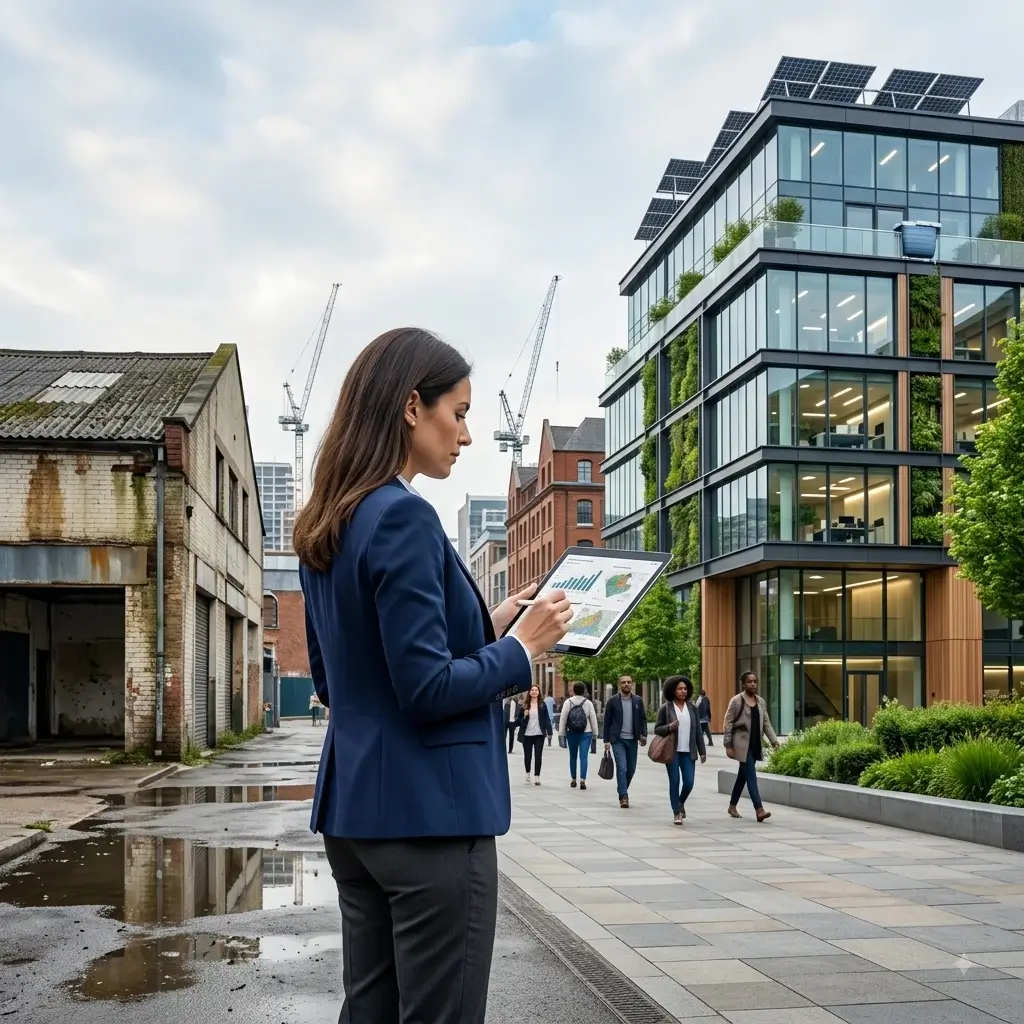
Climate risks are changing real estate decisions by influencing property values, investment strategies, and the long-term potential of properties.
The spot where a building is, what it looks like, how well it uses energy and how it can deal with climate problems can all affect whether or not someone wants to invest in it. Climate risks are changing real estate decisions, as buyers and investors increasingly consider a property’s location, design, energy efficiency, and ability to withstand climate-related challenges. A property’s location and design can make a difference when it comes to climate risks. Climate risks are a factor in investment decisions about properties.
The Impact of Climate Risk on Property Prices
Climate risks are changing real estate decisions because they can significantly affect property prices, buyer demand, insurance costs, and long-term investment potential. This is because people do not want to buy properties in areas that have a lot of climate problems. For example properties that get flooded all the time may not be as popular. Climate Risks Are Changing Real Estate Decisions by influencing how buyers, investors, and property owners evaluate future costs and long-term value. Properties exposed to frequent flooding, storms, or extreme heat may face higher repair, maintenance, and insurance expenses, which can affect their market demand and investment potential.
On the other hand properties that are safe and can withstand bad weather may keep their value. Climate risks are a deal when it comes to property prices. Properties that are in areas with a lot of climate risks may be cheaper to buy.. Properties that are safe from climate problems may be more expensive. This is because people are willing to pay more for properties that are not going to get damaged by weather. Climate risks can affect property prices in ways.
Factors that influence property prices include:
- Risk of flooding or storm damage
- Increasing insurance costs
- Repair and maintenance expenses
- Energy performance of the building
- Future climate-related regulations
For example, two houses that are similar in design and location may be valued differently if one has better flood protection, energy efficiency and climate-resilient features
The Role of Climate Risk Assessments in Real Estate Investment
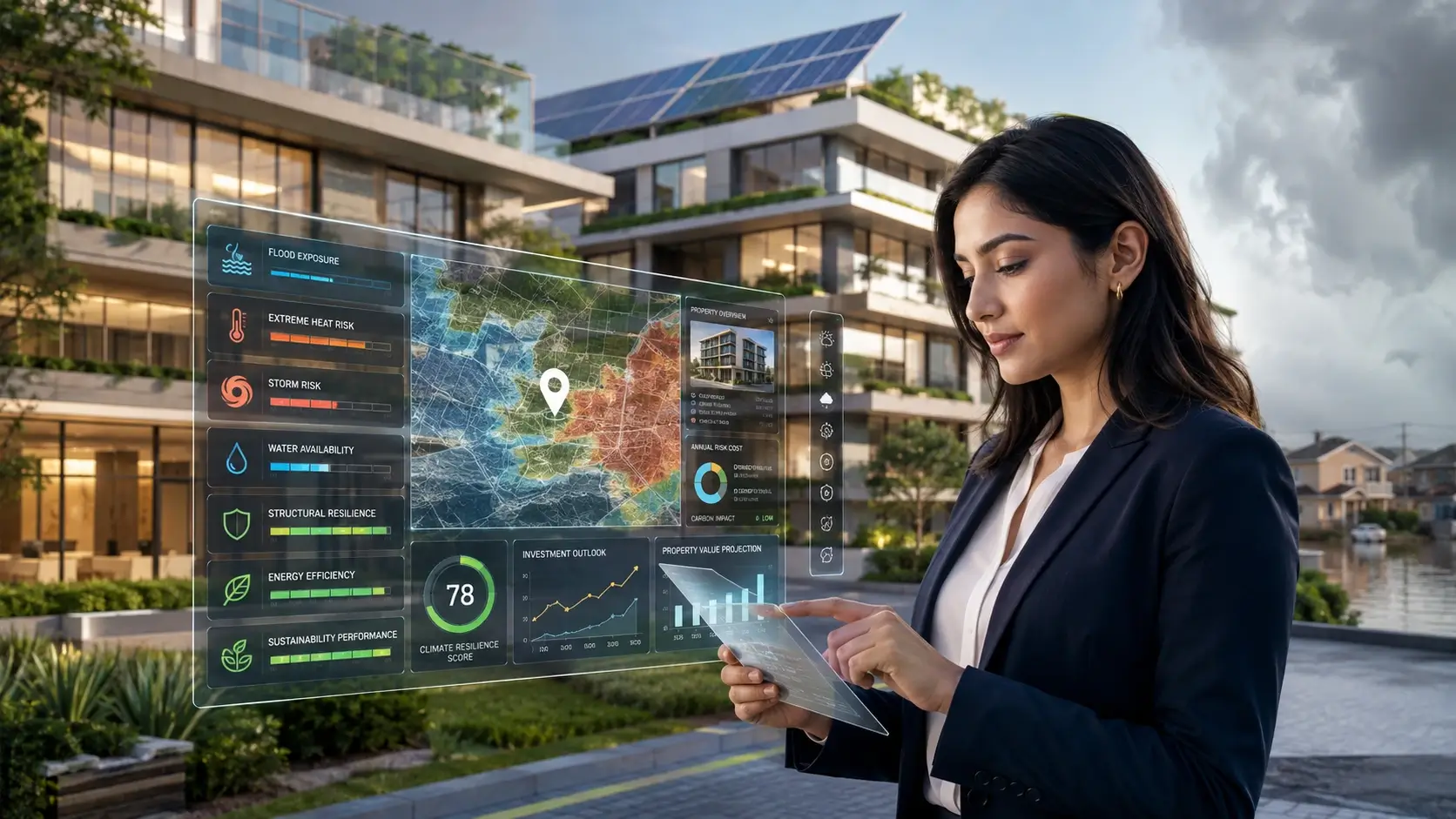
Climate risks are changing real estate decisions, making climate risk assessments increasingly important before investors purchase a property. These assessments provide information about how climate conditions may affect a building in the future
They usually consider:
- Flood exposure
- Temperature trends
- Storm risks
- Water availability
- Building strength
- Sustainability performance
Investors can minimize unforeseen financial losses and make better decisions by utilizing climate risk assessments.
Changing Buyer and Investor Preferences
Awareness of climate risks is changing buyer preferences. More people are considering more than just appearance and location when buying properties. Climate Risks Are Changing Real Estate Decisions among modern buyers and investors, who are now paying greater attention to energy efficiency, flood protection, indoor comfort, water management, and a property’s ability to withstand extreme weather conditions.
Today’s buyers are showing more interest in:
- Energy-efficient homes
- Lower utility costs
- Sustainable materials
- Comfortable indoor environments
- Safer locations
Investors are also giving more importance to properties that can maintain value despite future climate challenges.
How Developers Are Adapting to Climate Challenges
Climate risks are changing real estate decisions, encouraging developers to use more resilient and durable construction methods. At the moment of constructing any structure, developers pay attention to the climate of the region, doing so since the very initial stage of planning and designing.
Climate-Resilient Building Designs and Infrastructure
Climate-resilient buildings are designed to reduce damage and improve safety during extreme weather conditions. Climate Risks Are Changing Real Estate Decisions at the design and construction stage by encouraging developers to consider local climate conditions, future environmental risks, building materials, drainage systems, and long-term resilience.
Common features include:
- Strong construction materials
- Better drainage systems
- Flood-resistant designs
- Improved ventilation
- Heat-resistant structures
These features help buildings handle changing weather conditions while improving their long-term value.
For example, buildings in areas with heavy rainfall may include advanced drainage systems to reduce water-related damage.
The Growth of Sustainable and Green Buildings
Sustainable and green buildings are becoming more popular in the real estate market. These buildings are designed to use less energy and resources while creating a healthier and more comfortable environment.
Common features include:
- Solar energy systems
- Energy-efficient lighting
- Better insulation
- Water-saving systems
- Sustainable building materials
The Role of Technology and Regulations in Climate-Smart Real Estate
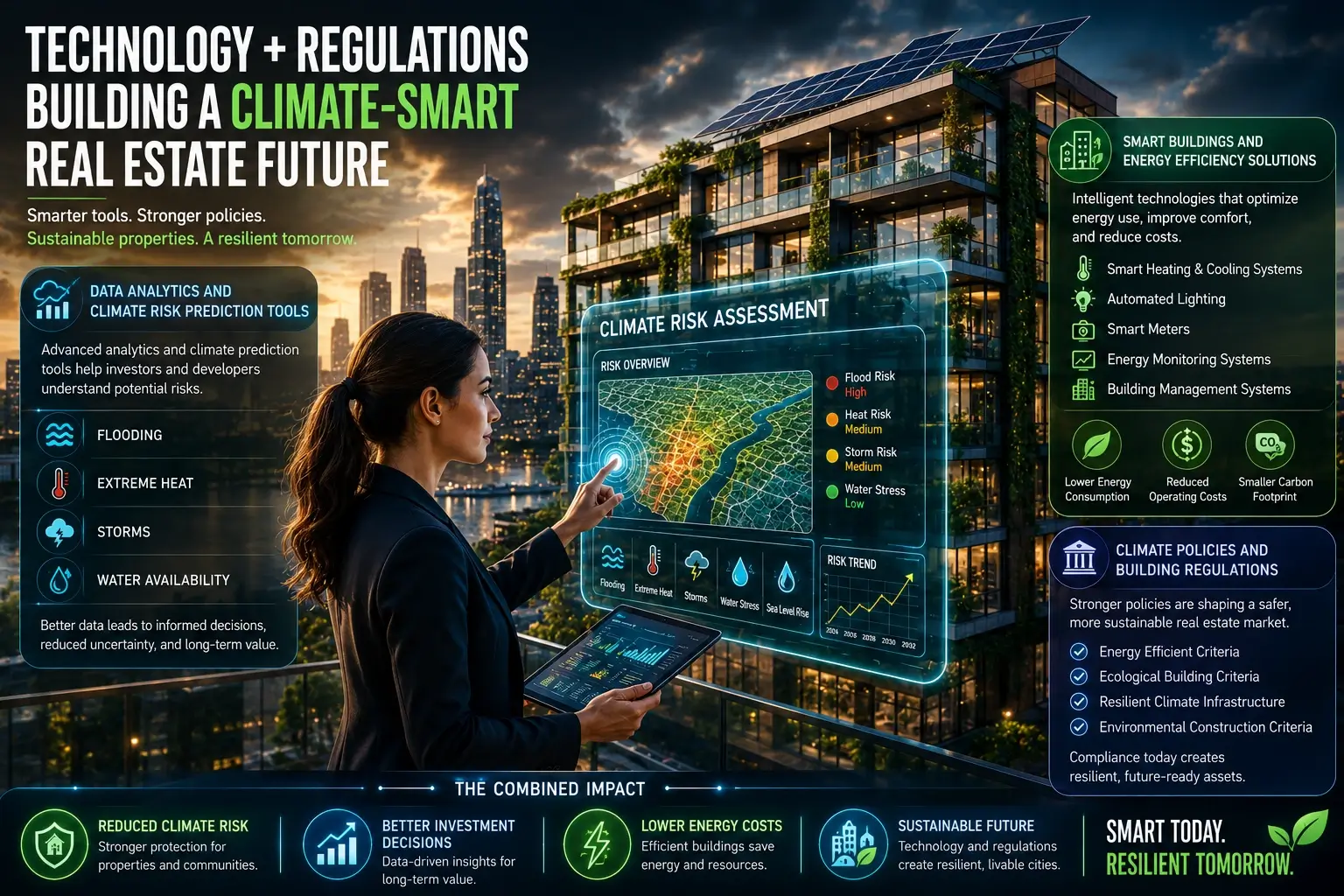
Climate risks are changing real estate decisions, while technology and government regulations are helping the real estate sector respond to these challenges. Modern tools can help investors understand potential risks, while regulations encourage developers to improve the safety and efficiency of buildings.
Technology can support climate-risk assessments, energy management, and building performance. At the same time, regulations may introduce requirements for energy efficiency, sustainable construction, and climate resilience. Together, these changes are encouraging the industry to make properties more prepared for future environmental challenges.
Data Analytics and Climate Risk Prediction Tools
Data analytics and climate prediction tools help investors and developers understand the risks connected to a property. These tools can provide information about flooding, extreme heat, storms, water availability, and other climate-related conditions.
By using climate data, investors can compare properties and identify possible risks before making decisions. Developers can also use this information when selecting locations and planning climate-resilient buildings. Better data can therefore support more informed and long-term real estate decisions.
Smart Buildings and Energy Efficiency Solutions
Smart building technologies are helping properties use energy and other resources more efficiently. These systems can monitor building performance and automatically adjust certain operations according to actual needs.
Examples include:
- Smart heating and cooling systems
- Automated lighting
- Smart meters
- Energy monitoring systems
- Building management systems
Climate Policies and Building Regulations
Governments are introducing policies to encourage safer and more sustainable construction.
These policies may focus on:
- Energy efficient criteria
- Ecological building criteria
- Resilient climate infrastructure
- Environmental construction criteria
Following these regulations helps create a stronger and more prepared real estate market.
Changing Consumer Behavior and Demand for Climate-Resilient Properties
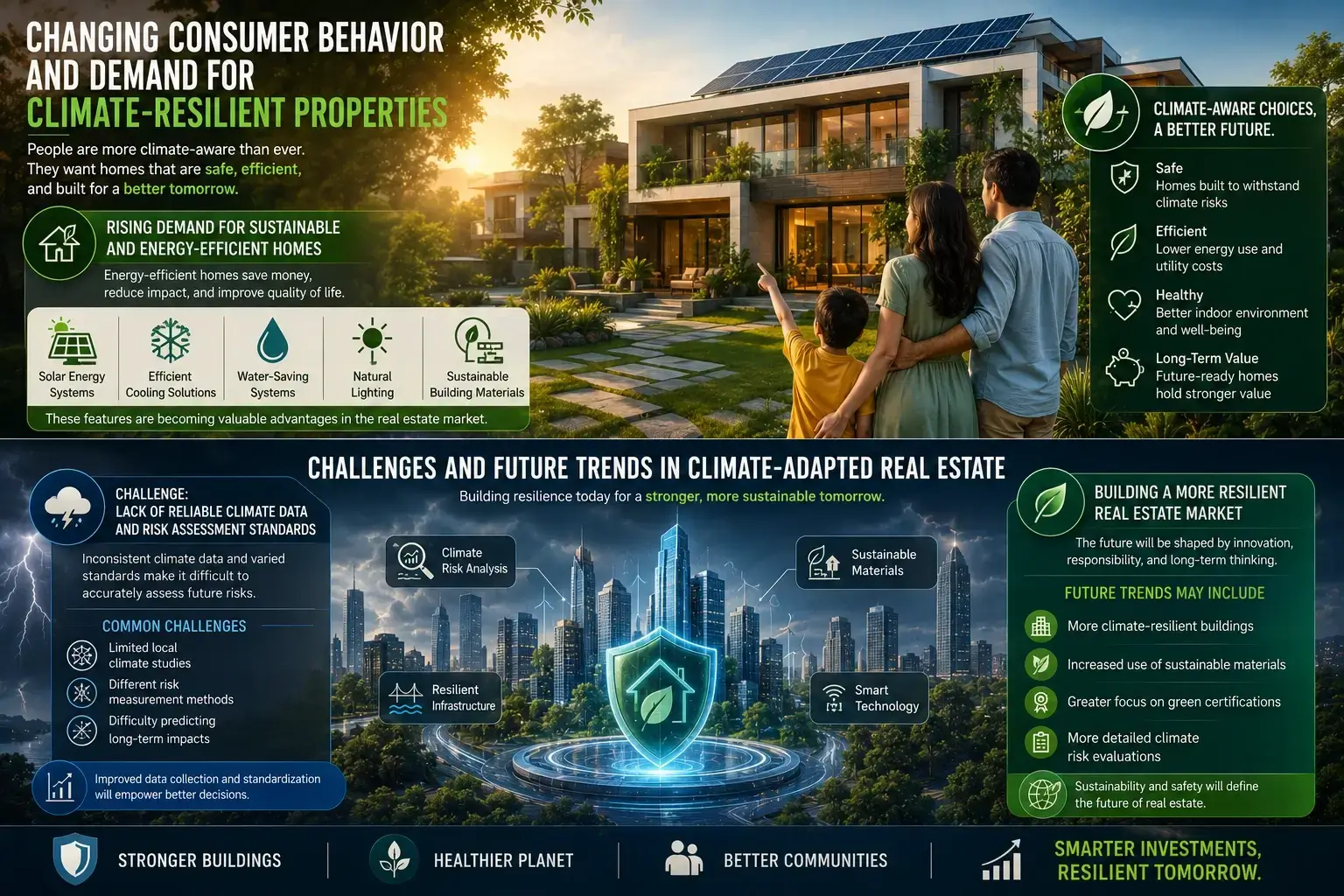
People are becoming more aware of the climate. This is changing the way they look for houses. When people search for homes they want to find a place that’s safe. They also want a home that’s efficient and good for them, in the long run. Climate awareness is making people think about the long term benefits of the homes they buy. People want homes that provide safety and efficiency because of climate awareness.
Rising Demand for Sustainable and Energy-Efficient Homes
Energy-efficient homes are gaining popularity because they help homeowners save money while reducing environmental impact.
Features that attract buyers include:
- Solar energy systems
- Efficient cooling solutions
- Water-saving systems
- Natural lighting
- Sustainable building materials
These features are becoming valuable advantages in the real estate market.
Challenges and Future Trends in Climate-Adapted Real Estate
Climate-adapted real estate is getting bigger. The climate-adapted real estate industry still has a lot of problems. To make buildings stronger people need to put in money get the information and make good plans, for climate-adapted real estate.
Lack of Reliable Climate Data and Risk Assessment Standards
An important obstacle is the inconsistency in climate data. Every region might have varying data regarding their climate risks in the future.
Common challenges include:
- Limited local climate studies
- Different risk measurement methods
- Difficulty predicting long-term impacts
Improvement in collecting such data would help the developers in making decisions.
Building a More Resilient Real Estate Market
The success of real estate in the future will depend on how effectively it adjusts to the climate issues.
Future trends may include:
- More climate-resilient buildings
- Increased use of sustainable materials
- Greater focus on green certifications
- More detailed climate risk evaluations
.The future of the real estate industry will be characterized by sustainability and safety.
Frequently Asked Questions (FAQs)
1.In what way does climate change affect property values?
Climate change may influence the value of the property. It will bring such issues as flooding, high temperatures, and increased costs to fix everything. The property that is adapted for these changes may preserve its value for a long period of time.
2.Why do investors take into account climate risks while investing in property?
Investors think about climate risks since they may influence future profits, costs for insurance, repairs, and even demand for the property.
3.Which properties are most vulnerable to climate risk?
Properties located in flood zones, coastal areas, wildfire zones, and hot areas tend to be more vulnerable
4.How can property owners enhance the resilience of their properties?
Resilience can be enhanced through proper insulation, drainage, energy-efficient installations, and improved building material.
5.Are sustainable buildings gaining value in the real estate sector?
Yes, sustainable buildings are gaining value due to reduced costs, improved efficiency, and comfort.
6.In what way are governments involved in reducing climate risks in real estate?
Governments play a key role in making building standards and policies to reduce climate risk.
Conclusion: Why Climate Risk Awareness Is Becoming Essential in Real Estate
Climate risks are changing real estate decisions by influencing property values, investment approaches, construction techniques, and buyer expectations. Climate change is affecting real estate through changes in property values, investment approaches, construction techniques, and buyer expectations.
Properties that overlook the effects of climate issues can become costly to maintain and less attractive in the long run. At the same time, climate-resistant and sustainable properties are turning into better investments.
As for buyers, investors, and developers, climate considerations are no longer an optional aspect of decision-making processes. They are now becoming an integral part of making sound judgments in real estate.