

One of the best Digital Property Registration Guide, from how to do it, the necessary paperwork involved, its legalities, benefits, and more. Purchasing any property is probably the largest purchase decision any person makes during their lifetime. Whether a first time home owner, an investor in land or just adding to their existing real estate portfolio, it is important that the property is registered properly and legally. Today, many countries are digitizing their land and property registration processes by implementing the Digital Property Registration system.
Digital Property Registration Guide , Everything a Buyer Needs to Know
Digital Property Registration involves the process of registering ownership rights over land, apartments, houses or commercial properties through online means using electronic records. In other words, the buyers and sellers can perform some tasks related to property registration online rather than depending only on paper records and physically going to offices. in this Digital Property Registration Guide we’ll discuss how to do that exactly.
The governments around the globe are taking advantage of digital transformation to make things better for citizens. Property registration is one of the fields where they have seen tremendous progress. The use of the system ensures reduced paperwork, minimum processing time, improved accuracy of record keeping and minimization of chances of document tampering and fraud. The specific steps may differ from one country, state or local government, but the general goal stays the same – creation of an open and safe system for property ownership.
When it comes to property buyers, knowledge of the digital property registration guide and its procedure is as important as the choice of property itself. No matter how beautiful a home is, if the registration procedure was not followed or there are any legal issues, owning this house may be problematic. Knowledge of the digital property registration guide will help buyers to check whether the property is owned, to prepare all necessary documents and follow legal regulations.
Another great thing about digital property registration guide is the opportunity to have secure electronic documents. Unlike physical paperwork which may get lost or damaged, information about the registered property will be saved electronically. Following a digital property registration guide can help buyers understand how these electronic records are maintained and accessed.
In this detailed digital property registration guide, you will find out more about digital property registration: its definition, process of registration, necessary documents, legal aspects, possible mistakes, and tips to ensure a safe purchase. While the registration process may vary from place to place, the issues covered in the present article will be helpful for buyers to make informed decisions regardless of the jurisdiction where they buy a property. A clear digital property registration guide can also help first-time buyers understand the key steps involved. By using this digital property registration guide as a reference, buyers can better prepare for the registration process and avoid common mistakes.
What Is Digital Property Registration?
Digital Property Registration refers to the process of registering ownership of any kind of property by means of an electronic government system. In order to save time, the government agencies have moved to the use of a computerized system and do not process all documents manually anymore.
The process of registration may involve:
- Online application submission
- Document Uploads
- Identity Verification
- Online payments for registration and stamp duty
- Record storage
- Registration certificates in digital form
- Application status tracking
 The main point is to increase efficiency without harming the accuracy and security of the records. This digital property registration guide explains how these improvements benefit property buyers.
In the case when a buyer has purchased a house, he/she may submit documents online, make online payments for registration and stamp duty, go through the procedure of biometric or identity verification, and receive a digital registration certificate. A digital property registration guide can help buyers understand these steps.
While in some places biometric verification or authentication of documents is still required, much of the process can be performed online nowadays.
Traditional Method vs. Digital Platform
There have been great benefits of using digital property registration as compared to the traditional way of registering properties. Both these
ways are meant to prove ownership but differ on the grounds of speed, transparency, security, and convenience.
| Feature | Traditional Registration | Digital Property Registration |
| Application Process | Paper-based | Online application |
| Documents | Physical copies | Digital document uploads |
| Record Storage | Paper files | Electronic records |
| Processing Time | Usually longer | Generally faster |
| Transparency | Limited tracking | Online status updates |
| Security | Risk of document damage or loss | Secure digital storage |
| Accessibility | Office visits required | Accessible online (where available) |
| Fraud Prevention | Manual verification | Multiple digital verification methods |
| Tracking | Difficult | Real-time application tracking |
| Convenience | Time-consuming | Faster and more user-friendly |
In the traditional method, buyers used to visit several government departments carrying several paper documents and would have to wait for several weeks or months for the process to have to carry lots of physical documents, and also take weeks—or sometimes even months—to process them. Lack of documents or mistakes made by clerks may result in repeat trips.
Digital systems make several procedures much easier. The buyer may file applications online, upload scanned documents, pay fees, and track the process via government websites. This saves effort, time, and makes the whole process more comfortable.
Still, it is important for buyers to understand that digital registration does not exempt one from following all other laws. Property verification, checking its ownership and compliance with the law are very important.
Reasons Why Digital Property Registration :buyer’s guide(2026) Is Becoming So Popular

Governments are building up their digital infrastructure to enhance governmental services, and property registration is one of the most important spheres that benefits from the revolution.
There are several reasons why digital property registration is becoming popular.
Government Digital Transformation
A lot of governments are digitizing their land administration services to become more efficient and to reduce corruption.
Using digital property registration systems allows to do the following:
- Make management of land records more efficient
- Eliminate paperwork
- Increase data accuracy
- Quickly approve registration
- Provide online governmental services
For instance, instead of keeping thousands of paper records in physical archives, land departments are able to safely keep millions of property records in digital databases.
Increased Transparency
Among the main benefits of digital property registration is increased transparency.
Using traditional methods, verifying information about ownership usually involved visiting government offices and searching in paper files.
Using digital platforms, buyers can do the following:
- Verify ownership details
- Check the registration status
- View land records
- Verify transaction history (if available)
Transparency helps minimize:
- Fraudulent ownership claims
- Double property sales
- Falsification of documents
- Illegal transfer of ownership
Example:
Let’s say there are two buyers who want to buy the same apartment. With a help of the online property records service, each of the buyers can verify the details of the registered owner before paying for the property and prevent any fraud.
Faster Processing
Manual registration could take multiple steps of document processing, approvals and physical movement of papers between departments.
Digital processing involves movement of documents electronically between the different stages of approval.
The benefits of such process include:
- Faster processing of documents
- Faster approval process
- Reduced wait times
- Real time updates of applications
While varying from region to region, digital systems help eliminate unnecessary administrative delays.
Effective Record Keeping
The management of property records dating back decades is tough.
The paper files may get:
- Damaged
- Lost
- Misplaced
- Hard to find
Digitized data banks provide safe long-term storage and also give authorized officials easy access to records anytime.
For property owners, this implies that ownership history may be accessed easier than in traditional paper-based archives.
Easy Access to Information by Citizens
Several governments have developed online portals where citizens may access certain property related services.
Depending on local policies, users can:
- Search land records
- Check ownership information
- Monitor the progress of their registration applications
- Access some certificates
- See the tax records of the property
- Access registration guidelines
Example:
For instance, a prospective buyer looking to purchase a piece of land may check ownership information online before agreeing to buy. This will enable him/her to establish any problems regarding the ownership of the property.
The availability of information enables buyers to make informed decisions without having to seek information through middlemen.
How Does Digital Property Registration Work?
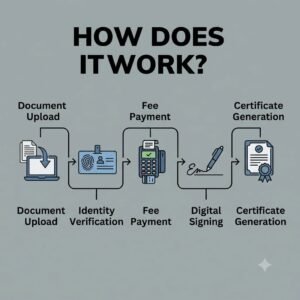 Despite differences in the process according to different countries, states, or authorities, the process of digital property registration goes through some common steps. Knowing about the process with this digital property registration guide allows buyers to collect relevant documents and complete the registration process smoothly.
Step 1 – Property Verification
The first and foremost step involves verifying that the property belongs to the seller and is eligible for the sale.
Buyers should do the following before registering their property:
- Check the ownership of the seller.
- Look into the earlier title deed.
- See if there is any loan or legal dispute on the property.
- Make sure that the property is correctly mentioned in the land record.
- Make sure that the property has all the necessary approvals.
Example: The buyer verifies whether the seller’s name is correctly mentioned in the land records portal and pays the advance amount.
Step 2 – Collection of Relevant Documents
Once you verify your property, collect all documents needed to register your property.
These documents are typically:
- Proof of identity
- Proof of address
- Tax ID (e.g., PAN card in India).
- Sale agreement
- Old title deed
- Proof of property tax paid
- Encumbrance certificate
- Approvals for construction (if needed)
- Passport size photos
By preparing them in advance, the chances of delays at the time of filing are prevented.
Step 3 – Identity Verification
Almost all online registration platforms require both the buyer and the seller to provide proof of identity. This process may involve the following steps:
- Providing government-issued identification.
- Conducting biometric verification (fingerprint and/or facial).
- Generating digital signatures or authentication.
Identity verification is needed to confirm that the correct individuals will be taking part in the property transaction.
Step 4 – Submission of the Application
Now that everything is ready, the applicant can submit the application via the official government property registration platform.
- The submission process generally involves:
- Entering the buyer and seller details.
- Entering the property details.
- Uploading relevant documents.
- Submitting the application after reviewing it for accuracy.
In many cases, the online application generates a reference number which allows you to track the progress of your registration.
Step 5: Payment of Stamp Duty
The fifth step in the process of online property registration involves payment of the required stamp duty and registration fees. Stamp duty refers to the taxes collected by the government from property transactions and is mandatory in many countries. The stamp duty is dependent on factors like the market value of the property, the location, the type of property, and so forth.
Most online property registration systems have an option for making online payments via the official government payment gateway, net banking, debit/credit card or other acceptable digital modes of payment. Once the payment is made, a digital receipt or the confirmation of payment is generated. This digital property registration guide helps buyers understand the importance of completing the payment correctly.
Prior to making payment, make sure that you are on the right website and check the details before proceeding with the payment as wrong payment could delay the process. Following this digital property registration guide can help buyers avoid payment-related mistakes.
Tip: Keep a copy of the digital and printout of the receipt of the payment until the completion of the process.
Step 6: Registration Appointment (As Required)
Even though most of the processes involved in the registration of digital property can be done online, there are some places that require buyers and sellers to come physically to the registration office for the purpose of verifying their applications. This digital property registration guide explains that some jurisdictions may still require in-person verification.
During the registration appointment, the registration officers will:
- Check the original documents.
- Verify the identities of the buyer and seller.
- Record biometric information including fingerprints or photographs.
- Get the signatures of the individuals on required documents.
- Check transaction information before approving.
The aim of the registration appointment is to confirm the legitimacy of the property transfer. The buyers are supposed to attend the appointment punctually and bring all required original documents. Following this digital property registration guide can help buyers prepare properly for the appointment.
Example: Some Indian states require buyers to make a biometric verification at the Sub-Registrar’s Office (SRO) despite having made the application online. Buyers can refer to this digital property registration guide to understand why online applications may still involve physical verification. A digital property registration guide can also help buyers identify which steps may need to be completed in person.
Step 7: Digital Verification
After submitting the application form and required documents, government officials will do thorough digital verification. This is aimed at ensuring that all the information submitted is authentic and legal.
The digital verification process includes:
- Confirming the identification of both buyer and seller.
- Validating documents submitted online.
- Verifying property titles.
- Analyzing land records and survey documents.
- Analyzing stamp duty and registration payments.
- Confirming that there are no significant legal restrictions in connection with the property, wherever necessary.
In case any discrepancies or incomplete documentation is noted, the applicant may be notified and requested to rectify the same. It would be helpful for him to act promptly and respond to such requests in order to avoid delays.
Online verification makes the registration process much more secure and reliable because the possibility of mistakes and fraud becomes less likely.
Step 8: Approval of the Registration Application
If all the steps of verification are successfully passed, the registration authority checks the application and gives its approval. In case all legal requirements have been fulfilled and the submitted information is correct, the property is registered formally. This digital property registration guide helps buyers understand what happens after successful verification.
Upon approval:
- The transaction is recorded in the computerized system of the government.
- The new owner becomes a legal one, in accordance with the relevant legislation of the region/jurisdiction.
- Property records are updated accordingly.
- A registration confirmation is provided either through the website or via email/SMS notifications.
Note: Check the status of your application periodically via the government’s registration portal in order to be updated on any approval or requirements. Following this digital property registration guide can help buyers stay informed throughout the approval stage.
Step 9: Downloading of Digital Registration Certificate or Registered Property Document
This will involve downloading the Digital Registration Certificate or the property document that has been registered. After receiving an approval for the application, one will be able to download the document from the government registration portal using the application number or account. A digital property registration guide can help buyers understand how to access and save these important records. Keep this digital property registration guide as a reference when completing the final documentation stage.
The digital registration certificate will normally contain the following details:
- Registration number
- Details about the property
- Details of buyer and seller
- Date of registration
- Government registration stamp or authentication
It will be prudent for the buyers to cross-check the document and if there are any mistakes, they should get into contact with the relevant authorities for correction.
Moreover, it will be recommendable for buyers to:
- Get more than one digital copy.
- Have one printed copy.
- Save the document in a secure cloud or digital file.
- Keep it handy for future use when making any property deal or applying for a loan.
Documents Required for Digital Property Registration

Before starting the Digital Property Registration procedure, it is important to gather all relevant documents needed. Incorrect or missing documents are among the common reasons for rejection and delays. Although the specific documents needed will vary depending on the jurisdiction, in general, the following documents are required by most government registration offices. This digital property registration guide helps buyers understand which documents they may need to prepare before starting the process.
The list of important documents along with their significance is mentioned below. This digital property registration guide provides a useful reference for buyers when preparing the required paperwork.
Identity Proof
Government issued identity proof is required to prove the identities of both the buyer and the seller.
Some of the common documents are:
- Passport
- National identity card
- Driver’s license
- Aadhaar card (India)
- Voter ID (India)
Make sure that the identity proof document provided is valid and the name mentioned is the same as that in the sale agreement and other documents filed. Following this digital property registration guide can help buyers ensure that their identity documents are accurate and up to date.
Address Proof
Address proof helps to prove the residential address of the buyer and the seller. This digital property registration guide also helps buyers understand the importance of keeping address-related documents ready before beginning the registration process.
The documents that can be used for this purpose include:
- Utility bill
- Bank statement
- Passport
- Driver’s license
- Government issued residence certificate
The address in the document should be the same as provided during the online registration process.
PAN Card/ Tax Identification Number
A tax identification number is necessary in most of the countries for any property transaction.
For example:
PAN card (India)
- SS related tax number (if applicable)
- Taxpayer Identification Number (TIN)
- This will help the authorities to maintain the tax records of the transaction.
Sale Agreement
Sale agreement is one of the important documents in any real estate transaction.
The agreement usually includes the following information:
- Details of buyer and seller
- Property description
- Agreed purchase price
- Payment terms and conditions
- Date of agreement
Government officials need this agreement to ensure the legality of transaction prior to its registration.
Previous Title Deed
Title deed gives the history of ownership of property.
This deed assists government officials to verify:
- Current ownership
- Previous transactions
- Ownership chain
Buyers must carefully study the title deed to make sure that it has no discrepancies.
Property Tax Receipts
Property tax receipts give the proof that the owner of property has paid all due taxes on property.
These receipts assist in verifying:
- Tax compliance
- Not owing anything to municipality
- Up-to-date information on property
Encumbrance Certificate
Encumbrance Certificate gives information about:
- Existing loans
- Mortgage
- Claims and attachments in court
- Financial responsibilities
Without verifying this document a purchaser runs a risk of getting involved into unexpected legal or financial issues.
Occupancy Certificate (if applicable)
For completed buildings an Occupancy Certificate gives information that the property has been inspected and is fit for occupancy according to the official authority. It shows that the construction is compliant with the approved design drawings and regulations. A digital property registration guide can help buyers understand the importance of checking this certificate before completing a property transaction.
Building Approval Documents
They serve as proof that the construction has been legally approved.
Some examples are:
- Building permit
- Construction design approval
- Layout approval
- Approvals from development authorities
Unauthorized construction may lead to legal hassles even after registration.
Passport-Sized Photographs
Most of the registration authorities still ask for recent passport-size photographs.
There are some digital systems that ask for digital photography submissions while filling up the online form.
Checklist of Documents Required for Digital Property Registration
| Document | Purpose | Mandatory |
| Identity Proof | Verify buyer and seller identity | ✅ Yes |
| Address Proof | Confirm residential address | ✅ Yes |
| PAN Card/Tax ID | Tax compliance | ✅ Usually |
| Sale Agreement | Proof of transaction | ✅ Yes |
| Previous Title Deed | Ownership verification | ✅ Yes |
| Property Tax Receipts | Confirm tax payment | ✅ Usually |
| Encumbrance Certificate | Verify legal liabilities | ✅ Strongly Recommended |
| Occupancy Certificate | Building occupancy approval | If Applicable |
| Building Approval Documents | Construction legality | If Applicable |
| Passport-sized Photographs | Identity records | Usually Required |
Note: Scan all documents properly and convert into PDF format (or other formats as prescribed by the registration authority). Make sure that the document file size and naming convention conform to the uploading requirements of the portal.
Advantages of Digital Property Registration
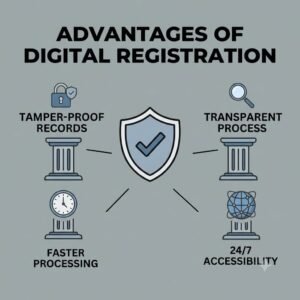 Digital property registration guide provides many benefits for buyers, sellers, government authorities, and banks. It increases efficiency and improves security and transparency in property transactions.
Speedier Process
Traditional registration is usually slow, involving several visits to the office, paper documentation, and cumbersome processes.
Digitization allows faster transaction by enabling the applicants to:
- Apply online
- Submit the documents online
- Make payments online
- Monitor status updates online
Example: A property buyer may be able to do most things in days by uploading the documents, while it could take him weeks to go through a manual process.
Greater Security
Electronic documents eliminate chances of:
- Loss of papers
- Damage to documents
- Unapproved changes
- Duplication of documents
Moreover, the majority of government portals maintain logs regarding the changes made to the record and when they were made.
Decreased Paperwork
The use of digital registration greatly decreases the number of printed materials required.
Advantages include:
- Cheaper printing
- Improved document control
- Quicker record searching
- Environmentally friendly process
There is no need to carry heavy folders with paperwork, as people can simply upload scanned documents through official websites.
Decreased Chance of Frauds
Frauds continue being one of the main problems in real estate transactions.
With the help of digital registration, the following measures can be taken:
- Identity verification
- Digital signature (when it is legally recognized)
- Government databases with secure access
- Property ownership verification systems
- Online transaction tracking
Despite the fact that it is impossible to guarantee the safety of a transaction, digital solutions increase security.
Example: When checking the official land records portal, a buyer finds out that the seller’s name is different from the name of the property owner. Thus, by recognizing the problem before making a payment, the person is saved from the fraud.
Online Tracking of Application Process
Another advantage of the digital solution is easy online tracking of the process.
People can usually track the following steps:
- Status of submission
- Verification pending
- Appointment schedule
- Status of approval
- Availability of certificate
This increases certainty and cuts down on the number of trips to the office required.
Greater Transparency
Digital systems increase transparency through accessibility of verified information about the property to authorized users.
Advantages include:
- Ownership record clarity
- Enhanced transaction history
- Increased confidence
- Minimized chances of manipulation
The transparent system ensures fair transactions by providing verified data for the buyer.
Improved Accuracy of Information
Manual data entry can result in spelling errors, duplicates, and missing information.
Many digital systems feature automatic data validation features which can help cut down on mistakes while filling out the application.
For instance, applicants will receive a notification when:
- Required data is missing.
- The file format is wrong.
- The identification number does not coincide with the official data.
Accurate information makes future transactions easier to complete.
Efficient Property Transfer
When a property becomes registered in a digital database, all future transfers of ownership become more convenient since records will be already there electronically.
This benefits:
- Buyers
- Sellers
- Banks
- Lawyers
- Government agencies
Such digital records also help make inheritance claims, mortgage applications, and future resale transactions easy.
Legal Aspects Buyers Should Be Aware Of
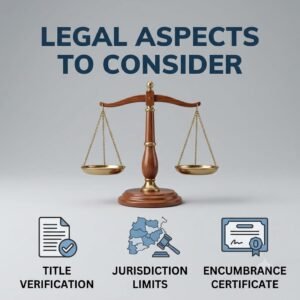 Property registration is an activity carried out in accordance with the law. Even though digital platforms make the procedure easy, they cannot substitute for the legal issues surrounding property ownership. This digital property registration guide helps buyers understand the importance of considering these legal aspects.
Since property laws differ from one country, state, or local government, buyers should always refer to the laws in force in their area of residence. This digital property registration guide can help buyers understand the importance of following the applicable local laws.
Ownership Verification
Before proceeding with the registration, it is important to ascertain the ownership status of the property. This digital property registration guide recommends verifying ownership details before completing the transaction.
Buyers should check for:
- Title deeds
- Ownership history
- Land documents
- Identity cards
- Records in the government registries
It helps avoid complications that might arise in future.
Digital Signatures
In many places, digital signatures are legally binding when used in accordance with the relevant laws.
Digital signatures can be used to:
- Verify authenticity of documents
- Verify consents
- Save on the use of paper
- Increase security
Buyers should always make sure that only legal digital signatures are being used.
Electronic Records
Electronic property records are becoming more acceptable in many places as legitimate official documents.
Electronic records can contain:
- Ownership history
- Certificates of registration
- Property maps
- Taxes
- Registries
They often have the same legal standing as written documents depending on local laws.
Registration Laws
Every property deal must conform to the laws governing registration set by the concerned authority.
Typically, such laws outline:
- Timelines for registration
- Documents required
- Fees to be paid
- Verification process
- Duties of both buyers and sellers
Incorrect registration might have an impact on the rights of ownership or legal issues.
Stamp Duty Payment
Stamp duty refers to the government tax levied on many property deals.
- The charges to be paid depend on:
- Value of property
- Type of property
- Category of buyer
- Location of property
- Local rules
Today, most online registration systems provide an option to pay stamp duty online using the government payment gateway.
Keep receipts of payments for future references.
Taxing of Property
Ensure that all the necessary taxes on property are paid before registering.
Not paying the taxes may lead to:
- Delays in registration
- Costs
- Legal problems
Get the latest receipts of taxes to be paid.
State or Country Rules
There exist great differences in the process of digital property registration across states and countries.
Differences may include:
- Requirement to visit offices
- Biometric verification
- Documents required
- Payment options online
- Fees charged
Use the official website of property registration at all times.
Mistakes That Buyers Should Be Aware Of
While using digital methods, some mistakes can be avoided and prevent further delays or legal issues. This digital property registration guide helps buyers understand common mistakes and complete the process more smoothly.
Ignoring Title Verification
Never trust the seller’s words blindly.
Remember to check the following:
- Title deed
- Ownership
- Government property records
- History of dealings
For instance, the buyer will pay the advance payment without verifying the title deed and later finds out that the seller does not have ownership rights.
Overlooking Encumbrance Certificate
There are buyers who ignore the Encumbrance Certificate in order to save time.
It is risky because there might be:
- Active mortgage
- Pending loan
- Court orders
- Other financial encumbrances
Always check the certificate before signing the final deal.
Submitting Incorrect Documents
Incorrect document formats, blurry uploads, expired identification, or wrong file formats can delay the whole registration procedure.
Make sure you:
- Check for file clarity.
- Confirm the validity of the documents.
- The names and property details are correct.
- Adhere to file size and format guidelines provided by the portal.
Not Visiting Official Websites
There are buyers who completely rely on third parties or websites to get information.
What to do instead?
- Go to the official website of the government property registration authority.
- Get the information
- Verify registration process.
- Check the relevant charges.
- Determine the necessary documentation.
Official sources will give you the most reliable and updated information.
Payment through Unofficial Sources
The payment for the registration fee and stamp duty should be made via the official payment system and banks.
Do not:
- Click on unknown payment links
- Scan unverified QR codes
- Pay cash to unofficial representatives
Print or download the receipt after each payment.
Overlooking Registration Time Limits
There may be some jurisdictions that mandate property registration during a particular period following the execution of the sale agreement.
Some of the negative consequences for failure to comply with these deadlines include:
- Charges
- Penalties
- Delay in transferring ownership
- Legal problems
Important dates must be noted and application must be made earlier than the deadline.
Failure to Confirm Seller’s Identity
A case of identity theft can arise when buyers fail to confirm the seller.
Compare the following at all times:
- Government-issued identification
- Ownership records
- Details of the sale agreement
- Contact information
When possible, meet with the seller physically or through an authorized legal representative.
Steps to Confirm Ownership Before Property Registration
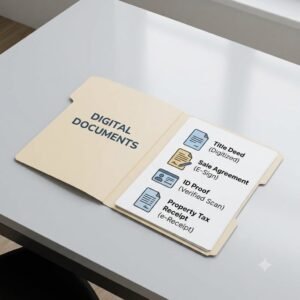 Some simple steps can be followed by buyers in order to confirm the validity of the property before registering it through the Digital Property Registration process. This digital property registration guide can help buyers verify important property details before proceeding.
Check Ownership Details
First, the buyer needs to confirm the legal right of the seller to transfer ownership of the property.
The following documents will be useful in checking the ownership details of the property:
- Title deed
- Sale deed
- Land records of government
- Ownership record
- Ownership transfer details
Checking ownership history of the property eliminates any chances of legal disputes in the future.
Tip: In case of multiple ownership transfers within a very short period of time, make sure to check the reasons behind it.
Verify Legal Approvals
Make sure that the property has received all the legal approvals required in case of the purchase of such property.
According to property type, these include:
- Building approval
- Layout approval
- Development approval
- Environmental approval (if needed)
- Occupancy Certificate
- Completion Certificate
In case of under-construction property, it is important to check whether all the approvals have been issued or not before paying anything.
Check Taxes Paid
Unpaid taxes may become the burden of the new owner in some jurisdictions.
Proof of payments for:
- Property tax
- Municipal tax
- Land revenue (if applicable)
- Utility dues (if applicable)
Match the receipts to official records, wherever possible.
Check Legal Disputes
A property involved in a legal dispute could take many years to settle.
It is important to check before buying whether the property has any disputes:
- With court cases
- With ownership
- With boundary
- With inheritance claims
- With acquisition by government
In case of any legal issue, consult a legal expert before proceeding further.
Land Records Verification
Many governments today have an online portal for verifying land records and some other details about property that buyers need.
The records could contain:
- Survey Number
- Boundaries of the property
- Owner of the property
- Land use category
- Measurements of area of the property
Always match the online records with the papers submitted by the seller.
Tips for Practical Verification
Always verify the property details before making any advance payment:
- Verify the ownership through official government record.
- Verify the physical boundaries of property with official map.
- Verify whether the property has any loans pending.
- Verify that all approvals are genuine.
- Verify the history of payment of tax.
- Always consult a lawyer when you notice any discrepancy in the document.
Digital Security Tips on Property Registration
Even if digital methods have made the process easier and more efficient, buyers need to take measures to avoid possible cybercrimes and fraud.
Only Official Government Websites
 All registrations should be done using the official government property registration website.
Do not use:
- Fake websites
- Mobile applications not verified by the government
- Advertisements
- Third party links
Make sure you have entered the right website address before entering your personal details and the address of the site should use HTTPS.
Avoid Using Public Wi-Fi
The registration of property involves sensitive information.
 Do not use:
- Public Wi-Fi
- Internet cafes
Computers that belong to another person
It is better to use your private internet connection at your home.
- Private network
- Mobile hotspot.
This helps prevent your information from being accessed without authorization.
Check Payment Links
Some fraudsters may make fake payment webpages that look like the government’s official webpage.
 Before making payments:
- Verify the address of the website.
- Verify that the payment gateway is authorized.
- Re-check the amount of the transaction.
- Keep the receipt.
You should never pay anyone using your personal account saying he/she
Do not send any funds to the personal bank accounts that claim to be working for government agencies.
Keep Copies of Documents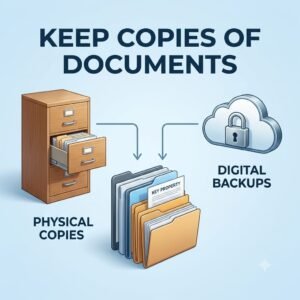
It is important to retain copies of documents, including:
- Sale agreement
- Registration certificate
- Tax receipts
- Payment confirmation
- Identification documents
- Approval of property
- Digital copies should be stored in the encrypted cloud space or through external backup devices.
Enable Two-Factor Authentication
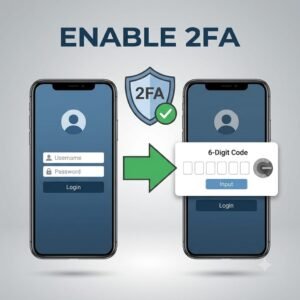 If the government portal enables two-factor authentication (2FA), turn it on.
This additional level of security requires:
- Your password
- OTP (one-time password)
Even if anyone gets to know your password, it would not be easy for him or her to log into your account without a second security measure.
Never Send OTPs
One-time passwords (OTPs) are used in order to authenticate you at the time of secure transactions.
Do not provide your OTP to:
- Unrecognized callers
- Property agent who says he or she needs it
- Seller
- People pretending to be government employees
Government officers would never ask for OTP over the phone.
Challenges of Online Property Registration
Though digital registration provides several advantages to the buyers, it still poses certain difficulties which should be known beforehand to avoid any possible delays.
 Technical Errors
Sometimes, there might be some technical errors in the online portals.
These include:
- Login errors
- Upload errors
- Incompleteness of forms
- Timeouts
Solution:
- Try again later.
- Clear the browser cache.
- Use an approved browser.
- Contact the help desk in case of persistence of the problem.
Slow Internet Connection
Large sized documents need a good internet connection.
A slow internet connection will cause:
- Failure in upload
- Failure in payments
- Timeouts
Solution:
It is advisable to use the broadband internet connection or upload the documents at times when there is lesser internet traffic.
Problems Related to Document Uploads
Many registrations are delayed due to failure to upload the files as per the standards required. A digital property registration guide can help buyers understand the required file formats and upload standards.
Problems encountered are:
- Wrong format of files
- Large file size
- Poor quality scanning
- Lack of any page in the documents
- Solution
It is advised to:
- Scan the documents properly.
- Use the suggested file format (e.g., PDF).
- Compress if needed but without losing any legibility.
- Ensure completeness of the upload before final submission.
Digital Illiteracy
Some buyers may not be acquainted with the online registration process. This digital property registration guide can help first-time users understand the basic steps involved.
For example, older individuals and new internet users may struggle with the technology.
Solution
Get help from:
- Official registration centers
- Government help desks
- Officially authorized service providers
- Qualified lawyers
Do not trust unlicensed intermediaries.
Downed Server
Sometimes the government website is under maintenance or too busy.
This can disrupt the process temporarily. This digital property registration guide helps buyers understand how to handle temporary website issues.
Solution
- Register well in advance of the deadline.
- Look up official notifications regarding server maintenance.
- Save your application as much as you can.
Following this digital property registration guide can help reduce delays caused by website downtime. Buyers can also use this digital property registration guide to prepare for unexpected technical issues.
Solution
- Register well in advance of the deadline.
- Look up official notifications regarding server maintenance.
- Save your application as much as you can.
Cybersecurity Threats
The online registration process can fall victim to phishing, fake websites, and identity theft. A digital property registration guide can help buyers recognize these risks and take appropriate precautions.
Solution
Take protective measures:
- Visit only official government websites.
- Keep your device updated.
- Use strong passwords.
- Enable two-factor authentication.
- Never use your passwords or one-time passes with others.
Comparison of Digital and Traditional Property Registration Process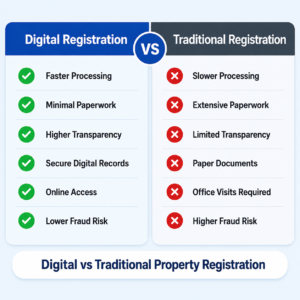
The table below gives the comparative characteristics of digital and traditional property registration systems. This digital property registration guide also highlights the key differences between the two systems.
Note: Even though most electronic systems are easier to use, some regions have laws requiring one to visit in person for identity verification, biometric identification or document validation.
Feature |
Digital Property Registration |
Traditional Registration |
| Speed | Faster processing | Usually slower |
| Cost | Lower administrative costs in many cases | Higher due to paperwork and repeated visits |
|
Paperwork |
Minimal | Extensive paper documents |
| Transparency | High, with online tracking | Limited visibility |
| Security | Secure digital records and verification | Greater risk of lost or damaged documents |
| Accessibility | Available online (where supported) | Requires office visits |
| Risk of Fraud | Lower due to digital verification | Higher because of manual processes |
| Convenience | Applications can often be completed remotely |
Multiple in-person visits are common |
First-Time Property Buyers Tips
First-time property buying is stressful due to the legal procedures and electronic registration processes involved.
Adhere to the following practical tips to help make the transaction easy.
Check Every Document
Do not take anyone’s word alone.
Make sure to review:
- Deed of title
- Contract of sale
- Approvals for the property
- Receipts for payment of taxes
- Encumbrance Certificate
- Identification documents
When something seems vague, seek to clear your doubt before doing anything else.
Hire a Legal Advisor When Necessary
There will be legal documents in a property deal that first-time buyers find difficult to understand.
The services of a qualified real estate lawyer would assist you with:
- Determining the owner’s legal status
- Reviewing contract
- Determining the risk associated with the property
- Understanding the registration process
Legal fees are cheaper than the cost of sorting out future problems.
Take Care with the Agreement
Sign nothing without understanding it first.
Make sure to note:
- The price of purchase
- Payment plan
- Description of property
- Date of taking possession
- Cancelling terms
- Extra costs
- Pose questions if you find any clause difficult to understand.
Keep Digital Copies
Always keep digital copies of all your important documents at several safe places.
You should consider keeping backup copies:
- On your computer
- In your encrypted cloud storage
- In an external hard drive
Keeping organized digital copies will make future transactions much easier.
Consult Government Records
Before making the last payment, ensure that all the details about the property can be verified from the government records.
This will help you:
- Verify ownership
- Find out the registration status
- Learn about land details
- Find out if there are any legal clearances
Government records are better sources than other sources of information.
Comparing Registration Fees
The registration fee and taxes differ according to the location of the property, the value of the property, and various other factors.
Before doing anything else, do the following:
- Check the fee schedule.
- Find out what stamp duty you will have to pay.
- Plan for other expenses.
Knowing the cost in advance will prevent you from being caught off guard.
Know About Taxes
Being a property owner means having to pay certain taxes.
These could be:
- Property tax
- Registration fees
- Stamp duty
- Capital gains tax (at the time of selling)
- Local municipal charges
Getting aware of these responsibilities will help buyers manage their finances effectively.
Quick Checklist For First-Time Buyers
Before you finalize your property transaction, ensure that you have:
- Ownership verified.
- Encumbrance Certificate checked.
- Tax payments confirmed.
- Sale agreement verified.
- Building approvals verified.
- Used only official government portals.
- Saved digital copies of all documents.
- Paid registration fees via only authorized payment gateway.
- Known all the legal & financial responsibilities.
- Consulted a lawyer if needed.
Key Takeaways
Before doing your Digital Property Registration, keep these points in mind:
- Digital Property Registration makes buying & selling properties quick, easy & convenient.
- Always confirm the ownership of the seller before making any payment.
- Collect & examine all the necessary registration documents beforehand.
- Always use official government property registration portals only.
- Verify property tax payments & get the Encumbrance Certificate.
- Maintain the digital & physical copy of all important documents.
- Know all the relevant registration laws & stamp duties & taxes.
- Protect yourself from online scams by using a safe internet connection & not giving OTP.
- For clarification of the terms of registration or other aspects of the agreement concerning the registration of property, seek legal assistance.
- Requirements for the procedure of registration, fee amounts, and other details may differ from one country, region, or locality to another.
- Following a digital property registration guide can help buyers prepare the required documents and understand the registration requirements.
- Use this digital property registration guide to review important security and verification steps before completing the transaction.
- A reliable digital property registration guide can help buyers understand the process while avoiding common mistakes.
Frequently Asked Questions (FAQs)
1. What is Digital Property Registration?
Digital Property Registration is the legal procedure of registering the right to property ownership via online electronic governmental platform. The procedure allows making documents submission, verification, paying fees, and accessing digital documents concerning the property.
2. Is online property registration legally valid?
Yes. Online property registration is a legally valid form of registering property ownership if done via an official governmental registration platform and according to the local laws.
3. How long does digital property registration take?
The time of registration depends on various factors like the requirements of local law, verification of documents, and the procedures of the governmental authorities. In most cases, it takes less time than the traditional registration if all required documents were submitted correctly.
4. Can buyers register property without going to the office of registration?
Depending upon the laws of the concerned state, it is possible that the entire process may be done online. Other than that, it may even require a personal visit for biometric verification, authentication of the documents and approval.
5. Is digital property registration safe?
Yes, as the system of digital registration is based on secure technological methods such as encryption, digital identification, etc. The buyers must always use the official website and ensure the practice of cybersecurity principles.
6. What documents are essential for digital property registration?
There are some mandatory documents for the purpose of digital property registration which vary depending upon the jurisdiction. However, there are certain documents which may be mentioned as:
- Proof of identification
- Proof of address
- Sales agreement
- Old title deeds
- Tax identification number (e.g. PAN in case of India)
- Property tax bills
- Encumbrance Certificate
- Building clearance documents (if any)
- Passport size photograph
7. Is it possible to correct errors in the application?
Yes, depending upon the policy of the relevant registration authority it is possible that the errors can be corrected by sending a correction application or by providing more documents in support. This digital property registration guide can help buyers understand the possible steps for correcting errors.
8. What would be the consequences of delayed property registration?
The delay might result in penalties, fees or other legal issues in certain cases. Delayed registration will also delay the process of ownership transfer. Users need to register the property within the specified timeframe.
9. Is digital property registration permanent?
Government bodies retain digital records of property registration permanently for their reference. Digital records make it easy to check ownership, facilitate transfer of property and create necessary legal documents. Policies related to retention of records differ from location to location. A digital property registration guide can help buyers understand how digital records are maintained and why they are important.
10. How can I check my property ownership online?
There are government websites dedicated to land record or property registration that provide access to the ownership details of property, status of registration, survey number and other information. One must always use government sites for verification. This digital property registration guide helps buyers understand the importance of using official sources.
11. Do I need a lawyer for digital property registration Guide?
In many cases, people are able to complete the process independently because there is no complexity involved. It is advisable, however, to hire a lawyer in case of complicated ownership history, inheritance or expensive properties. A digital property registration guide can help buyers identify situations where professional legal assistance may be useful.
12. Does digital property registration prevent any kind of fraud?
No. Even though digital processes help prevent fraudulent activity through identity verification, electronic documentation and secure databases, the buyer needs to verify the ownership and review documents and use the official government sites only. Following this digital property registration guide can help buyers take these precautions more effectively.
Conclusion
The system of Digital Property Registration has revolutionized the process of registration by improving its efficiency and security. As a result of the development of the government’s land administration system, buyers can benefit from a better organization of the documents, the security of the digital files, and more convenient services. This digital property registration guide helps buyers understand these improvements and the overall registration process.
But even with the use of this technology, you will have to follow certain steps to avoid fraud, disputes about the property ownership, and any other problems. This helps minimize cases of fraud, disputes of ownership and expensive mistakes. This digital property registration guide can help buyers understand these important precautions.
The use of official government portals is equally essential. They offer accurate information, safe payments and correct registration records, which help in the completion of the process with ease. This is in addition to avoidance of non-official websites, protection of personal information and creation of a backup of documents in the online environment. A digital property registration guide can help buyers follow these security practices more carefully. This digital property registration guide also highlights the importance of using trusted sources during the process.
Since there are differences in the processes of registration in different countries and states, buyers need to consult the most recent guidelines available from the registration authorities. In case of any confusion, seeking the advice of a legal expert becomes helpful. A digital property registration guide can provide general information while helping buyers identify areas where local guidance may be required. This digital property registration guide should be used alongside the latest information provided by the relevant registration authority.
Official Resources:
- India National Government Portal: https://www.india.gov.in
- Digital India: https://www.digitalindia.gov.in
- Department of Land Resources, Ministry of Rural Development: https://dolr.gov.in
- National Generic Document Registration System (NGDRS): https://ngdrs.gov.in
- Your State Registration & Stamps Department (Example – Andhra Pradesh, Telangana, Karnataka etc.)
- Your State Land Record Portal (For online land records verification)
- Your State Municipal Corporation Property Tax Portal (For Property Tax Verification and Payment)