
Technology has become an indispensable part of our lives in modern times when it comes to the real estate business, future of Smart Homes in the Modern Real Estate has become prominent. One of the most prominent technological advancements contributing to this trend includes the introduction of smart homes. With the help of such technological homes, people get opportunities to use various connected devices, artificial intelligence (AI), and IoT to make their living spaces smarter, safer, more convenient, and energy-efficient. Smart homes allow people to control systems such as lighting and security with the help of a phone or to perform daily tasks by using voice-controlled assistants.
Future of Smart Homes in the Modern Real Estate Industry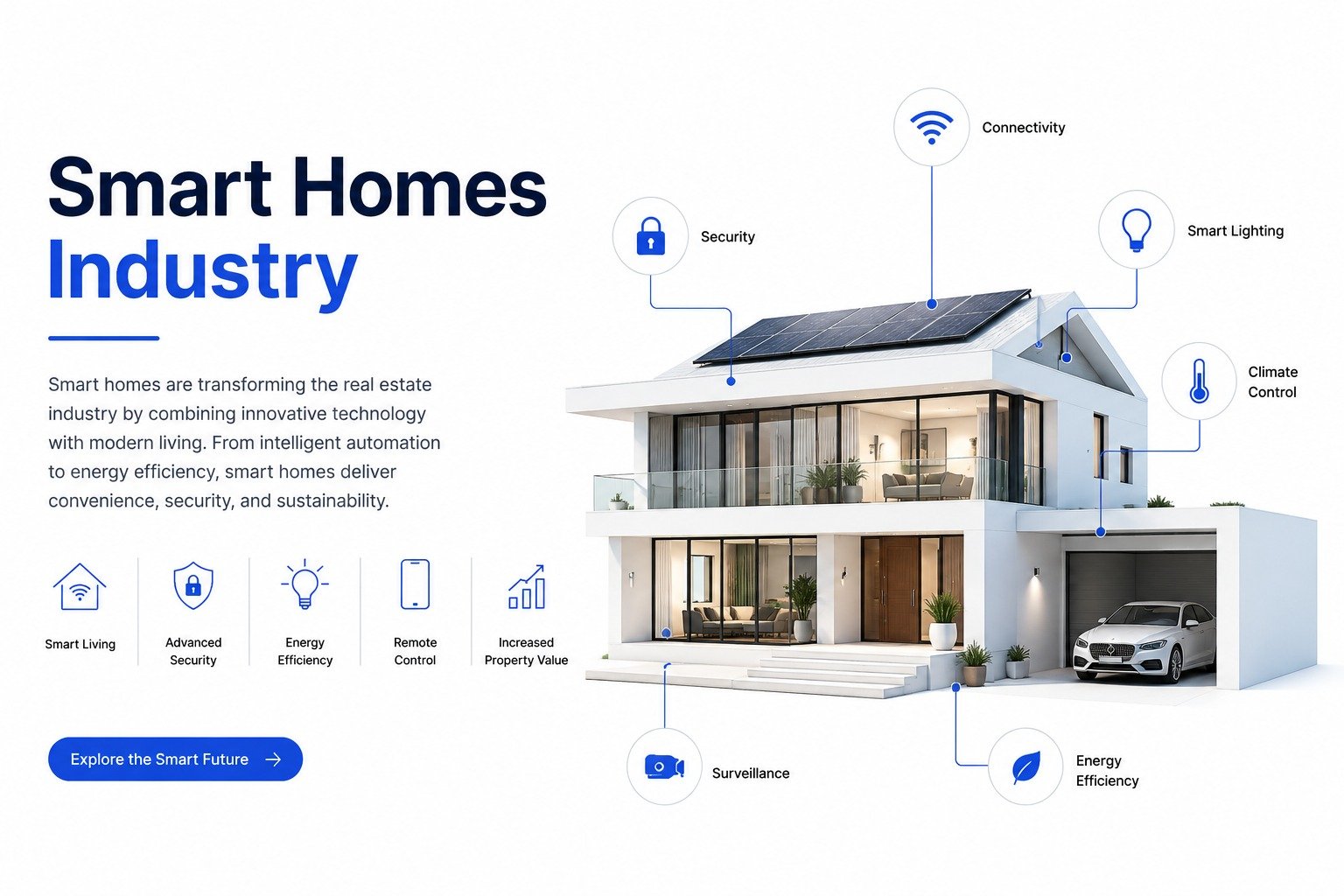
These days, homebuyers tend to be more interested in getting houses with smart solutions to improve the quality of their life while saving on energy expenses and operating costs. The growing interest in such technologies makes smart thermostats, automated lighting systems, smart locks, surveillance cameras, and voice-activated appliances not only an innovation but also a must for many buyers, especially young generations and tech-savvy customers. This growing demand clearly reflects the future of Smart Homes in the Modern Real Estate.
Moreover, in addition to their convenience, smart homes play a huge role in sustainability and environmental friendliness. With the help of intelligent energy management systems, one can effectively use electricity and reduce the amount of its wastage. In turn, the most advanced security systems give additional security with the help of online control and notifications. It goes without saying that all of the abovementioned characteristics make modern properties much more valuable and attractive. These benefits continue to strengthen the future of Smart Homes in the Modern Real Estate.
Smart technologies are used by real estate developers, builders, and investors as a great way to get an edge in their business. The houses equipped with smart technologies become much more desirable among buyers, get a higher resale value, and even possess investment potential. This article considers the future of Smart Homes in the Modern Real Estate, discussing technologies, their advantages and disadvantages for homeowners and investors, as well as new trends. Whether you are a buyer, investor, developer or a person who wants to learn something about the future of Smart Homes in the Modern Real Estate, knowledge of smart home technologies is crucial for you.
Smart Homes
A smart home refers to a house where a wide range of household systems such as lighting, heating, cooling, entertainment, security, appliances, and window blinds are integrated with internet-enabled devices. The main aim of smart homes is the creation of an ideal and comfortable home environment. The Future of Smart Homes in the Modern Real Estate industry is driven by these advanced technologies, which improve convenience, energy efficiency, and security for homeowners.
In contrast to conventional houses, where each device works independently, smart homes incorporate different systems into one integrated network. Homeowners can use their smartphones, tablets, voice assistants, or other control panels to regulate the operation of devices remotely. As technology continues to evolve, the Future of Smart Homes in the Modern Real Estate sector is expected to transform residential living by making homes more intelligent, sustainable, and user-friendly.
Smart homes make use of the following technologies:
Internet Connection
All smart devices communicate via Wi-Fi, Bluetooth, Zigbee, Z-Wave, or any other wireless technology. The presence of reliable internet connection enables seamless information exchange between devices and ensures an instant response to user commands. This interconnected ecosystem is a defining feature of Smart Homes in the Modern Real Estate sector, enhancing convenience, efficiency, and automation for homeowners.
Automation
Automation makes it possible for devices to carry out actions without any intervention. For instance:
- Lights switch on automatically at the sunset.
- The air conditioning system regulates itself according to the temperature.
- Blinds switch on according to the time of sunrise.
- Sprinklers are operated according to weather forecast
-
.H3:Remote Access
Remote management is another key feature of smart homes. Users can:
- Lock/unlock their doors.
- Access surveillance cameras.
- Control their appliances.
- Receive maintenance alerts.
- Manage their lighting remotely.
It is especially beneficial for travelers and those owning vacation rentals.
Voice Control
Homeowners find it easier to control their smart homes thanks to voice assistants like Amazon Alexa, Google Assistant, or Apple Siri. They can simply give voice commands to manage various connected devices, making everyday tasks more convenient and efficient. This hands-free functionality is one of the key advantages of Smart Homes in the Modern Real Estate industry, enhancing comfort, accessibility, and the overall living experience.
- ay music.
- Control smart TVs.
- Get reminders. Turn off their lights
- Lock their doors.
- Set the temperature in their rooms
Hand-free operation makes life more comfortable for people of any age.
Device Integration
Today’s smart homes include multiple devices that form an ecosystem. Instead of controlling each device separately, users set up routines, such as:
Morning routine:
- Lighting becomes brighter.
- Coffee machine switches on.
- Window blinds open.
- News briefings start.
.
Night routine:
- Doors get locked.
- Lights turn off
- Alarm goes on.
- Thermostat gets adjusted.
Such integration makes the home even smarter.
The Evolution of Smart Home Technology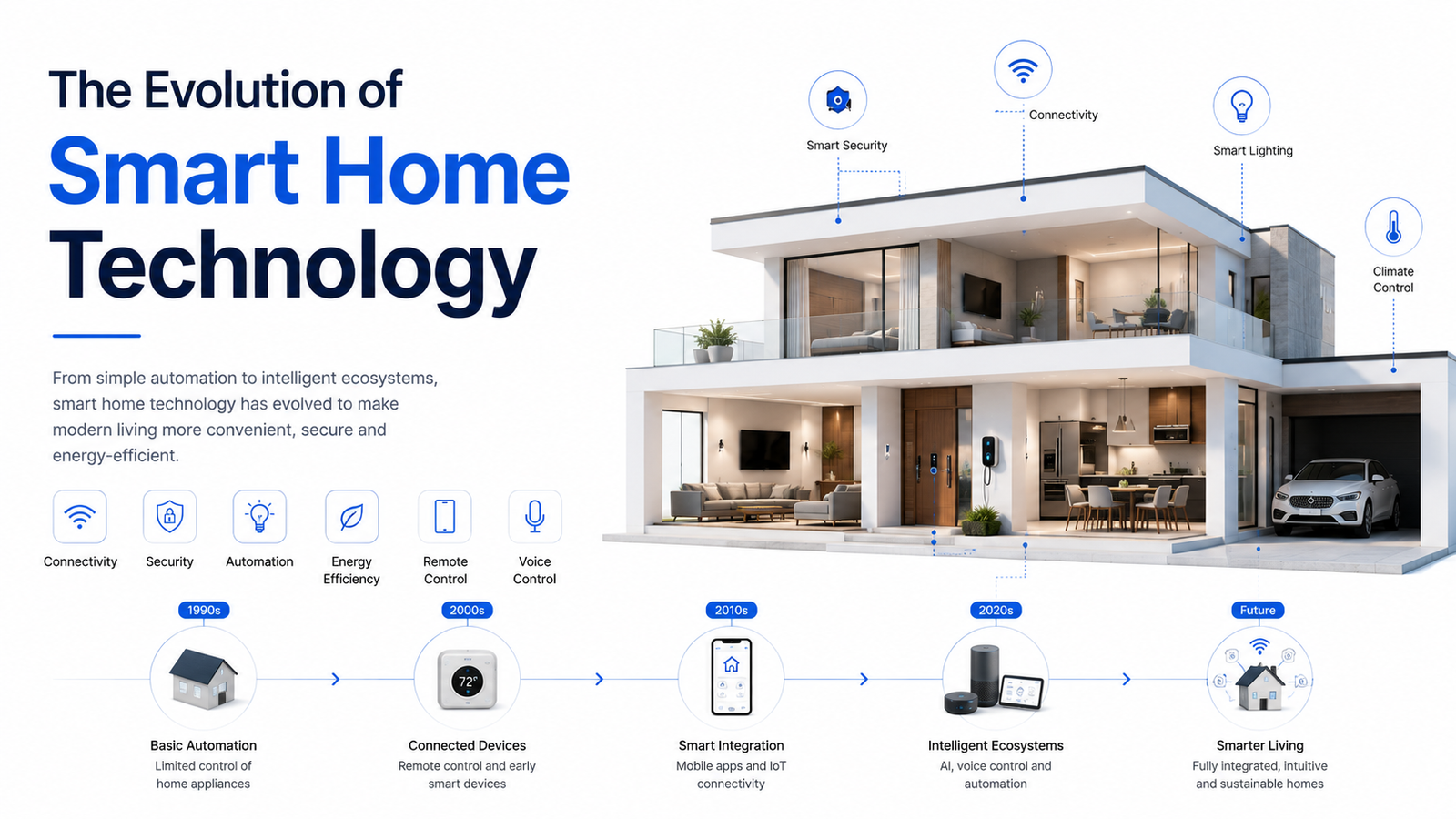
The concept of smart homes has developed tremendously during the last few decades. From basic home automation systems, it turned into intelligent ecosystems run by AI,
Early Home Automation
- In the 1970s and 1980s, home automation was limited to programmable lighting and simple security features. These solutions were expensive and accessible only to affluent homeowners.
- Internet Revolution
The popularization of the internet in the 1990s and early 2000s paved the way to the creation of connected homes. It became possible to control devices remotely through network connections.
Smartphone Revolution
The introduction of smartphones created a new era in smart home management. It became possible to control smart devices from any corner of the globe via mobile applications.
Major advancements:
- Mobile lighting control
- Smart thermostats
- Wi-Fi security cameras
- Smart door locks
H3:AI Integration
- Preferred temperature learning.
- Lighting schedule prediction.
- Energy consumption optimization recommendations.
- Security threat detection
H3: Modern Smart Ecosystems
Modern smart homes are capable of connecting hundreds of smart devices in a unified ecosystem.
Popular smart ecosystem
- Google Home
- Amazon Alexa
- Apple HomeKit
- Samsung SmartThings
The Future of Smart Homes
The future generation of smart homes will consist of:
- AI-assisted virtual assistants
- Predictive maintenance
- Health monitoring
- Cleaning robots
- Smart grid
- V2H (vehicle to home)
- AR (augmented reality) controlled house
Why Smart Homes Are Transforming Modern Real Estate
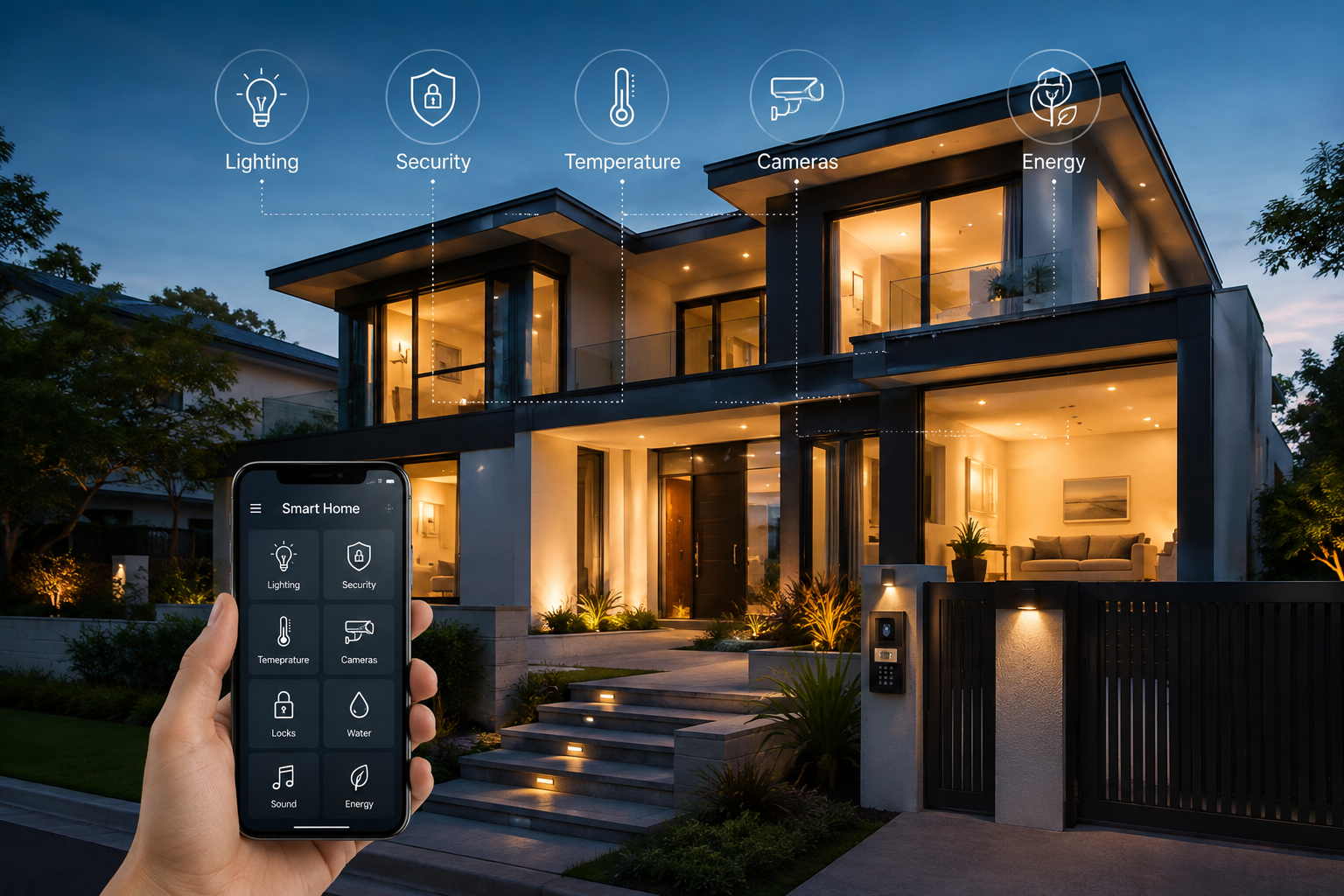
Smart homes will change the face of modern real estate as technology continues to reshape expectations for residential living. The growing adoption of Smart Homes in the Modern Real Estate sector is driving demand for connected, energy-efficient, and intelligent homes that offer greater convenience, security, and comfort.
Increased Demand
Today’s buyer looks for conveniences, efficient management, and safety provided by the house. The young generation of millennials and Generation Z looks for the connection and smart technology.
These factors attract buyers:
- Voice-activated lights
- Smart locks
- Video doorbells
- Energy-efficient systems
- Smart appliances
Higher Prices
Properties with smart technologies will receive higher prices because of the presence of smart features and reduced operating expenses.
Consumers are ready to pay more for houses that have:
- Improved security
- Lower electricity bill
- Automatic maintenance
- Future-ready structure
Competitive Advantage for Developers
Increasingly developers integrate smart technologies in order to distinguish
Competitive Advantage for Builders
Developers start integrating smart technologies into new buildings to gain competitive advantage over other developers.
The most popular elements include:
- Smart lighting
- Smart parking
- Visitor management system
- Charging stations for EVs
- Climate control automation
These technologies help to increase customer satisfaction and attract buyers.
More Effective Property Management
Real estate companies receive benefits from using smart technologies in the following ways:
- Remote property monitoring
- Equipment maintenance prediction
- Tenants’ management online
- Billing systems automation
- Access management system
All these innovations help to cut costs and improve tenant experience.
Sustainability and Eco-friendliness
Increasing concerns about the environment result in growing demand for green house
Smart homes contribute to sustainability by:
- Monitoring energy consumption.
- Optimizing water usage.
- Decreasing electricity waste.
- Using renewable energy sources.
Providing solar panels.
Green houses equipped with smart technologies become more and more desirable among eco-conscious customers.
Higher Quality of Lifestyle
Smart homes make our lifestyle easier and more comfortable. Automation helps reduce routine tasks while improving safety, convenience, and overall comfort. These benefits are driving the growing adoption of Smart Homes in the Modern Real Estate industry, where technology enhances the quality of everyday living.
With the continuous development of technology, smart features will become an essential part of residential properties. The future of Smart Homes in the Modern Real Estate sector will be shaped by intelligent automation, energy efficiency, and advanced connectivity, making smart living a standard expectation for homeowners.
Key Technologies Behind Smart Homes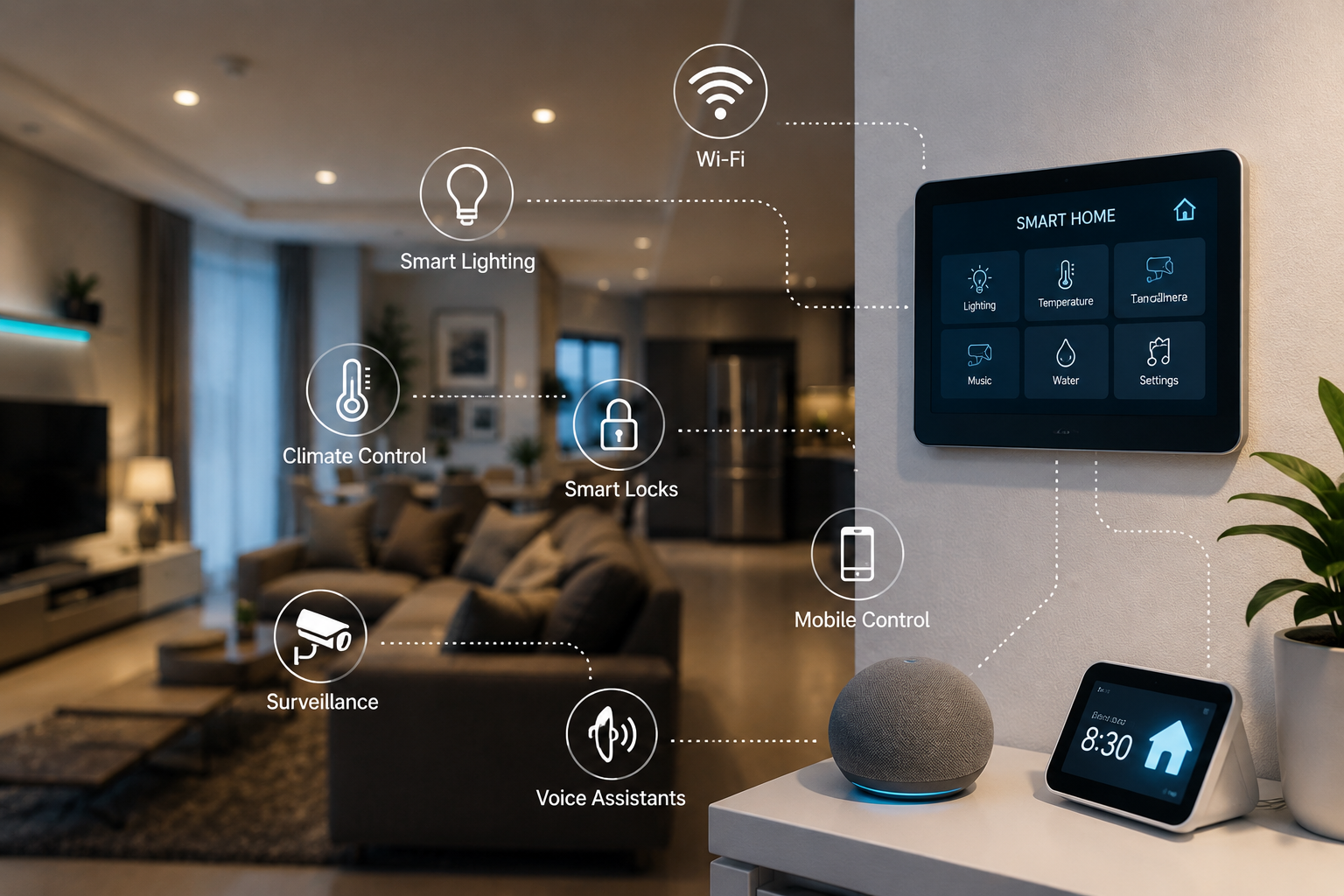
Smart homes are powered by a combination of advanced technologies that work together to create a connected, automated, and intelligent living environment. These technologies allow devices to communicate, collect data, make decisions, and perform tasks with minimal human intervention. Understanding these core technologies helps homeowners and real estate The growing adoption of Smart Homes in the Modern Real Estate sector highlights the importance of these innovations in transforming modern residential living.
Internet of Things (IoT)
The Internet of Things (IoT) is the backbone of every smart home. IoT refers to a network of internet-connected devices that can collect, share, and process data in real time. These device
communicate with each other to automate everyday tasks and improve the overall living experience..
How IoT Works
Each smart device contains sensors, software, and internet connectivity. The devices exchange information through a central hub or cloud platform, allowing them to respond automatically to user preferences and environmental conditions.
For example:
- A smart thermostat adjusts room temperature based on occupancy.
- Smart lights turn off when no movement is detected.
- A smart refrigerator alerts users when groceries are running low.
Advantages of IoT
- Real-time monitoring
- Control from anywhere
- Increased automation
- Effective energy management
- Greater home security
- Maintenance management
Artificial Intelligence (AI)
l intelligence makes it possible for the smart house to adapt and learn from user behavior and actions independently without continuous manual
AI-Based Automation
Rather than relying on predetermined schedules, AI observes the daily pattern and makes automated adjustments to your home environment.
These examples include:
- Temperature preferences of rooms.
- Lighting adjustments according to occupancy.
- Maintenance prediction of appliances.
- Electricity usage optimization.
Machine LearningMachine learning enables AI systems to get better over time through analysis of previous data.
These examples include:
Voice recognition by voice assistants.
Face recognition by security cameras.
Weather adjustments by thermostats.
Personalized content recommendations by smart speakers.
Cloud Computing
Cloud computing is where cloud technology holds and analyzes data from smart devices.
Advantages of cloud technology:
- Device management remotely
- Automated software upgrades
- Data protection through backups
- Data synchronization between devices
Scalability
Without cloud computing, there would be no possibility of using smart homes’ functionalities like remote monitoring.
Wireless Communication Technologies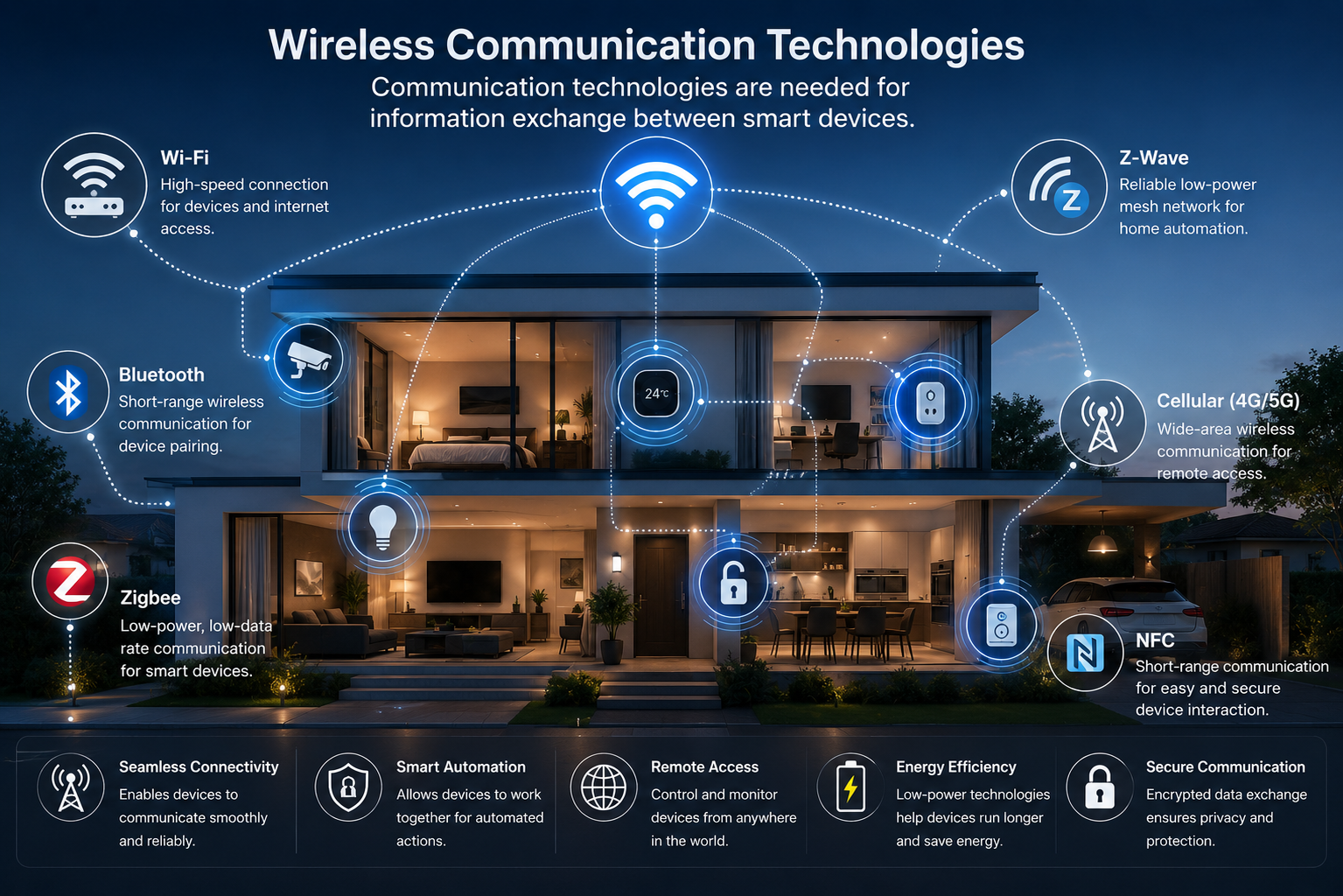
Communication technologies are needed for information exchange between smart devices.
Wi-Fi
For:
- Smart televisions
- Cameras
- Voice assistants
- Home appliances
-
Bluetooth
-
Best for:
- Smart locks
- Wearable devices
- Wireless speakers
- Automation in short range
Zigbee
A wireless low-power protocol usually used for:
- Smart lights
- Motion sensors
- Door sensors
- Smart sw
Z-Wave
Preferred for:
- Home automation
- Security devices
- Smart locks
- Energy management systems
Each wireless protocol differs in features depending on the device and its intended purpose.
Sensors
Sensors help smart homes detect changes in their surroundings.
Common types of sensors are:
- Motion sensors
- Smoke sensors
- Temperature sensors
- Humidity sensors
- Water leaks sensors
- Air quality sensors
- Light sensors
These sensors initiate automated actions that make smart homes safer and more convenient.
Important Features of Smart Home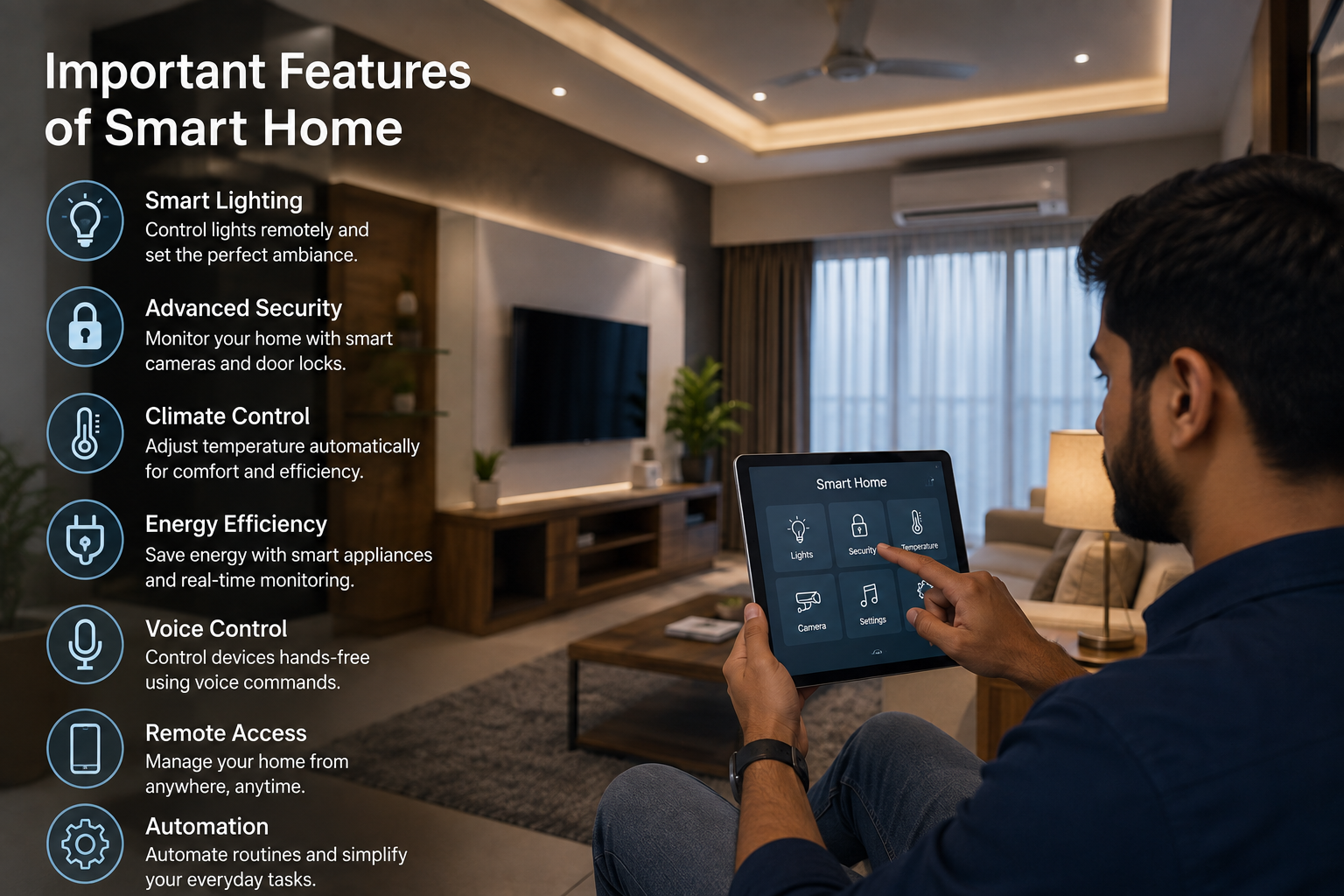
There are many important smart home features available to make our life easy and comfortable.
Smart Lighting
Smart home allows us to manage light levels and color in accordance with our convenience through an application or voice command.
- Benefits:
- Reduction in electricity costs
- Ability to create customized scenes for lights
- Automatic scheduling
- Lights control via motion sensors
- Remotely controlled
Smart lighting can be helpful in increasing security of our home by making it seem occupied even when we are not there.
Smart Thermostats
It adjusts temperatures of our houses according to the weather and our requirements.
- Smart thermostats have following features:
- Learned routines of users
- Remotely controlled
- Emission reports
- Automatic scheduling
- Adaptation to weather
They minimize energy usage without impacting comfort.
Smart Home Security System
Security system in smart home relies on monitoring and surveillance technology.
- Following are some common features:
- HD security cameras
- Motion sensor
- Video doorbells
- Smart alarms
- Facial recognition
- Real time notification
- Emergency alerts
We can monitor our homes at anytime by using mobile applications.
Smart Locks
Smart homes use access systems to replace keys.
- Smart locks have following features:
- Fingerprint access
- PIN code
-
Smart Appliances
The current generation of appliances is becoming smarter and smarter.
Some examples include:
Smart fridges
Smart ovens
Washing machines
Coffee machines
Dishwashers
Robot vacuum cleaners
Most appliances can automatically schedule their operations during times when electricity rates are low to save on energy.
Voice Assistants
Voice-assisted devices make communicating with all the smart devices more convenient.
Some of these assistants are:
- Amazon Alexa
- Google Assistant
- Apple Siri
They allow controlling:
- Lights
- Music
- TV
- Thermostat
- Security systems
- Appliances
Using voice assistants increases the accessibility of the smart home environment for elderly people and disabled people.
Smart Entertainment Systems
Nowadays, entertainment systems become a part of the smart home ecosystem.
It allows to have:
- Multi-room audio
- Streaming control
- Voice-controlled TV
- Smart speakers
- Recommendations
All these features enable creating immersive entertainment experience.
Artificial Intelligence and Home Automation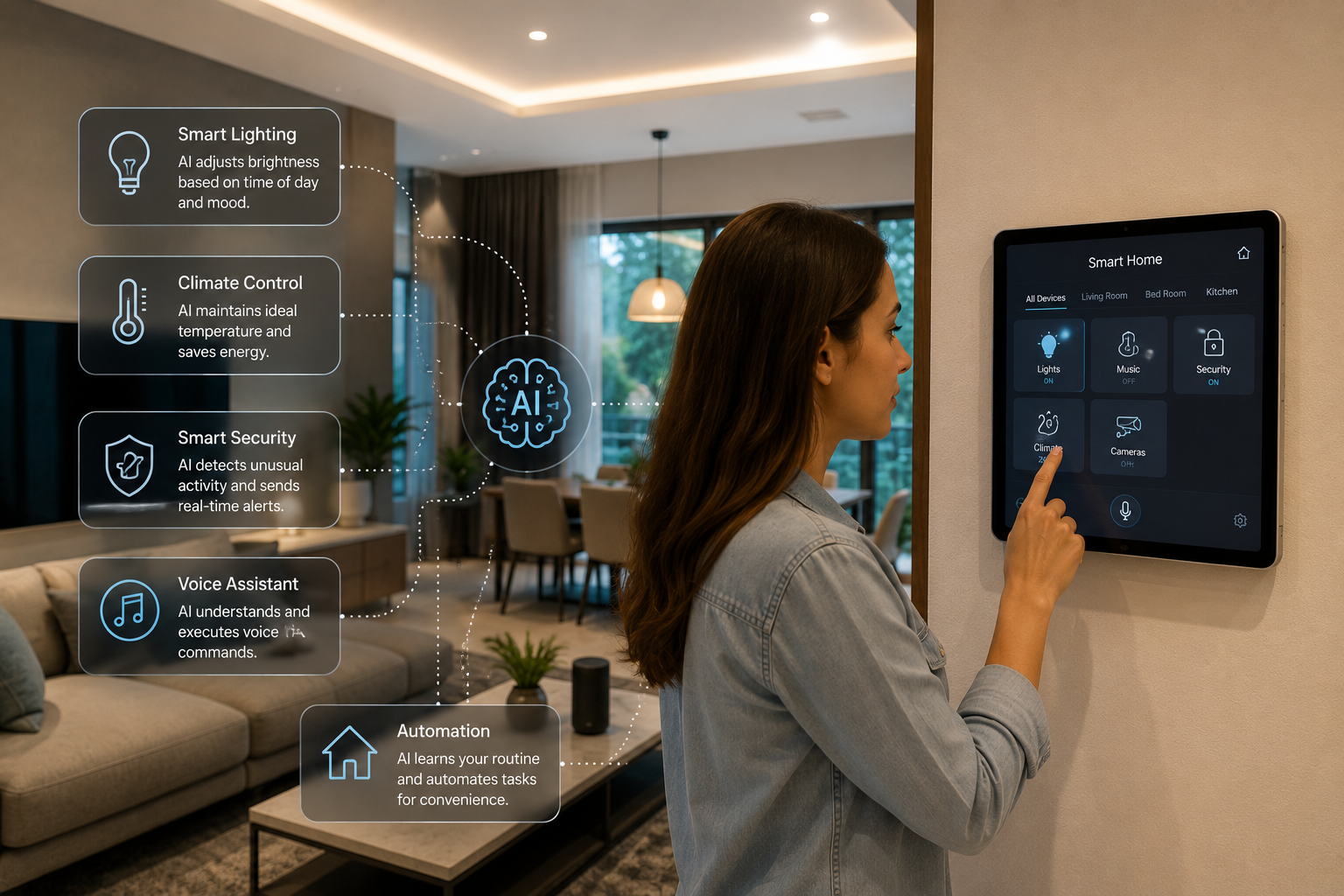
Artificial Intelligence (AI) is one of the most revolutionary technologies for modern smart homes. While traditional automation relies on preset schedules, AI-driven homes learn from your behavior and adjust accordingly.
Personalized Living Experiences
AI uses information about day-to-day activities to offer personalization of automation.
For instance:
- Setting the room temperature before waking up.
- Making coffee every day.
- Lighting up the room upon entry.
- Playing favorite music automatically.
Personalization enhances convenience and comfort.
Predictive Maintenance
AI monitors all the connected devices at home and systems.
It can predict
Equipment malfunction
Water leakages
HVAC malfunction
Electric faults
Batteries replacement
This saves on maintenance costs and prevents any losses.
Intelligent Energy Management
AI examines electricity usage and offers recommendations on how to lower consumption.
These include:
- Turning off unnecessary devices.
- Efficiently scheduling heating.
- Solar energy management.
- Limiting electricity usage during peak hours.
This will help save on utilities and sustainably manage energy.
Increased Safety
AI offers enhanced security by detecting abnormal behavior.
The features include:
- Facial recognition
- Vehicle license plates recognition
- Detected intruders
- Suspicious activities
- Detecting visitors
Unlike traditional security systems, AI is efficient since it detects people and animals and normal movements.
H3: Voice Recognition
The modern AI is capable of identifying each individual member of the family.
- Advantages of this technology include:
- Personalized reminders
- Personalized playlists for music
- Synchronization of calendars
- Personal shopping lists
- Personalized settings of smart homes
Artificial Intelligence Developments in the Future
Artificial intelligence technology will keep evolving by having new features like:
- Emotions recognition
- Health monitoring
- Predictive shopping
- Autonomous household robots
- Household management systems powered by artificial intelligence
These innovations will make the houses even more personalized to the needs of its residents.
Internet of Things (IoT) in Smart Homes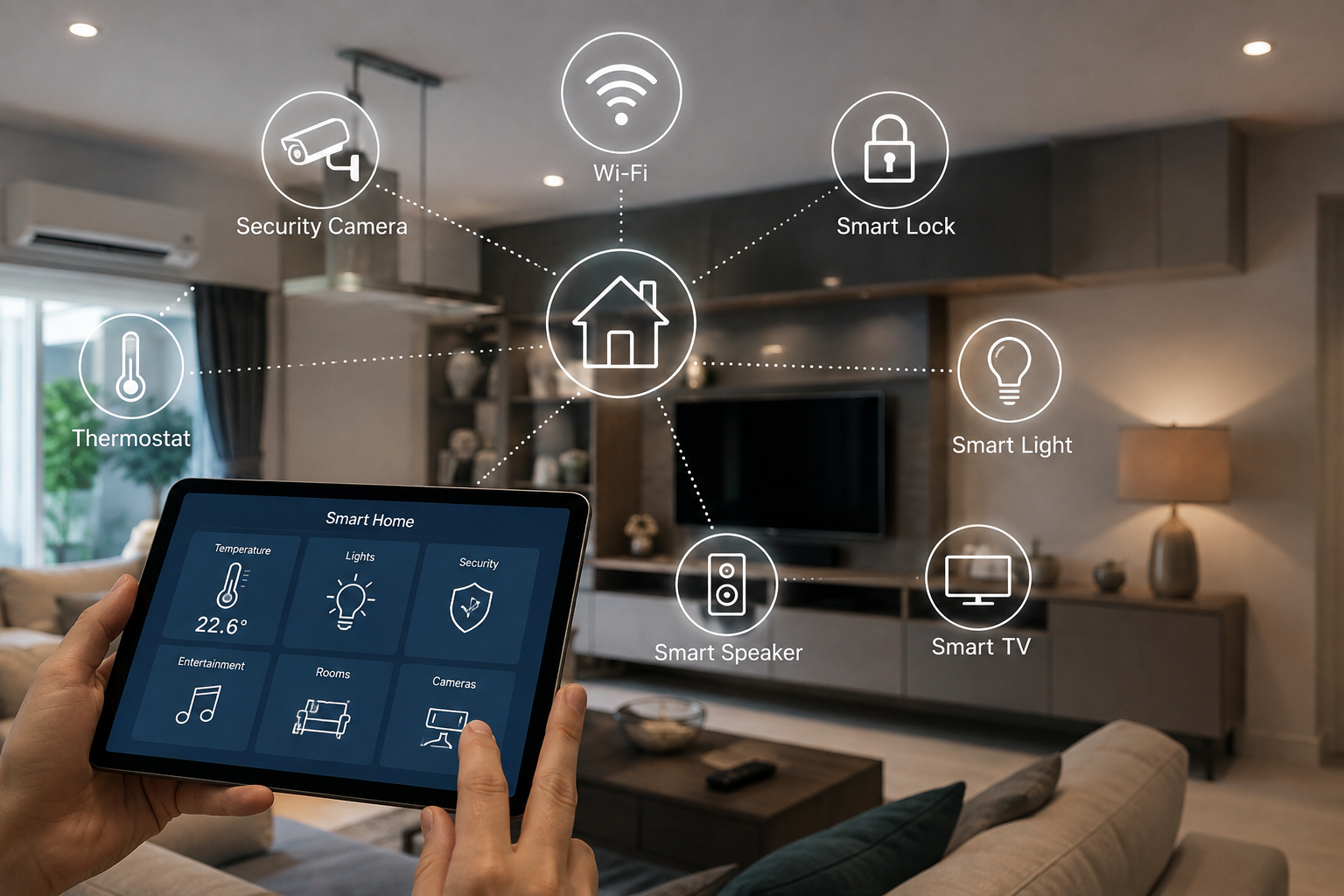
The Internet of Things technology enables to connect various devices used in the house to the Internet in order to enable communication between them. IoT is the basis of smart home ecosystems, allowing for automation and remote control.
IoT Enables the Connection Between Households Devices
Each device gathers information using sensors and communicates with other connected devices.
For example:
- Movement sensors turn on the hallway lighting.
- Smart thermostat devices communicate with weather services.
- Security cameras alert about intruders on smartphones.
- Smart fridge keeps updated about food supplies.
Popular IoT Devices
The popular IoT-enabled smart devices that are used within smart homes are:
- Smart lightbulbs
- Smart switches
- Smart plugs
- Security cameras
- Smart televisions
- Voice assistants
- Smart locks
- Smart thermostats
- Robot vacuum cleaners
- Smart irrigation systems
All these IoT-enabled devices provide the full connectivity of the living space.
Benefits of IoT in Smart Homes
There is a huge number of advantages of the Internet of Things, including:
- Remotely accessing home systems
- Monitoring of events in real-time
- Efficiency in energy consumption
- Increased safety of the household
- Predictive maintenance
- Improved convenience
- Saving time
- Greater comfort
-
IoT and Data Analytics
IoT-enabled devices constantly gather useful information.
For example:
- Consumption of electricity
- Consumption of water
- Indoor temperature
- Air quality
- Performance of home appliances
- Occupation
This data allows people to make rational decisions regarding energy consumption, maintenance, and renovations.
Challenges of IoT
However, there are several difficulties associated with IoT, including:
Security Risks
Connected devices can be prone to attacks if they are not adequately secured.
Privacy Issues
Data collected by smart devices has to be encrypted and kept safe.
Compatibility
Some smart devices may have problems working together in different ecosystems.
Dependence on Internet
IoT technology works only under conditions when there is a stable internet connection
-
Challenges in Implementing a Smart Home Technology
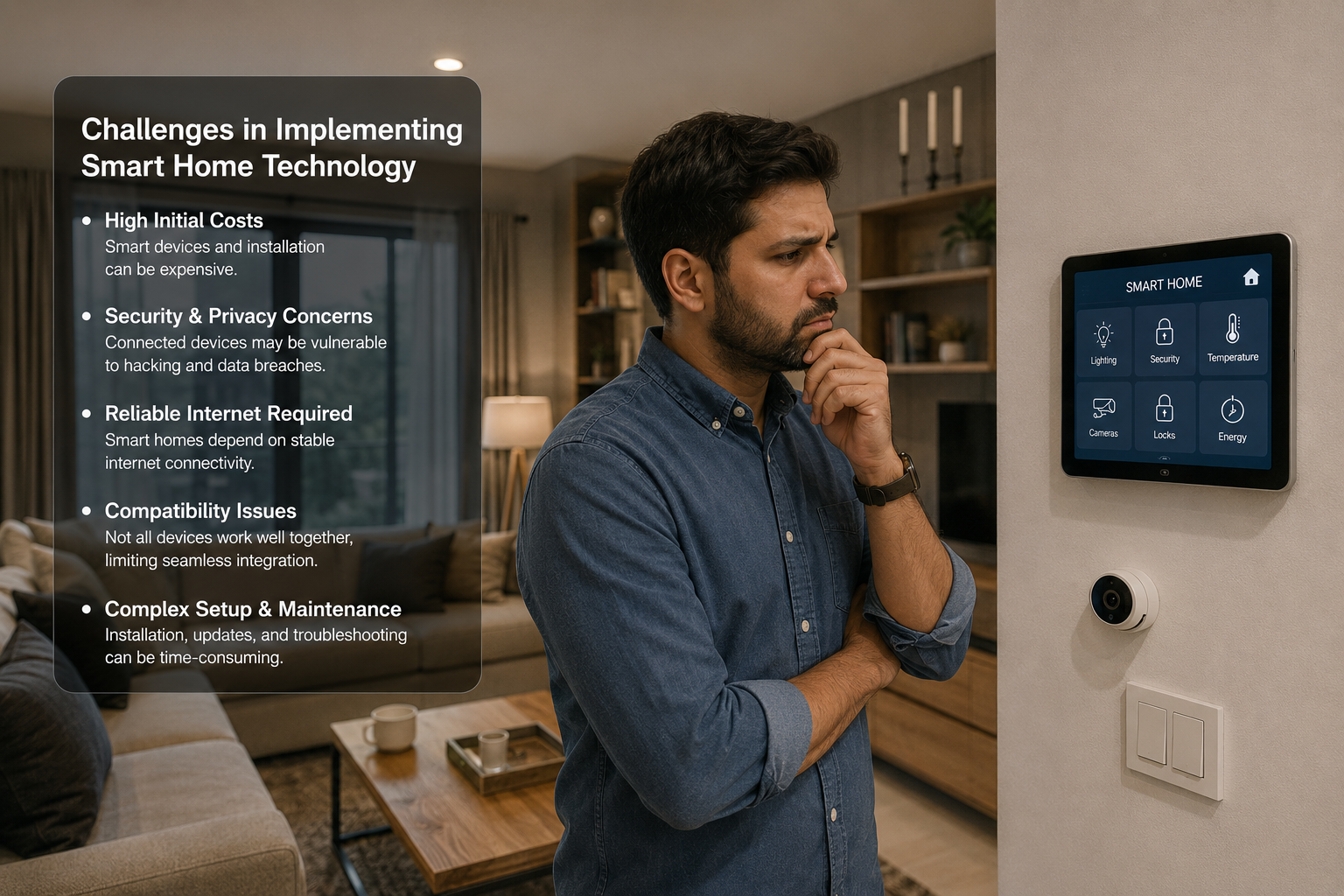
Challenges of Smart Home Adoption
While smart homes come with numerous benefits, there are also some challenges that need to be overcome by owners, developers, and technology companies in order to implement a smart home.
Costly Installation
The most significant challenge in implementing a smart home is the cost involved in the installation process. Adding a smart security system, intelligent lighting, automated temperature control, smart devices, and other elements will increase the price of the house.
Yet, the installation costs can be offset by the following:
- Reduction of electric bills
- Decrease in maintenance costs
- Increase in house value
- House efficiency
Moreover, as technology becomes cheaper, so do the installation costs.
Risks Related to Cyber Security
Every internet-enabled device represents a risk of being hacked by cyber criminals.
The following are some common risks related to the security of smart homes:
- Weak passwords
- Outdated software
- Vulnerability of Wi-Fi networks
- Breach of data
- Camera access
Owners should always:
- Best Security Practices
- Two-Factor Authentication
- Strong Passwords
- Regular Updates to Firmware
- Antivirus Software
- Encrypted Home Networks
Privacy Issues
The smart devices use data from users to enhance automation.
This data is related to:
- Voice Commands
- Daily Routines
- Energy Consumption
- Recordings by Camera
- Location Data
There is an increased trend of better privacy policy, encryption of cloud data storage, and transparency in data management by the manufacturers.
Device Compatibility
All the smart devices are not compatible with all the ecosystems.
These devices can support:
- Google Home
- Apple HomeKit
- Amazon Alexa
These devices work only with their application.
It is always good to choose compatible devices.
Internet Dependency
There are many smart home capabilities that depend on internet.
These features cannot function without:
Internet access.
This includes:
- Voice Assistants
- Monitoring
- Automation via Cloud.
Future Trends in Smart Home Technology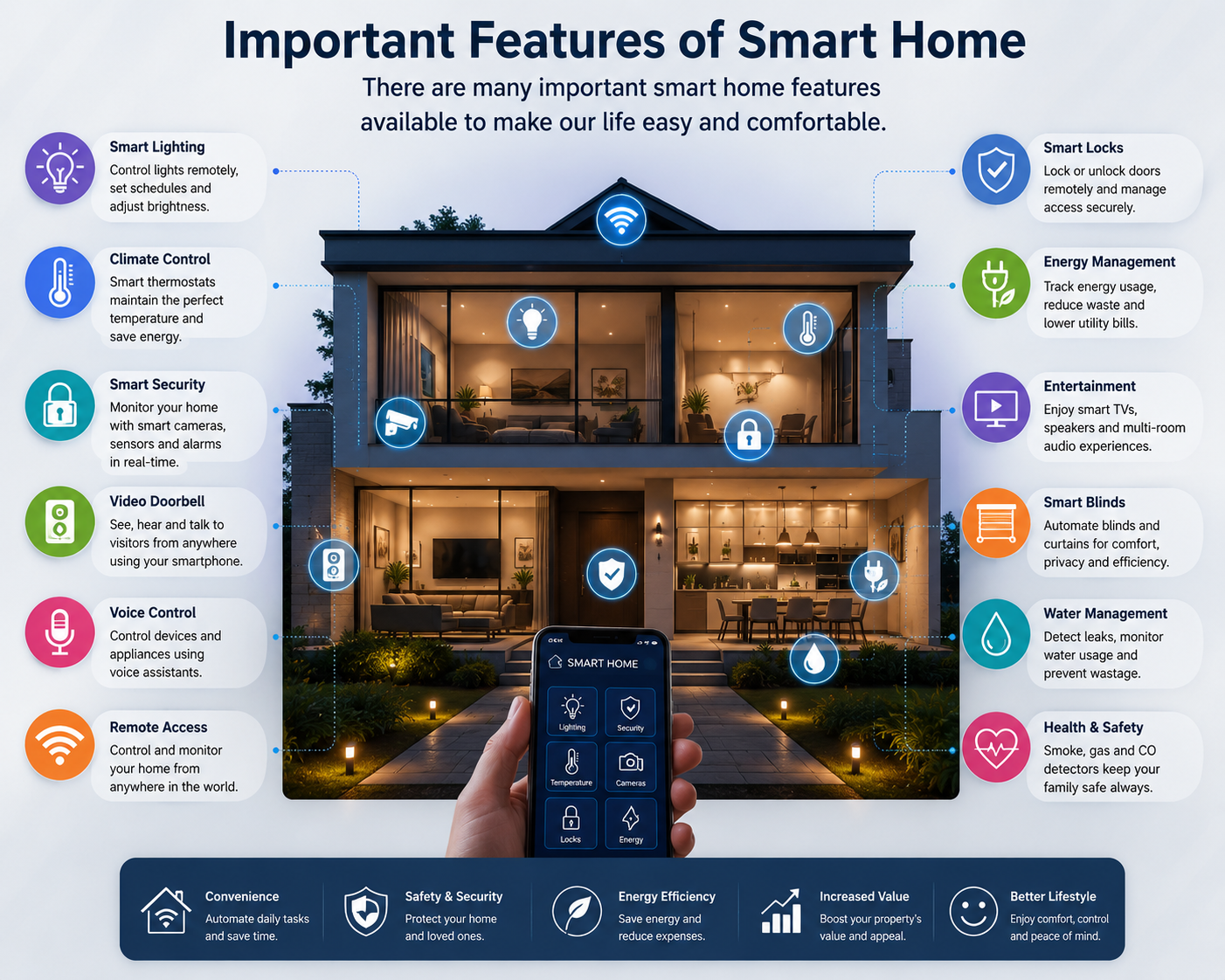
- In the coming years, smart homes will evolve to become intelligent living environments that are powered by artificial intelligence (AI), robotics and sustainable technologies.
- Future Artificial Intelligence Will Become Smarter
Instead of reacting to the commands of homeowners, future AI helpers will be able to anticipate the needs of homeowners.
This includes:
- Regulating the temperature of rooms automatically
- Making coffee before getting out of bed
- Guiding people towards energy saving practices
- Identifying strange activity in the house
Smart homes will be increasingly personalized.
Future Predictive Home Automation
Rather than reacting to commands, the houses of tomorrow will know your routines.
Example:
Morning Routine:
- Opening of curtains automatically
- Brewing of coffee
- Switching on of bathroom lights
- Activating water heater
Evening Routine:
- Locking of doors automatically
- Dimming of lights
- Activation of security system
- Adjusting of air conditioner
Intelligent Robots in Households
There will be an increase in the number of robots within households.
Such robots may:
- Clean floors
- Wash windows
- Carry groceries
- Help elderly people in the house
- Look after children
- Ensure safety in the house
Robots will decrease the workload in households significe
5G and Faster Connections
The benefits of 5G connections will include:
- More efficient communication
- Faster response times
- Improved video streaming
- Effective connection between smart devices
- Improved cloud computing
With 5G, thousands of devices can run at
Smart Health Tracking
In the future, houses may have continuous health tracking for the inhabitants through non-invasive sensors.
It will include:
- Heartbeat tracking
- Sleep monitoring
- Fall detection
- Air quality monitoring
- Emergency alert
This kind of technology will especially benefit senior citizens.
Sustainable Smart Houses
Environmental consciousness will become a critical component of smart houses in the future.
Some of the new technologies are:
- Solar power integration
- Energy storage
- Rainwater harvesting
- Irrigation management
- Electric car chargers
- Carbon footprint tracking
Smart houses will play a key role in meeting sustainability objectives globally.
-
Investment in Smart Real Estate
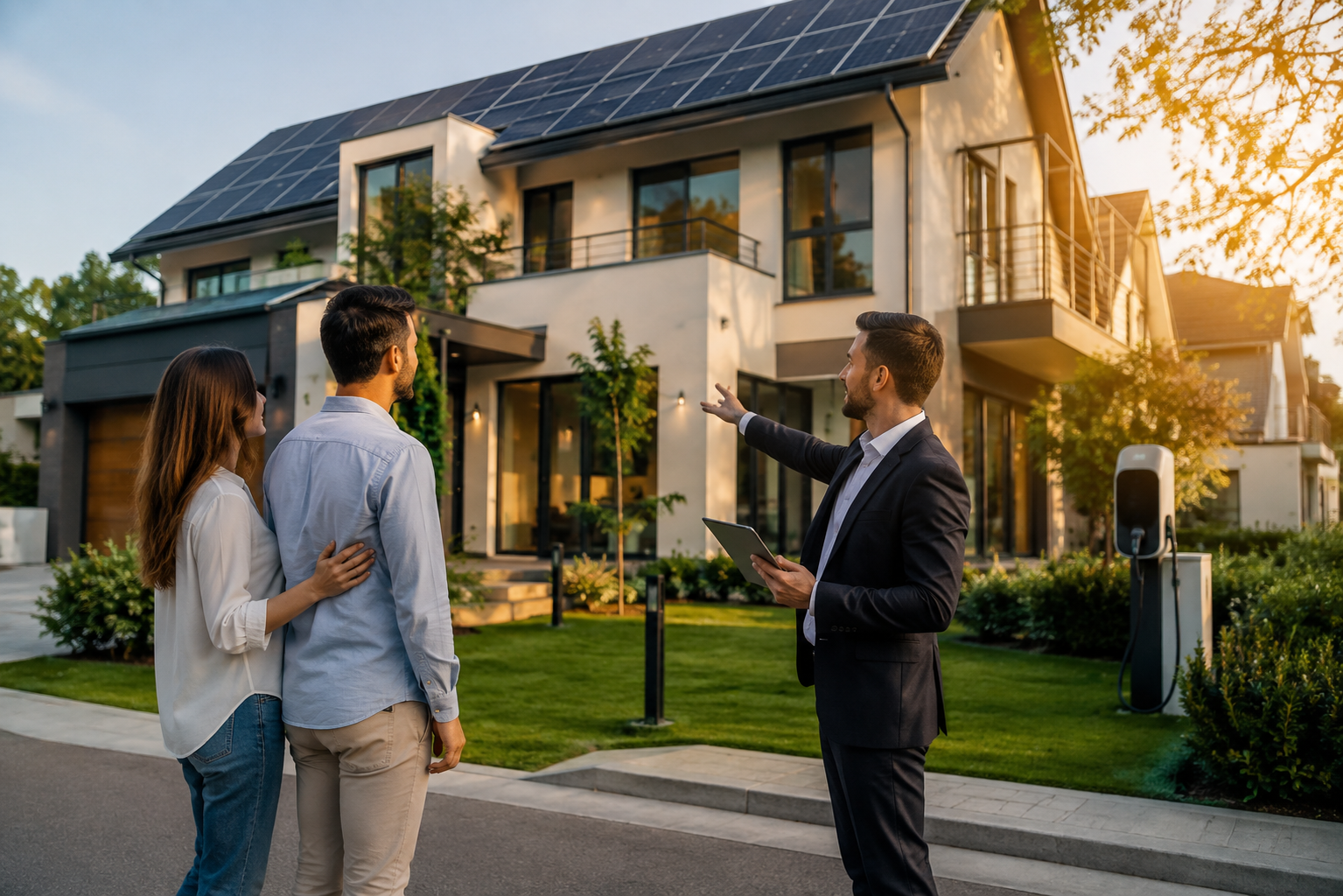
Smart real estate will soon become one of the fastest growing investment sectors around the world.
Greater Market Demand
Today’s buyers favor those houses that have smart features.
Smart features include:
- Smart security system
- Voice-controlled lighting system
- Smart thermostats
- Energy efficient appliances
- Home automation systems
The above properties can be more interesting to buyers and may sell faster.
More Rental Income
Tenants prefer smart rental properties because of comfort and low utility bills.
For landlords, there are benefits such as:
- Greater occupancy rates
- Low maintenance
- Property management remotely
- Tenant satisfaction
Future Value Appreciation
As compared to conventional houses, smart houses retain their value since they fit in the buyer’s expectations and the changing technological trends.
Investment in smart technology will eventually help in the resale value.
Developing PropTech Market
Property Technology or PropTech includes real estate and technology innovations.
Important areas for investments include:
Smart home companies
IoT technology
AI powered property management
Smart buildings technology
Energy management technology
The PropTech market is still attracting much investment worldwide.
How to Choose the Right Smart Home
Choosing the right smart home depends on your lifestyle, budget and future requirements.
Determine Your Needs
Identify what you need:
Home security
Energy savings
Entertainment
Convenience
Health monitoring
Select an Environmentally Friendly Ecosystem
It is advisable to stick to one major ecosystem.
Common options are:
Google Home
Amazon Alexa
Apple HomeKit
Samsung SmartThings
Ensure That You Select a Secure Option
Select products that:
Use end-to-end encryption
Employ two-factor authentication
Provide automatic updates
Have solid privacy policies
It is just as vital to secure your information as it is to secure your home.
Be Wary of Scalability
Begin by selecting basic smart products and proceed from there.
Some options are:
Smart lights
Smart thermostat
Smart cameras
Smart locks
Home automation
Product Reviews
Before making purchases:
Read product reviews
Check product comparisons
Understand the warranty policy
Ensure after-sale support
Verify device compatibility
Common Myths About Smart Homes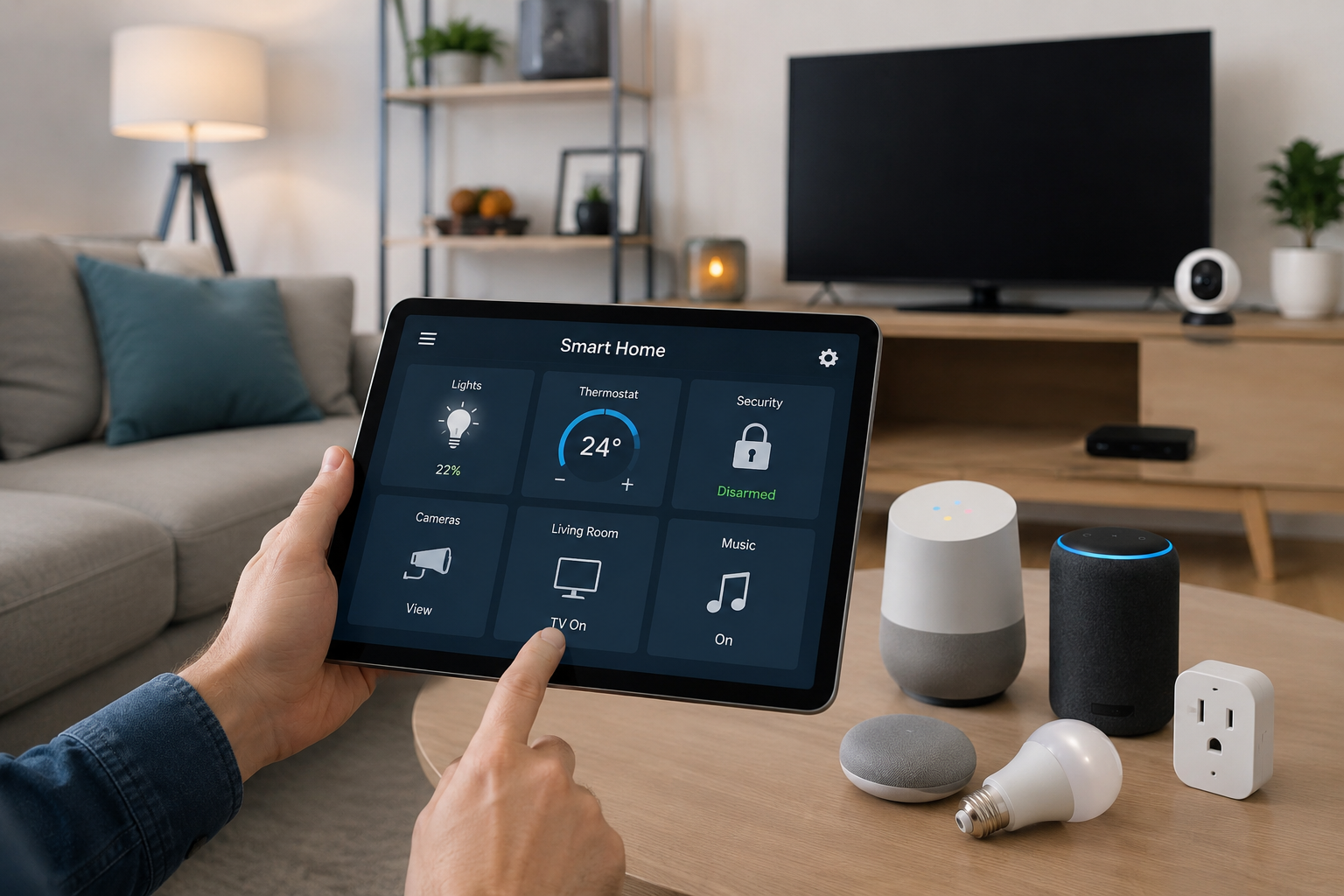
There are many myths that prevent people from installing smart home technology. Here, let us separate facts from myths.
Smart Homes are for Rich People Only
Fact: It is untrue because smart home technology is available at different prices. One can start from relatively cheap products such as smart bulbs, plugs, or speakers and gradually build up his/her smart home system.
Smart Homes are Hard to Use
Fact: Thanks to intuitive applications, voice assistance, and easy installation, modern smart devices can be used even by novices.
Smart Homes are Easy to Crack
Fact: While there is always some risk associated with connected devices, reliable brands have robust encryption, constant software updates, and top-notch security options. At the same time, the user himself should make sure that he/she uses strong passwords and two-factor authentication.
Smart Homes Require More Power
Fact: On the contrary, most smart devices were created to increase energy efficiency.
A Smart Home Needs Full Automation
Truth: A smart home does not have to be automated. Homeowners usually begin with just one or two smart devices and continue adding others depending on personal requirements and budgets.
Frequently Asked Questions (FAQs)
. What is a smart home?
Smart home is a house that has internet-enabled devices through which homeowners can manage lighting, security, appliances, climate, and entertainment remotely or automatically.
Is it safe to use smart homes?
Yes. Smart homes are usually safe when users go for trusted manufacturers, update software, create secure passwords, and enable security features such as two-factor authentication.
Can smart homes help save money?
Yes. Smart thermostats, smart lighting systems, and energy monitoring devices assist homeowners in cutting down electricity consumption and utility costs.
Does smart home raise the value of the property?
In most cases, yes. Property buyers are becoming increasingly interested in purchasing houses with smart capabilities
. What smart home ecosystem is the best?
The choice of ecosystem depends on your current devices and personal preference. Examples of ecosystems include Google Home, Amazon Alexa, Apple HomeKit, and Samsung SmartThings. Selecting an ecosystem ensures that all the devices will be compatible with each other.
Can I install smart devices myself?
Many smart devices allow users to install them themselves. Nevertheless, some systems, such as security and automation solutions, may require professional installation.
Will smart homes function without an internet connection?
Certain features, such as local automation and control of devices through Bluetooth, will function properly. Nevertheless, all cloud features and functions will require an internet connection.
What smart home devices should I start with as a beginner?
A good set of entry-level devices consists of:
- Smart speakers
- Smart lights
- Smart plugs
- Smart thermostats
- Smart locks
- Video doorbells
Conclusion
The concept of the smart home is reshaping the landscape of contemporary real estate by integrating technology, convenience, sustainability, and security into daily life. In line with the developments in the field of Artificial Intelligence, the Internet of Things (IoT), renewable sources of energy, and home automation, smart homes are becoming increasingly advanced and affordable.
There are various benefits to the implementation of the technology of smart homes – from energy savings to home safety, increase in the property value and development of connected neighborhoods. Even though there may be certain difficulties associated with the high cost of installation, privacy concerns, and compatibility problems, the advances in technology continuously solve those challenges.
If you are interested in purchasing your first smart product or remodeling your current house, the technology of smart homes will definitely serve as a good choice. In the light of the constantly increasing demand for smart homes, they are destined to become the standard for the future real estate market.